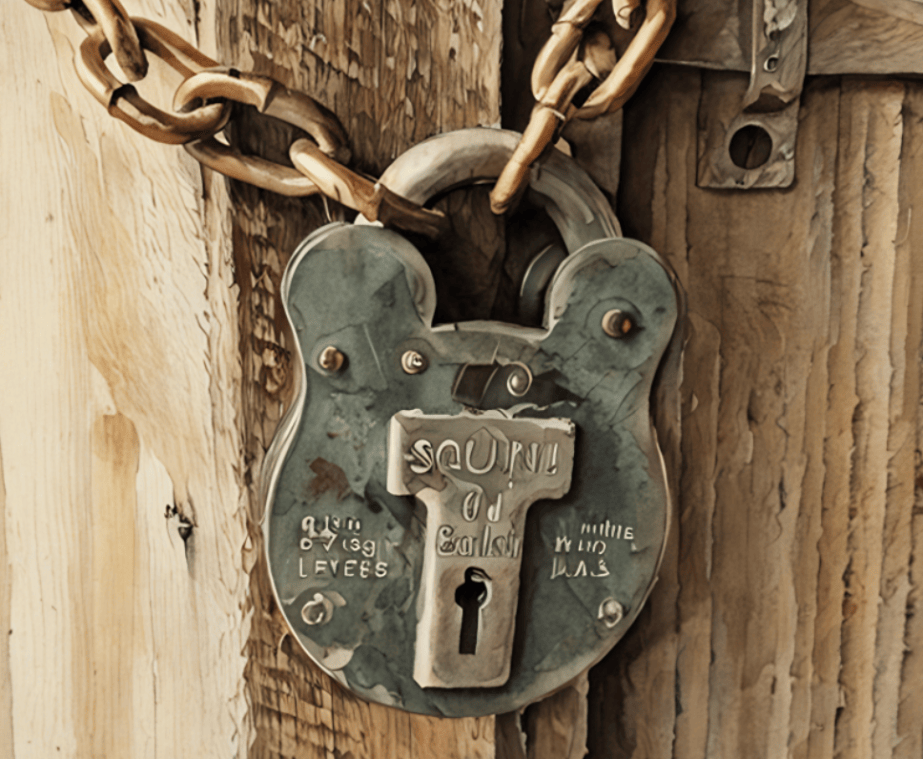

All my locks now have a keypad. I kinda miss the keyhole variety
My Artsy Side – An Image & A Story
Having Art In My Heart
All my locks now have a keypad. I kinda miss the keyhole variety
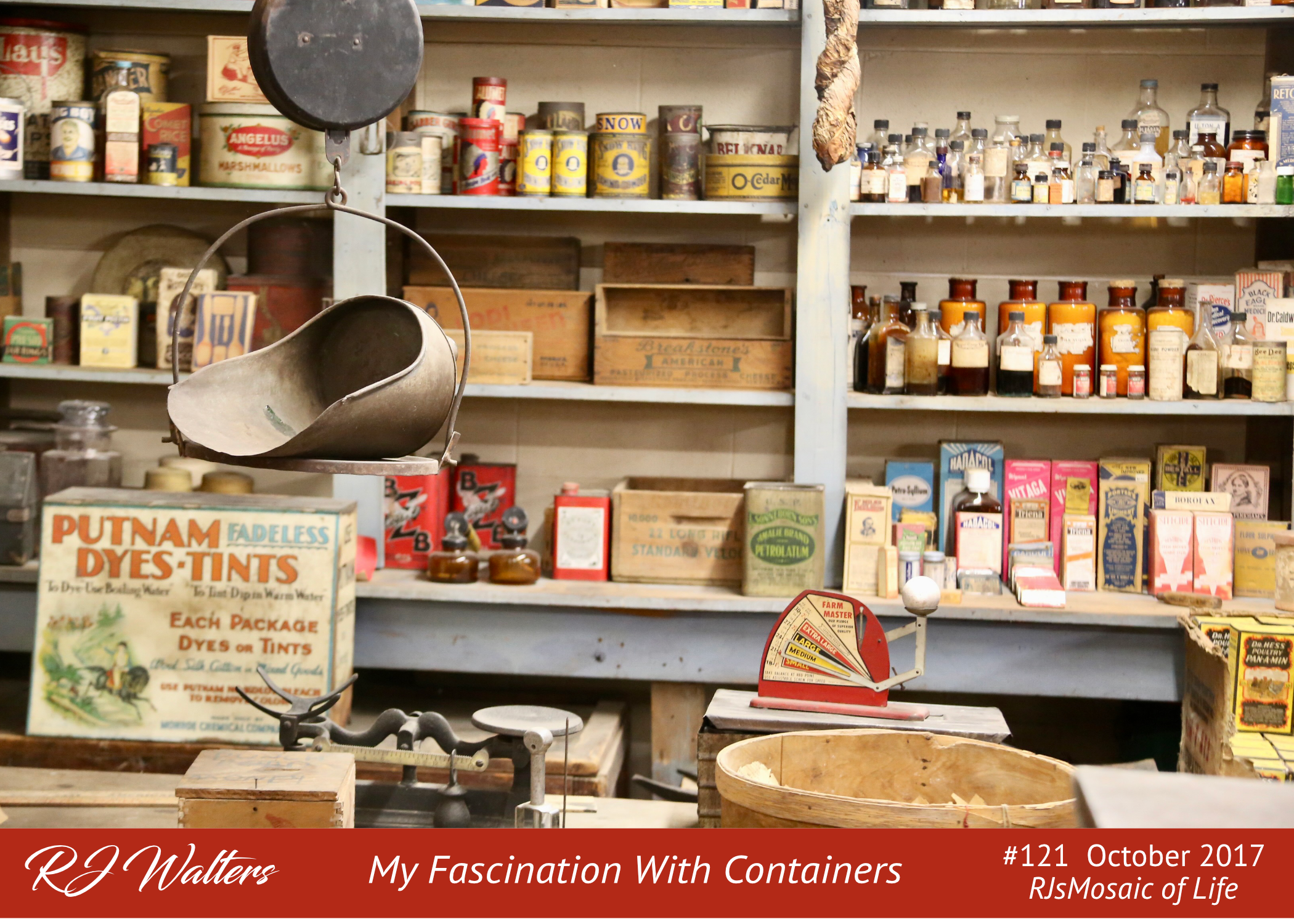
During my travels across America, I have become fascinated with containers found in old-time general stores. This was probably the most complete store shelf I ever ran across. It was in The Museum of Appalachia near Norris, Tennessee. That is one of the top 10 places I have visited.
I have probably spent hours looking at zoomed versions of this photo.
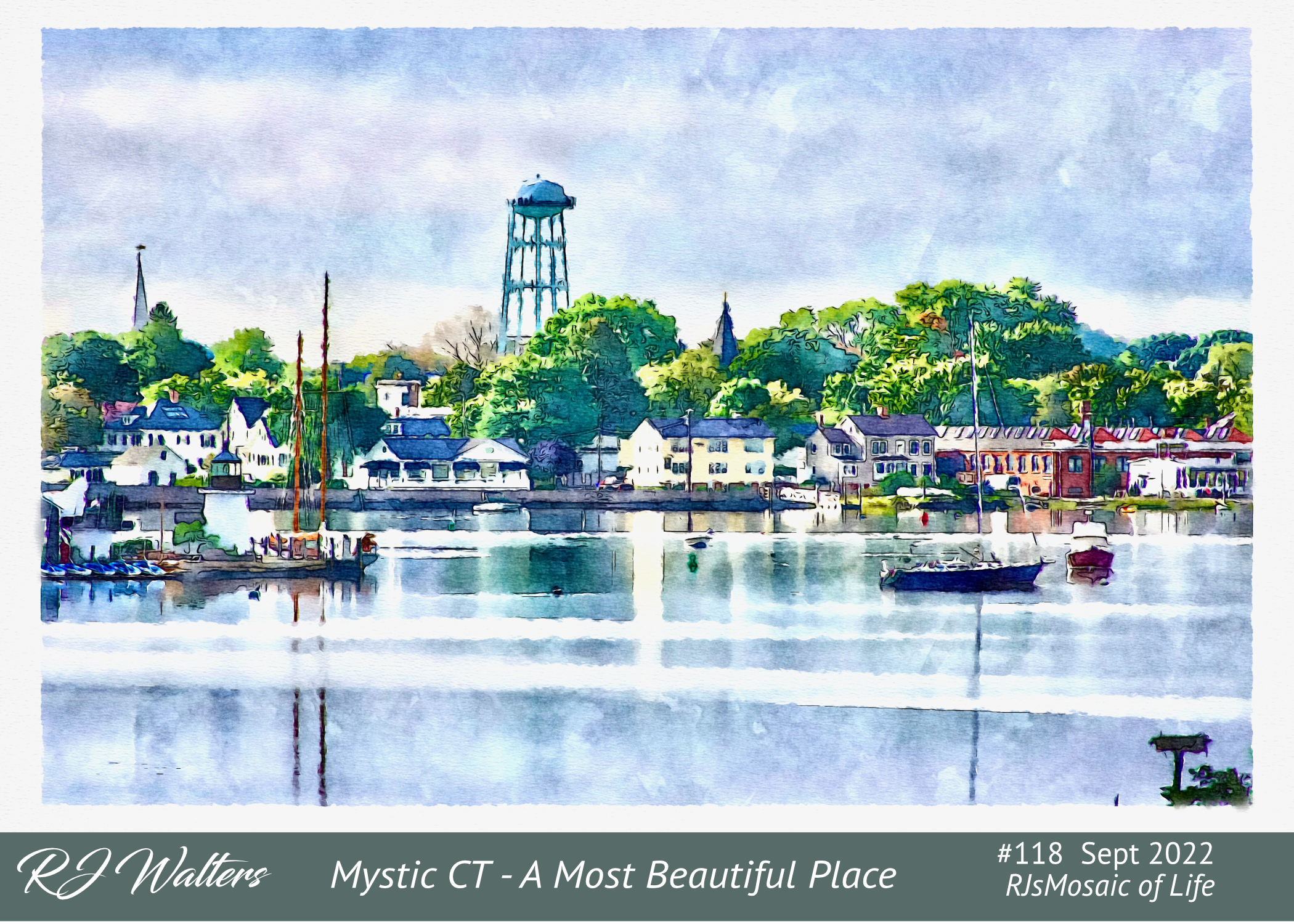
Mystic is simple mystical. It is perhaps the most beautiful place along the Atlantic seaboard.
Ever since I saw the 1988 movie “Mystic Pizza” , Mystic has been on my bucket list. The movie was the first one for Julie Roberts, and it certainly wasn’t her last.
But, of course, there is much more to Mystic than pizza. The mosaic above is a transformed photo of the harbor area.
Mystic is a village and census-designated place in Groton and Stonington, Connecticut. Mystic was a significant Connecticut seaport with more than 600 ships built over 135 years starting in 1784.
Wikipedia
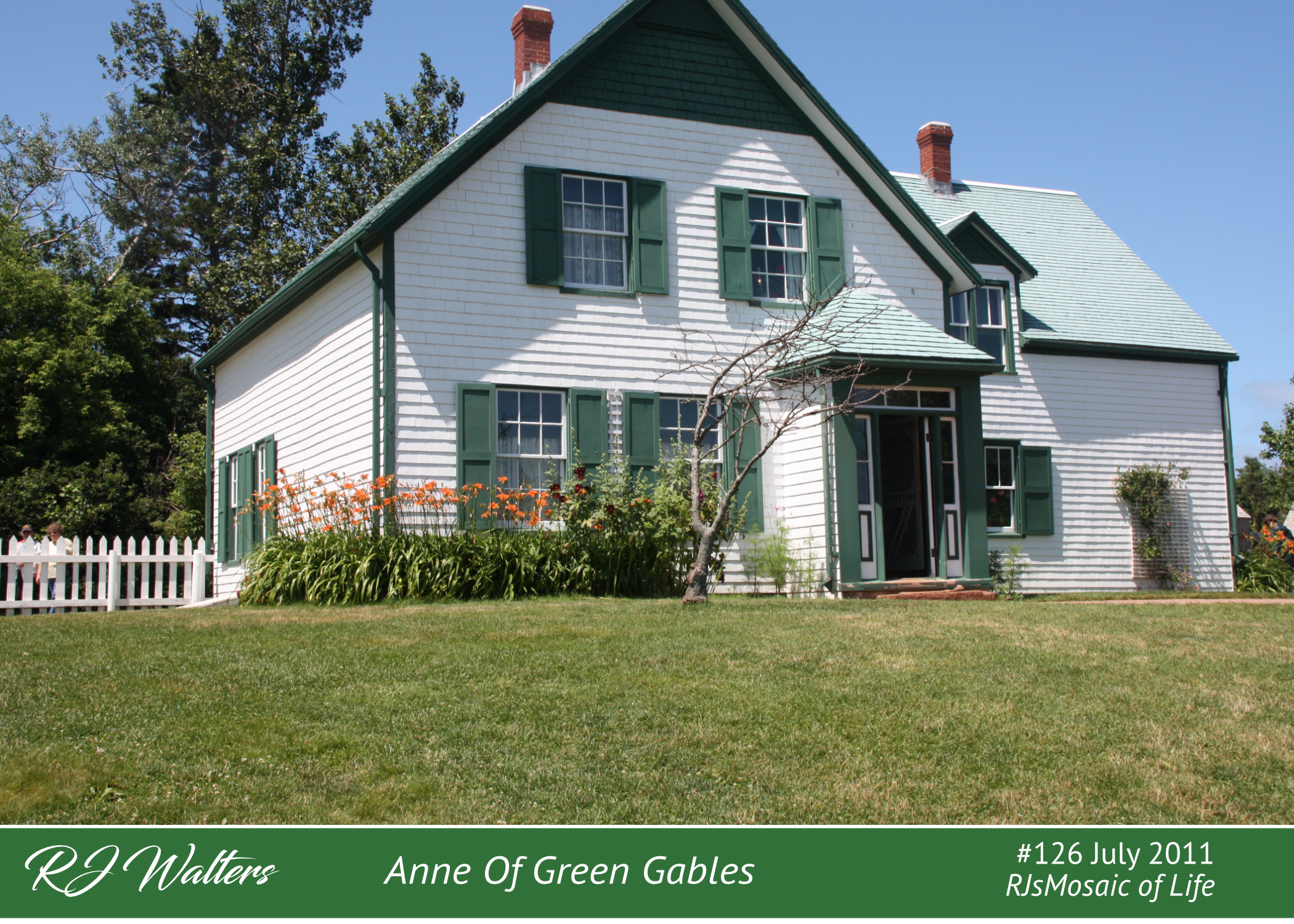
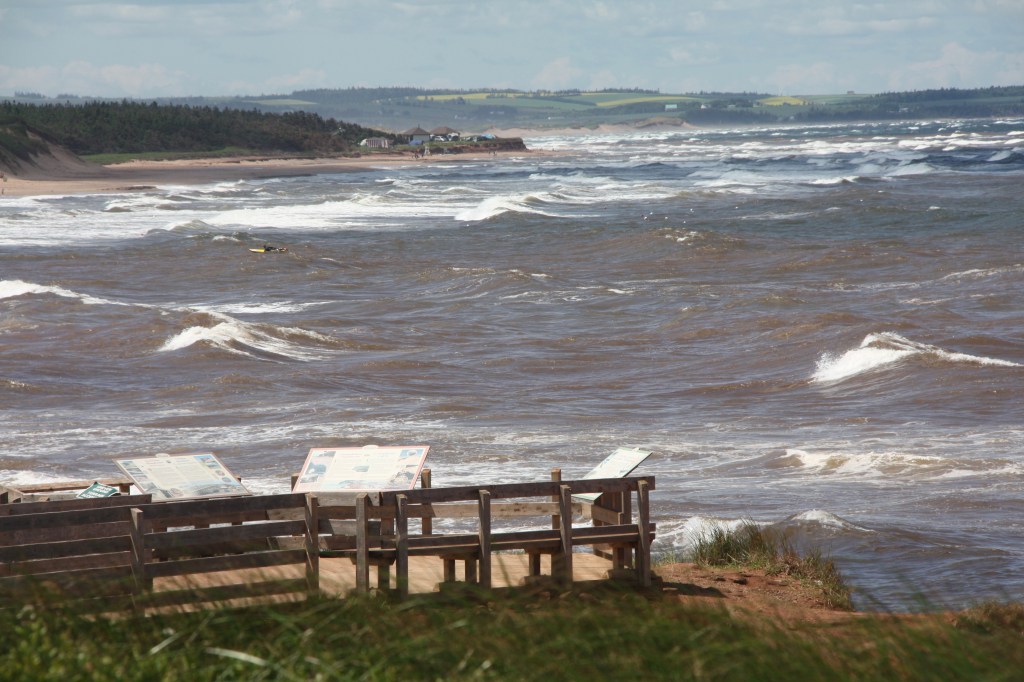
One of my favorite parts of my 2011 month-long trip through Eastern Canada was Nova Scotia, and Prince Edward Island (PEI). They were full of history, beauty, and good food. Anne of Green Gables has always been one of my favorite stories. It is a fictitious story about a young orphan who is mistakenly sent to live with an aging brother and sister on Prince Edward Island in the late 1800s. The heroine, Anne Shirley, is a red-haired, freckle-faced girl full of imagination and spirit.
I have always been for the underdog and especially with those who seem to live in a world of their own. I think I have seen three remakes of Anne of Green Gables over the years, and loved each one.
PEI is simply a beautiful place and has the best mussels I have ever tasted. I ate three servings of them at one dinner during our visit there. Unfortunately, my wife got sick while we were touring the area, and we were forced to leave early. I was hoping to get back to PEI again, but unfortunately that has likely passed.
Another part of this trip I will be talking about soon is the Citadel and a couple of other places in Nova Scotia
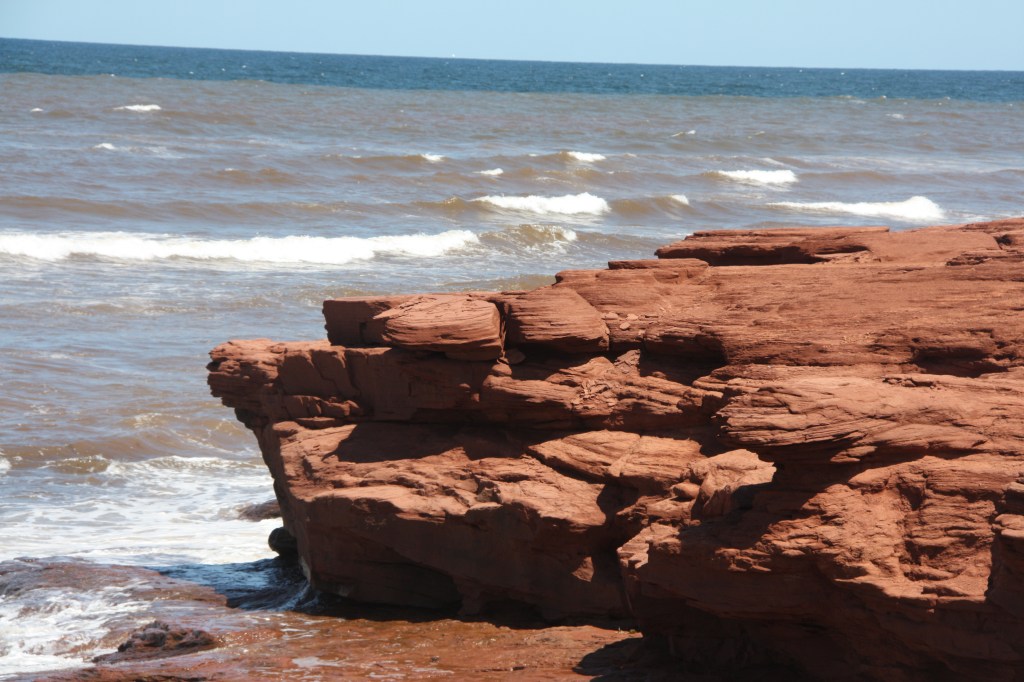
To close out this post, I want to give you a couple of pictures of PEI.
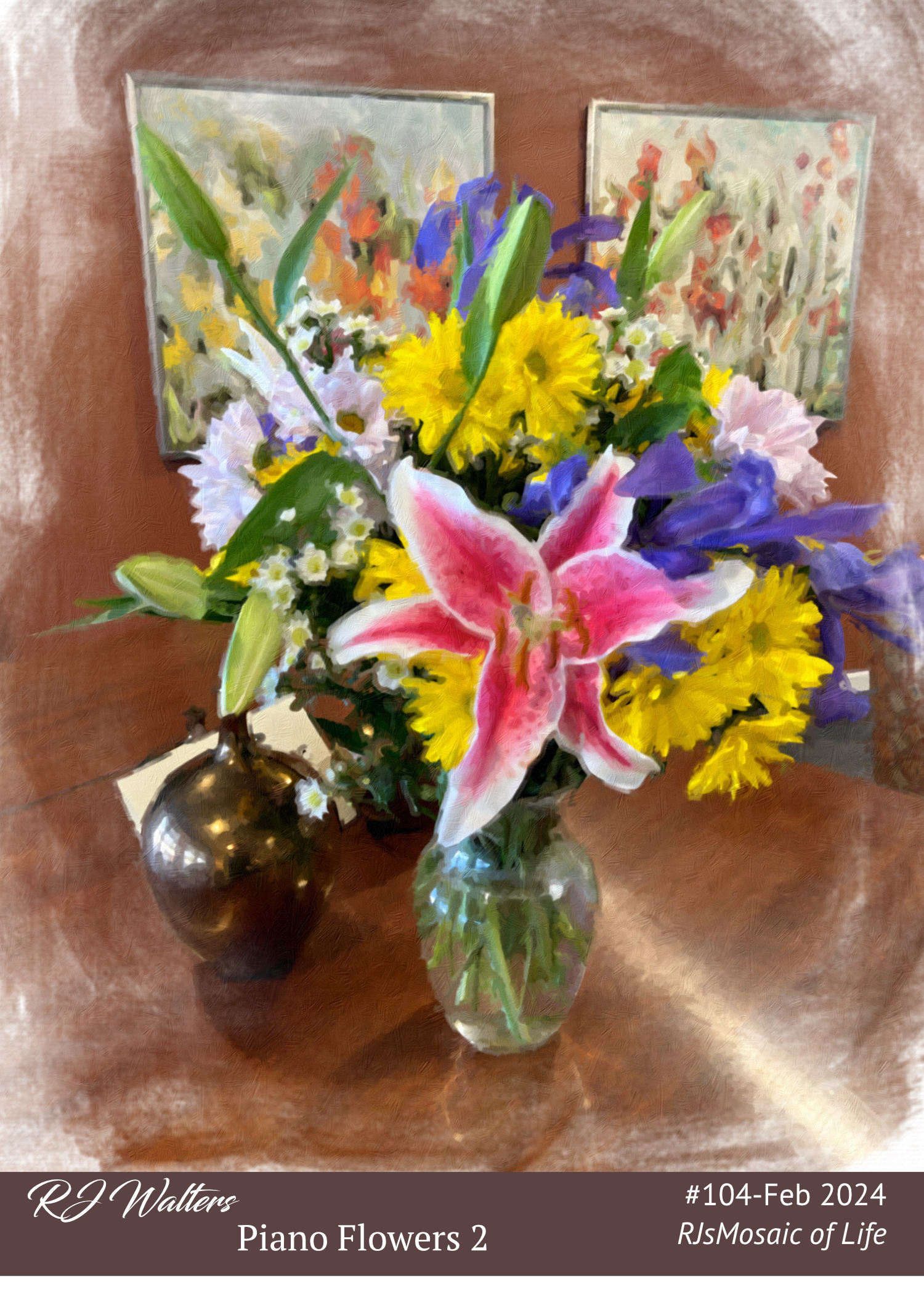
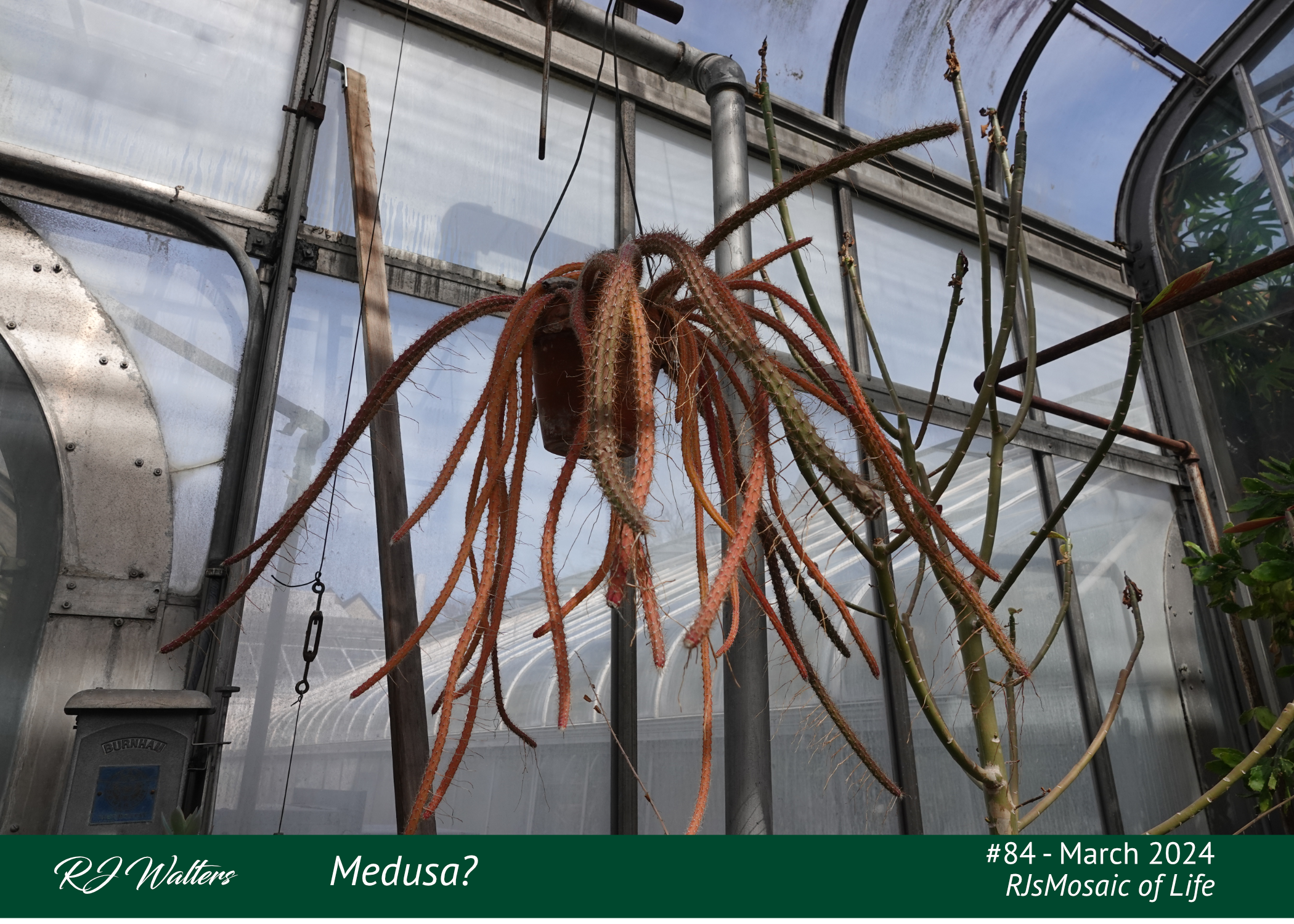
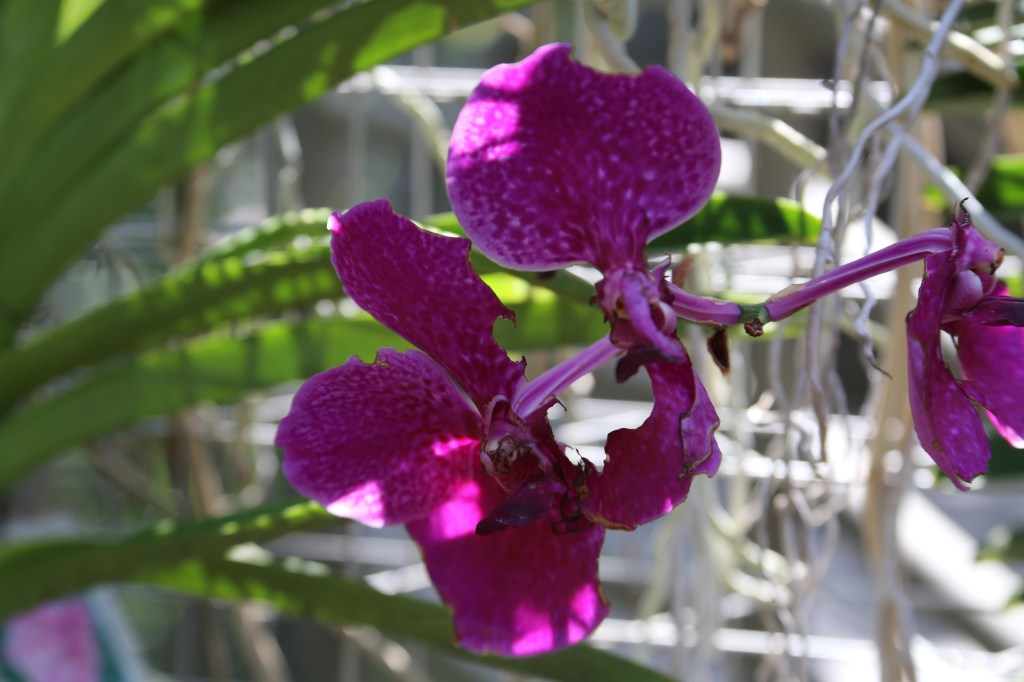
I am still enjoying all the photos I took from my March trip to an Indiana University greenhouse. There was such a variety of plants there. Even though I have seriously been taking photos of flowers and such, I haven’t really done much studying to know the names and varieties. I think I kinda just enjoy the artsy side of this new hobby. They do make some interesting mosaics, don’t they?
I don’t know if the above plant is some sort of Medusa or if it is just dead? Either way is just fine with me. BTW… I purposely took the pic with all the infrastructure in the background. That shows that it is a working greenhouse. I like that.
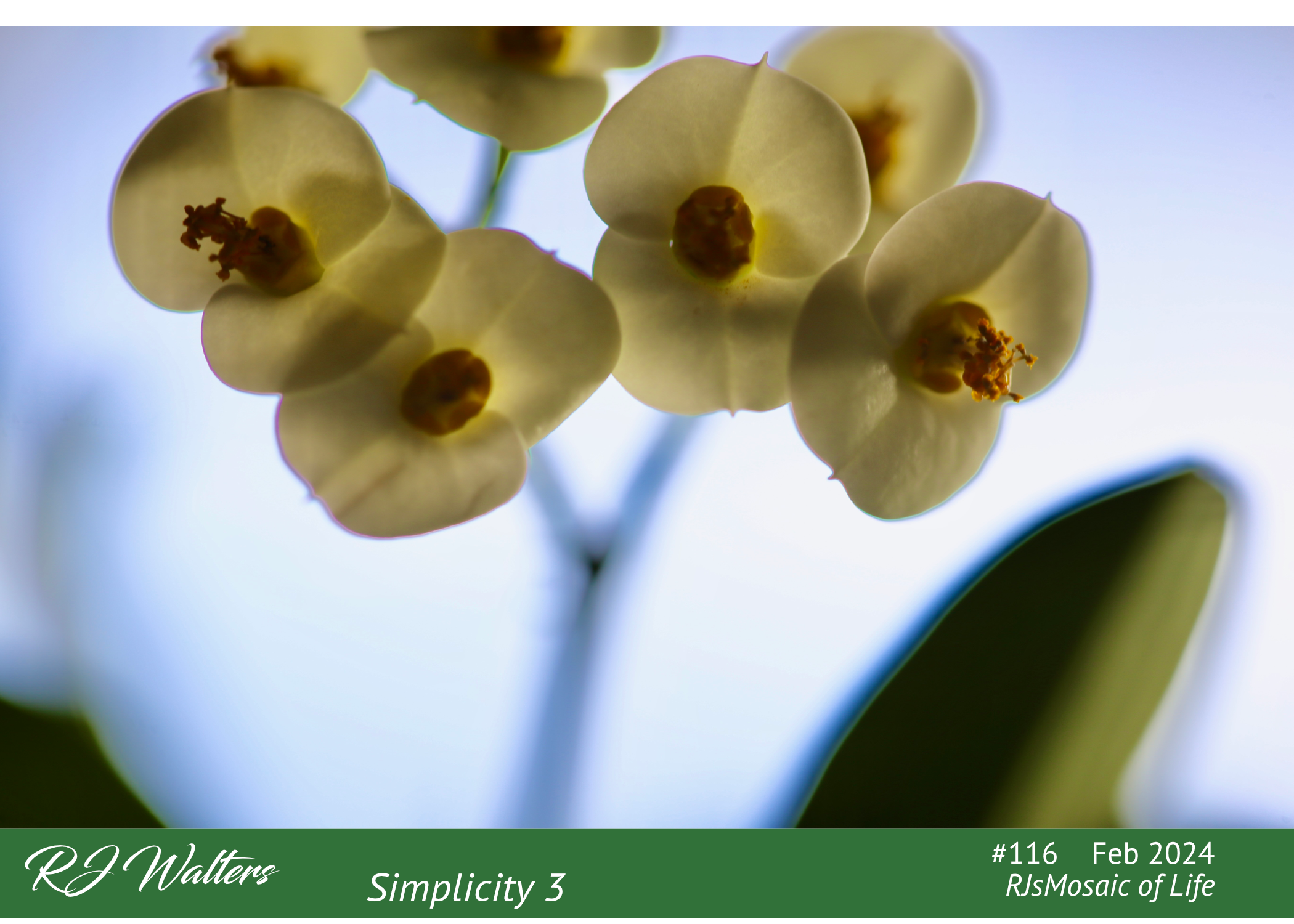
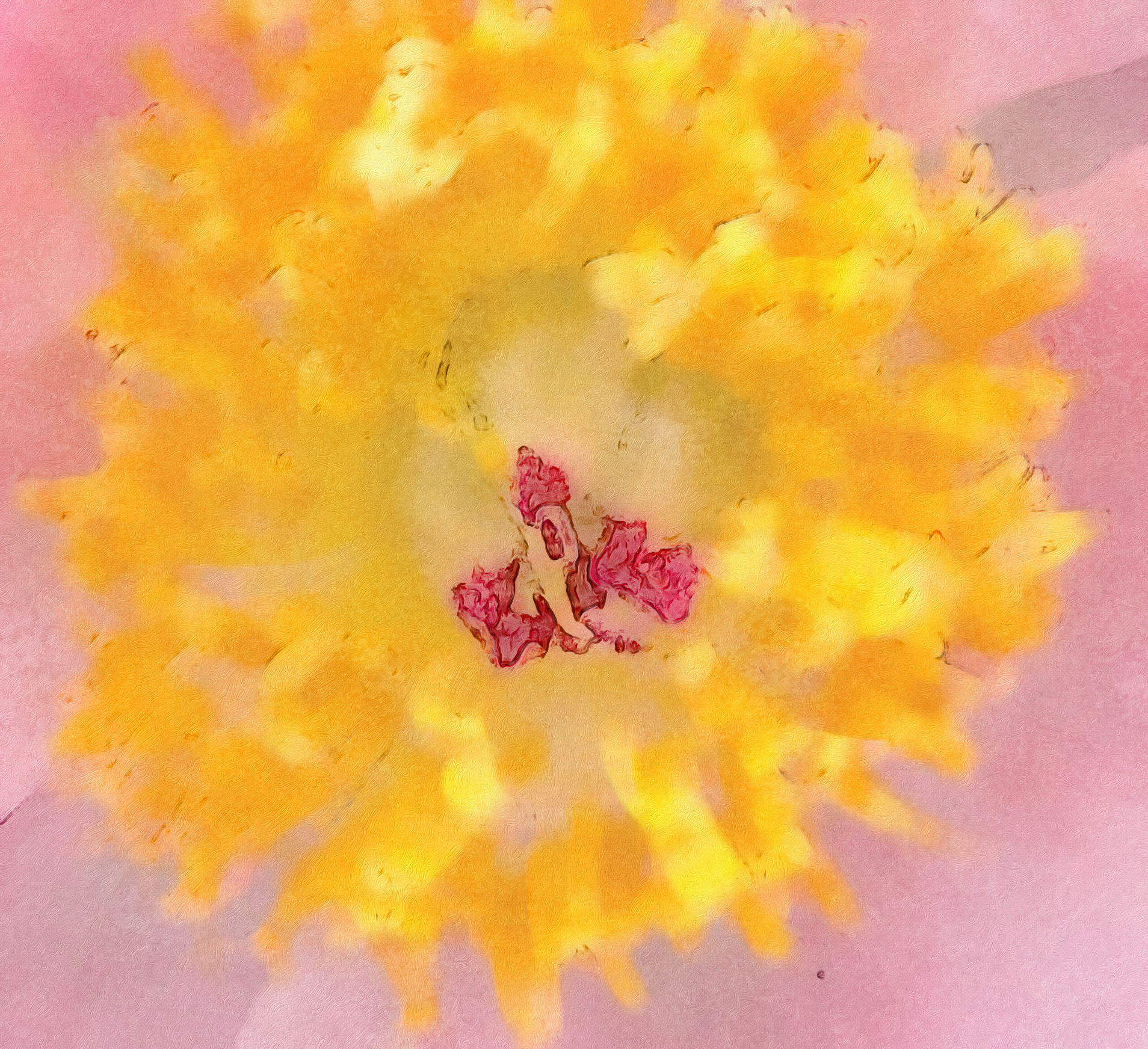
I am coming to believe that sometimes the most beautiful things are the simplest and smallest things. The subtle colors above draw me in
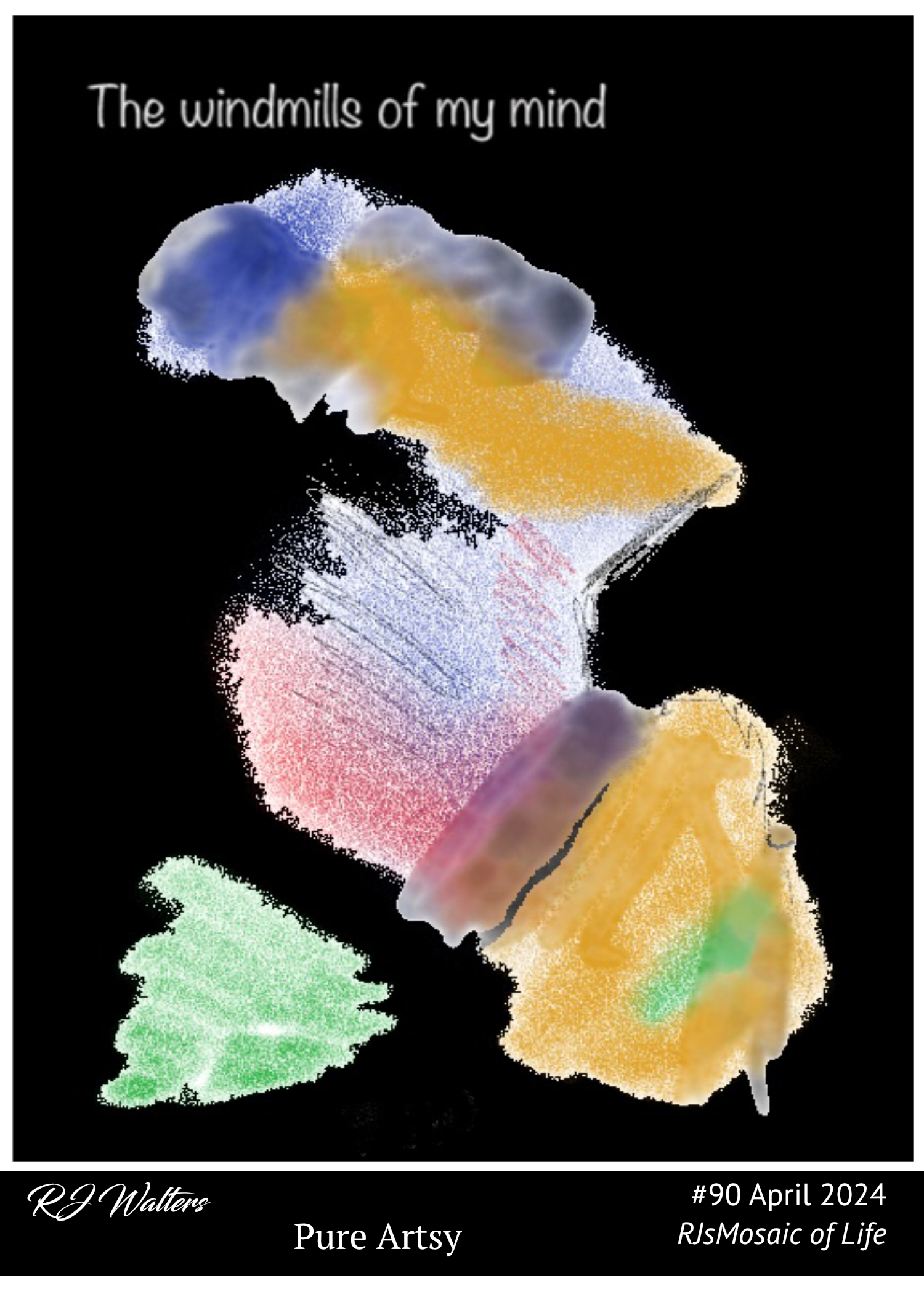
I have been in a playful mood lately, or maybe you could call it infantile creative mood. I have been on a serious search for Artsy tools and so far have found ten good ones. This mosaic was made with one of them. I tried to clear my mind of anything of this world and just go crazy with my iPad pen. When I was done it looked like I was trying to draw a windmill. I have been watching House Hunters International quite a bit lately, so maybe that had something to do with it.
It was fun just completely letting go. I have got to do that more often.
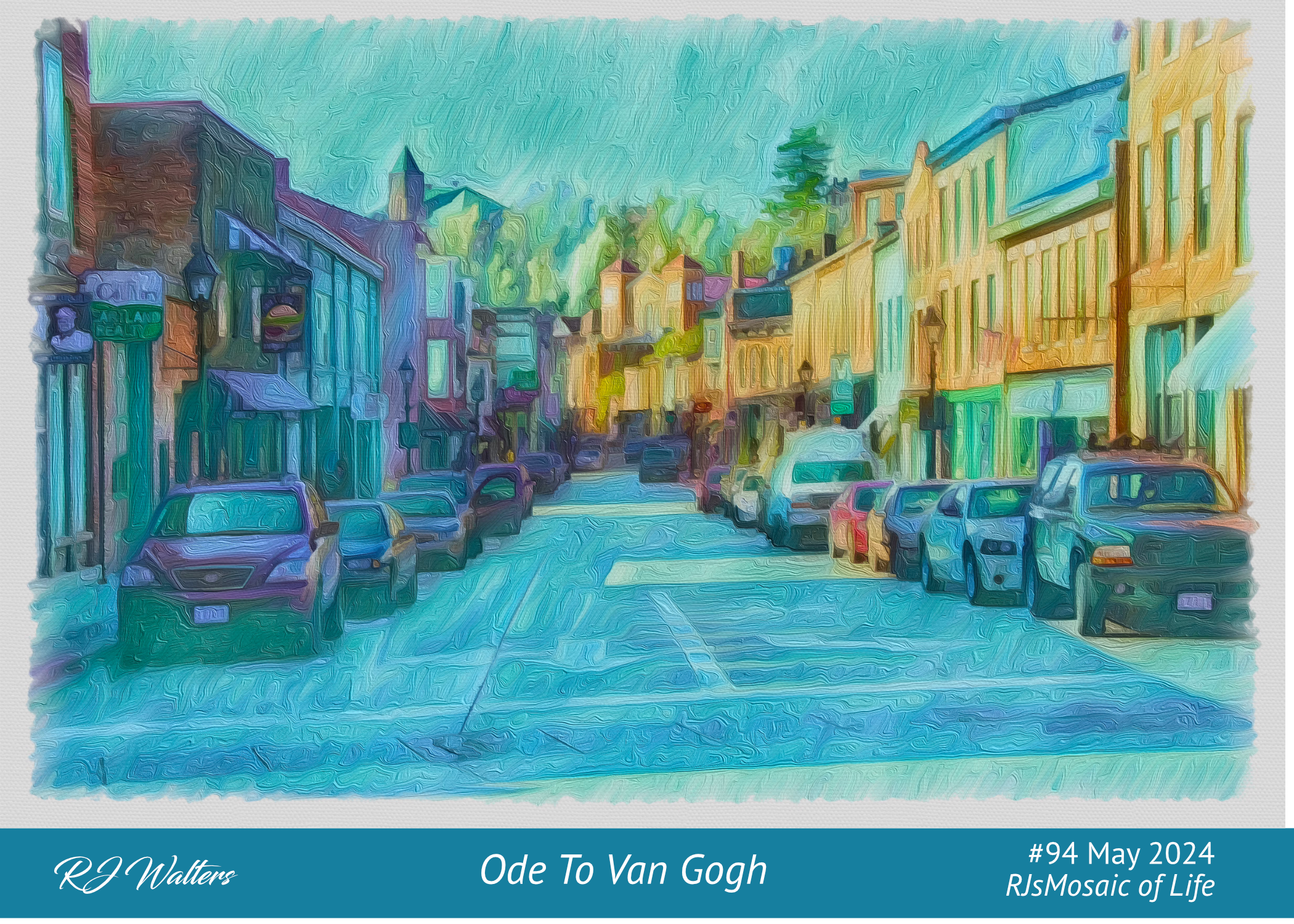
For this mosaic, I want to talk a little about AI (artificial intelligence) and how it relates to “My Mind’s Eye”. I am a techie, but even I am getting a little disturbed about the constant presence of AI in my life. Maybe the most disturbing thing is AI is that it is becoming more and more dominant as the days and months go by. I realize that this is new stuff that will eventually settle down to some established state, but right now it just seems too pervasive.
Some say that AI will replace artists, but, I kind of have a different view of the matter.
Yes, there are now apps that can mimic those of past artists. I used one of those apps on the mosaic above to give my photograph of a Galena Illinois street a Van Gogh-ish type flavor. I had an image in my mind’s eye of what I wanted it to look like. The morphing app did a pretty good job of meeting my expectations.
That got me to thinking, is AI just another tool in the artist’s palette? In the old days, meaning 600 years ago, the only way to produce what was in the artist mind’s eye was pigmented oils of various hues. It turns out that many of those pigments proved to be very toxic, and I imagine, caused premature death for the artist. Then about 150 years ago someone invented photographs. That technology was adamantly resisted by the artists of the day, but now is considered an art form of its own. Will AI enhancement of photos eventually prove to be the same. I kinda think so.
To me, art is something that simply fulfills what the mind’s eye sees.
Does it matter if that is done with messy toxic paint of AI based apps? But, getting to the crux of the matter, AI is not a creative process, but instead it just mimics other’s creativity. So, I don’t think the analog artist is threatened that much.
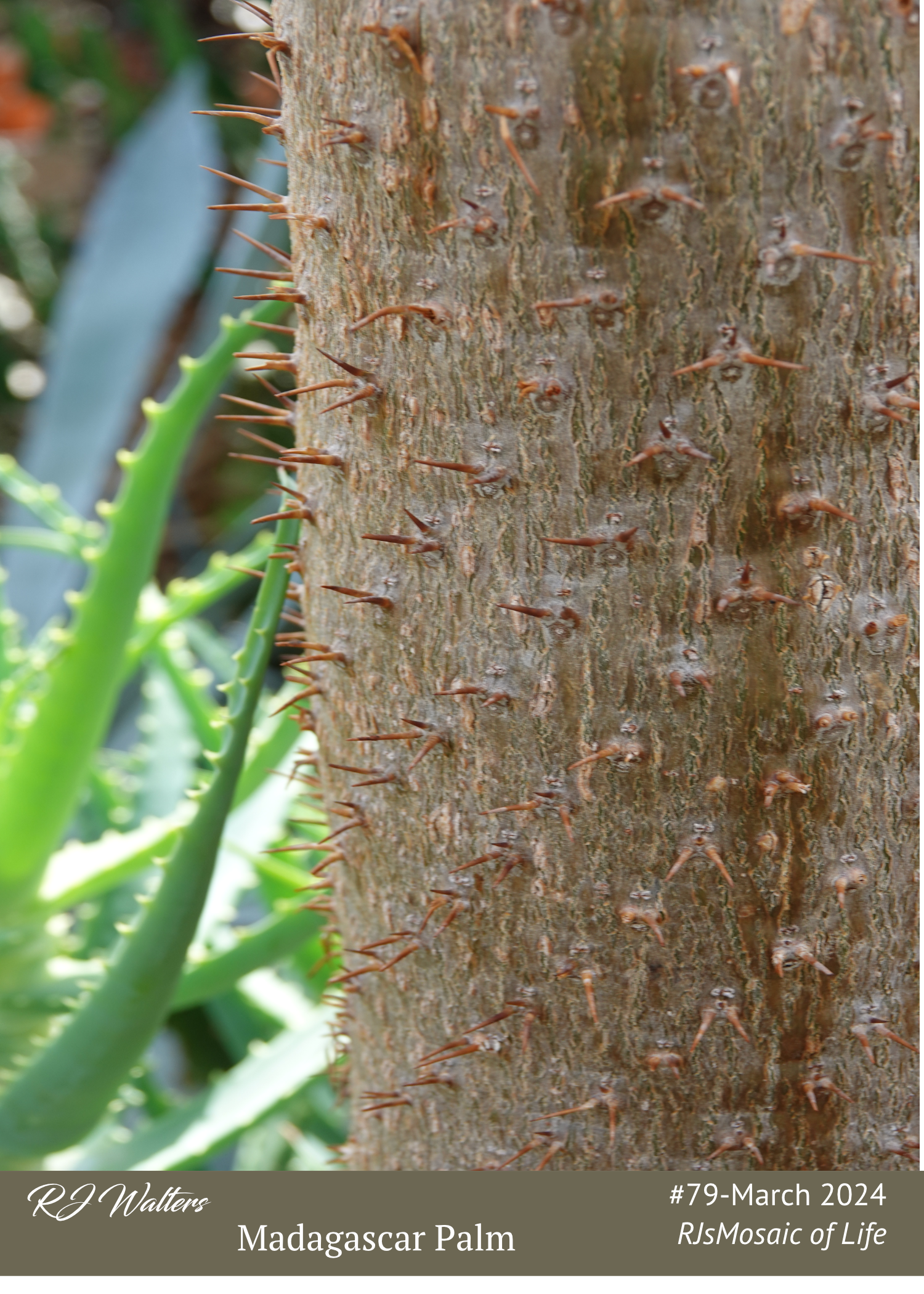
Who knew that full-size trees also had thorns. This picture was taken at the Indiana University Biology Greenhouse. The tree was about a foot in diameter and probably 20 feet tall.
I spent the last weekend organizing my iPhoto Library so that it’s easier to find what I want here at RJsCorner. Putting 18,000 photos into about 20 different boxes is no small challenge, but due to my Aspie traits, I am up to it.
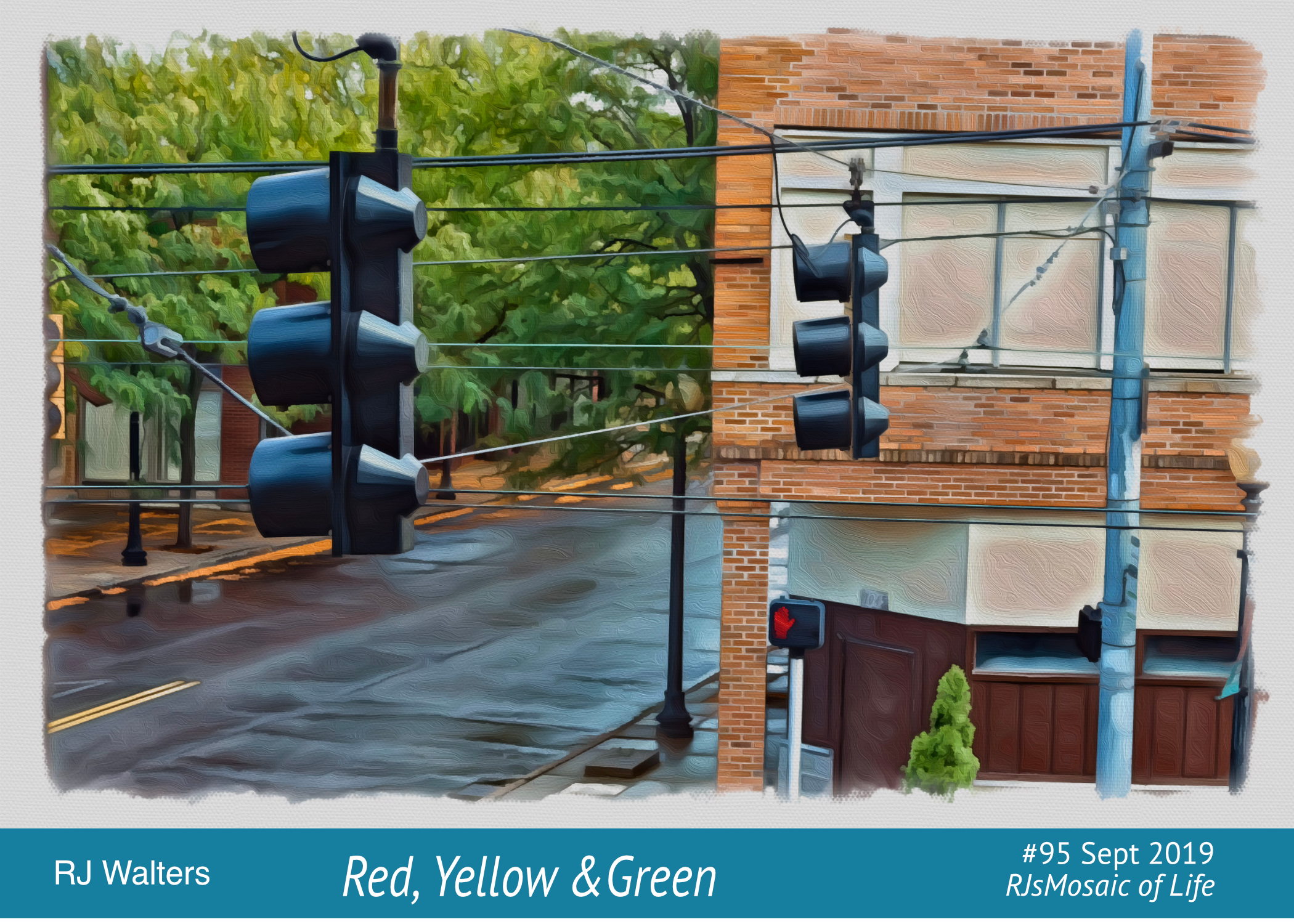
During all this work I came to the realization that I have an affinity towards stoplights. The art and structure, especially this one, fascinates me. This picture was taken while I was visiting one of the Wright Brother’s sites in Dayton Ohio. There is so much to see in Dayton, I will have to get back for another visit.
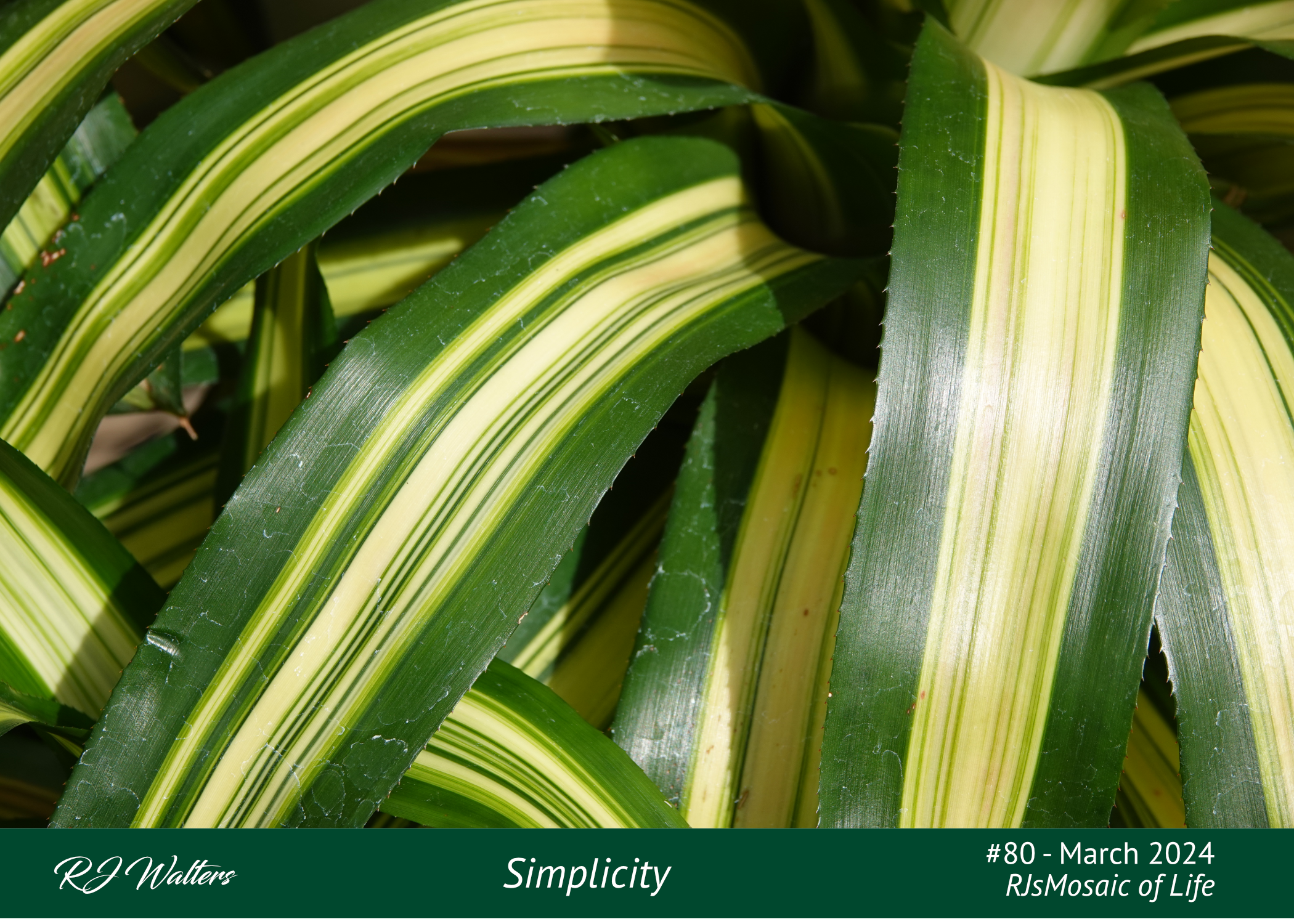
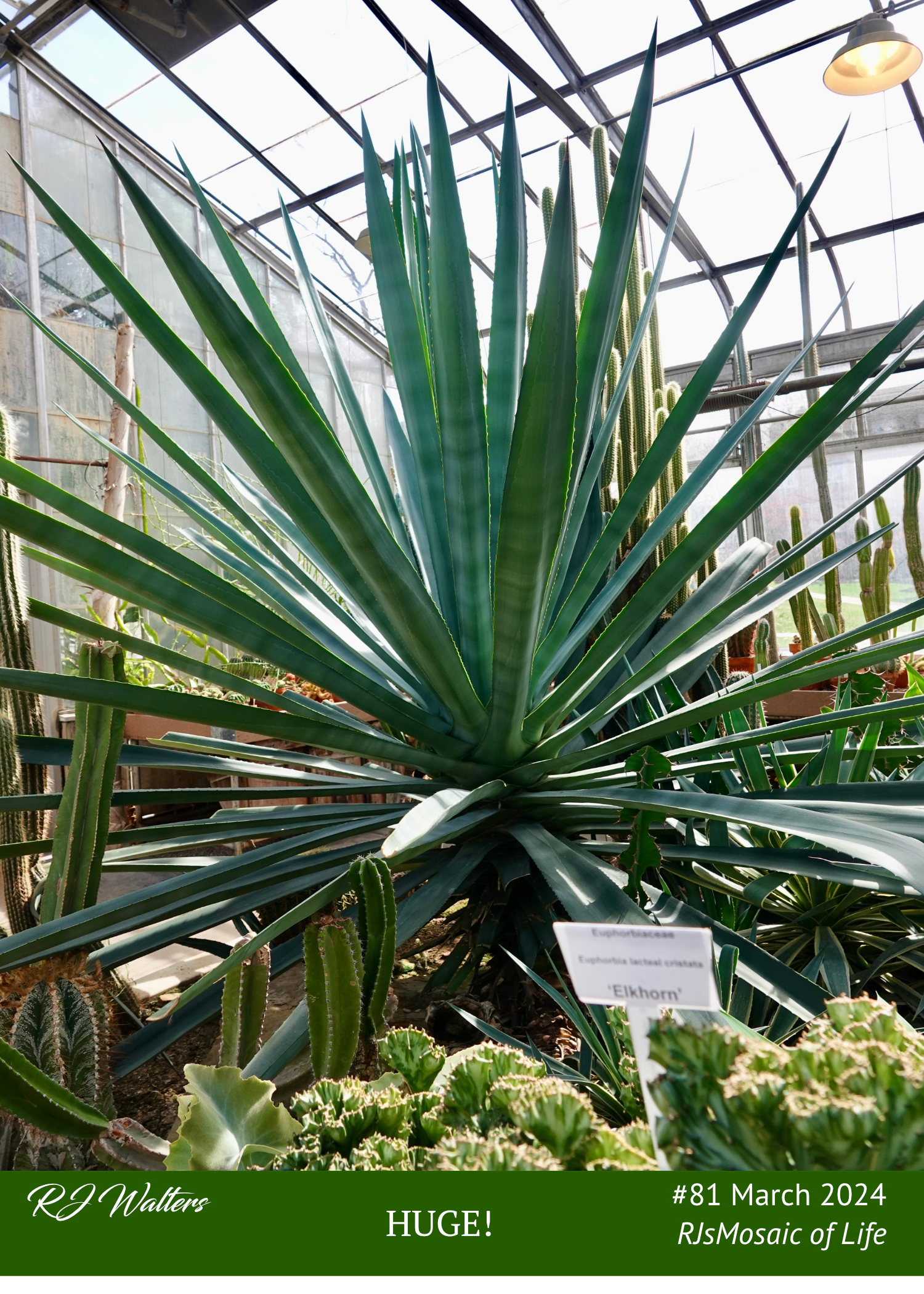
Here is another post of a huge plant I found at the Indiana University Biology Dept greenhouse. This guy was crowding the 12 ft ceiling. The “Elkhorn” label was for a plant in the foreground, not this one. I’m going to have to go back and find this guy’s name
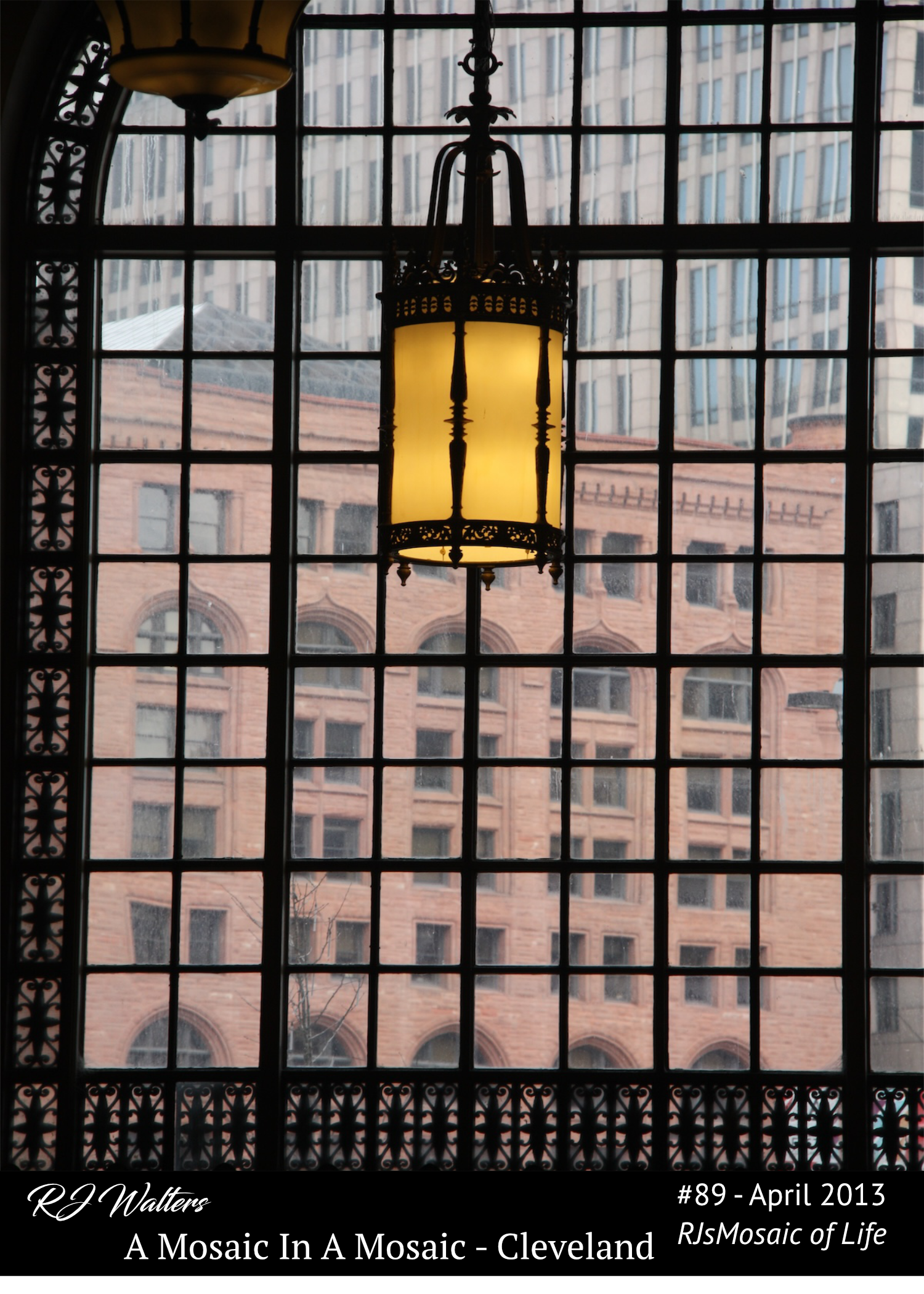
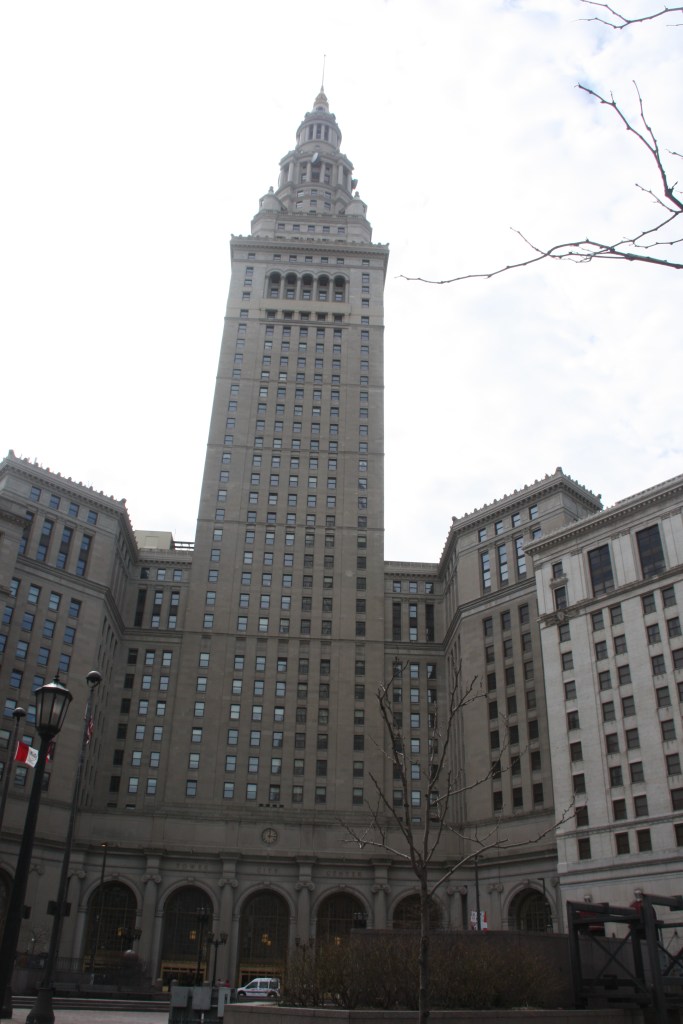
I think this is one of my most artsy photographs I have taken. It is kinda in the vain of my many reflection pictures. But, this one was taken through a large window in the Terminal Tower building lobby in Cleveland, Ohio.
Below is the exterior view of the building.
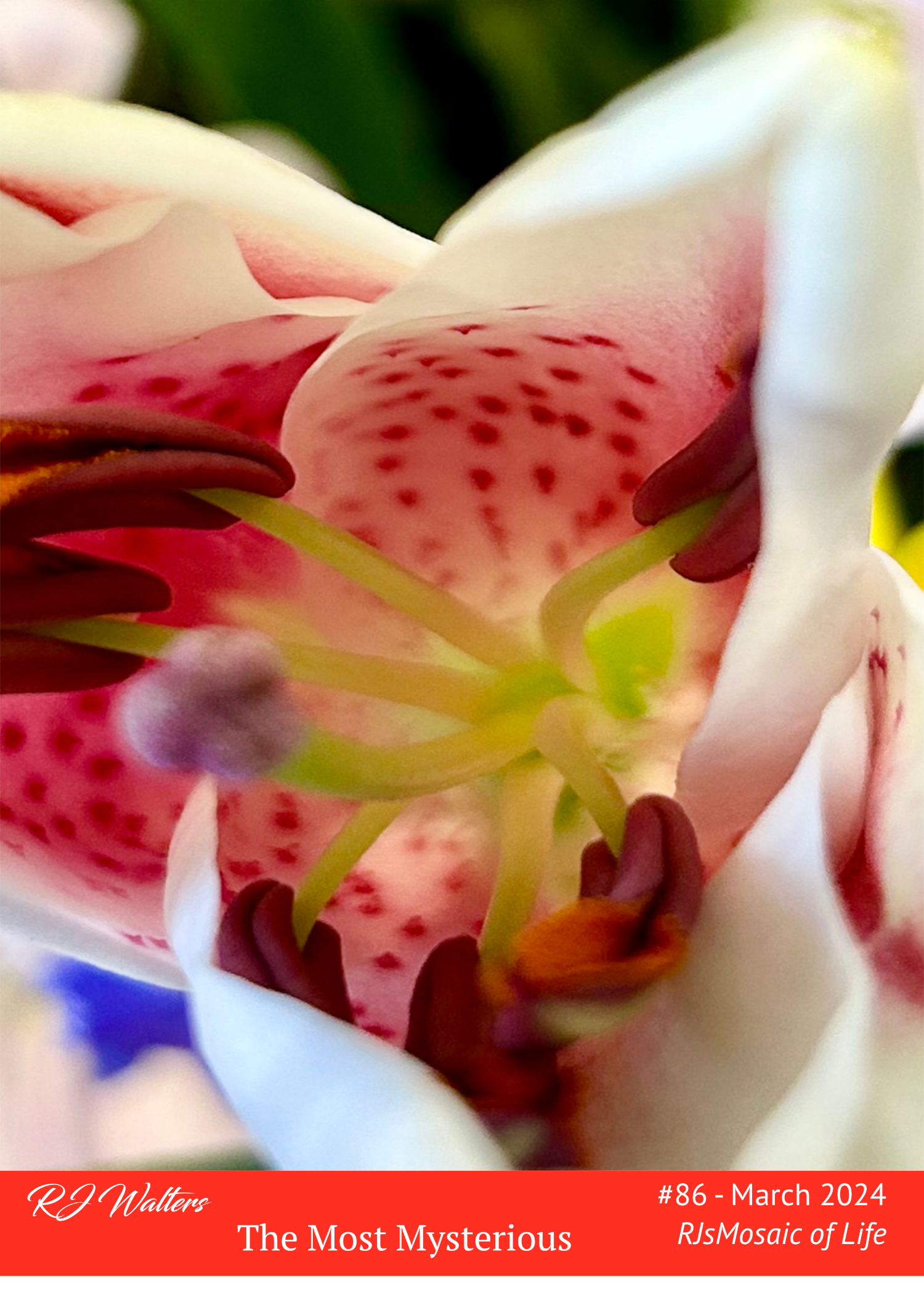
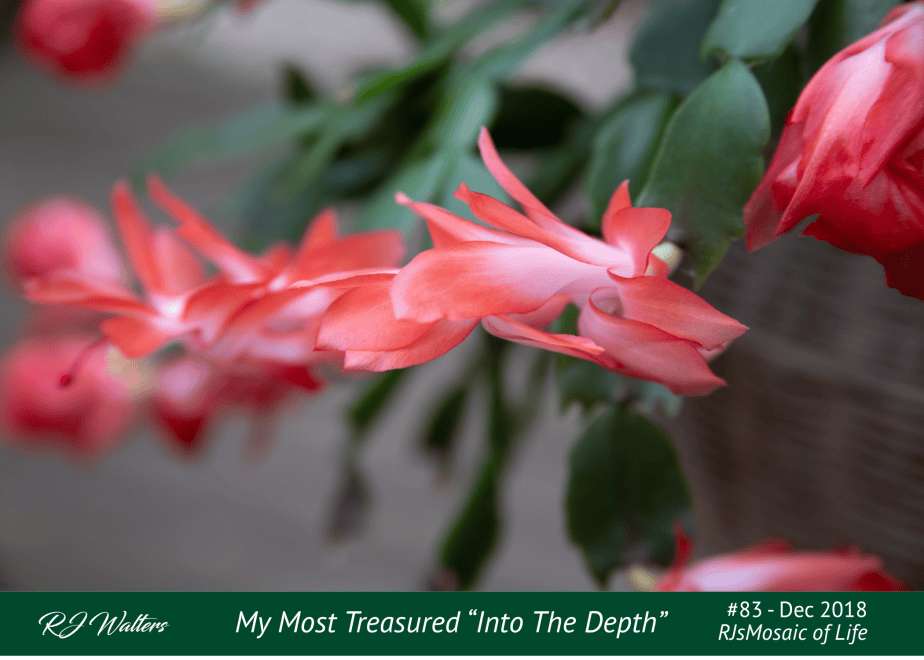
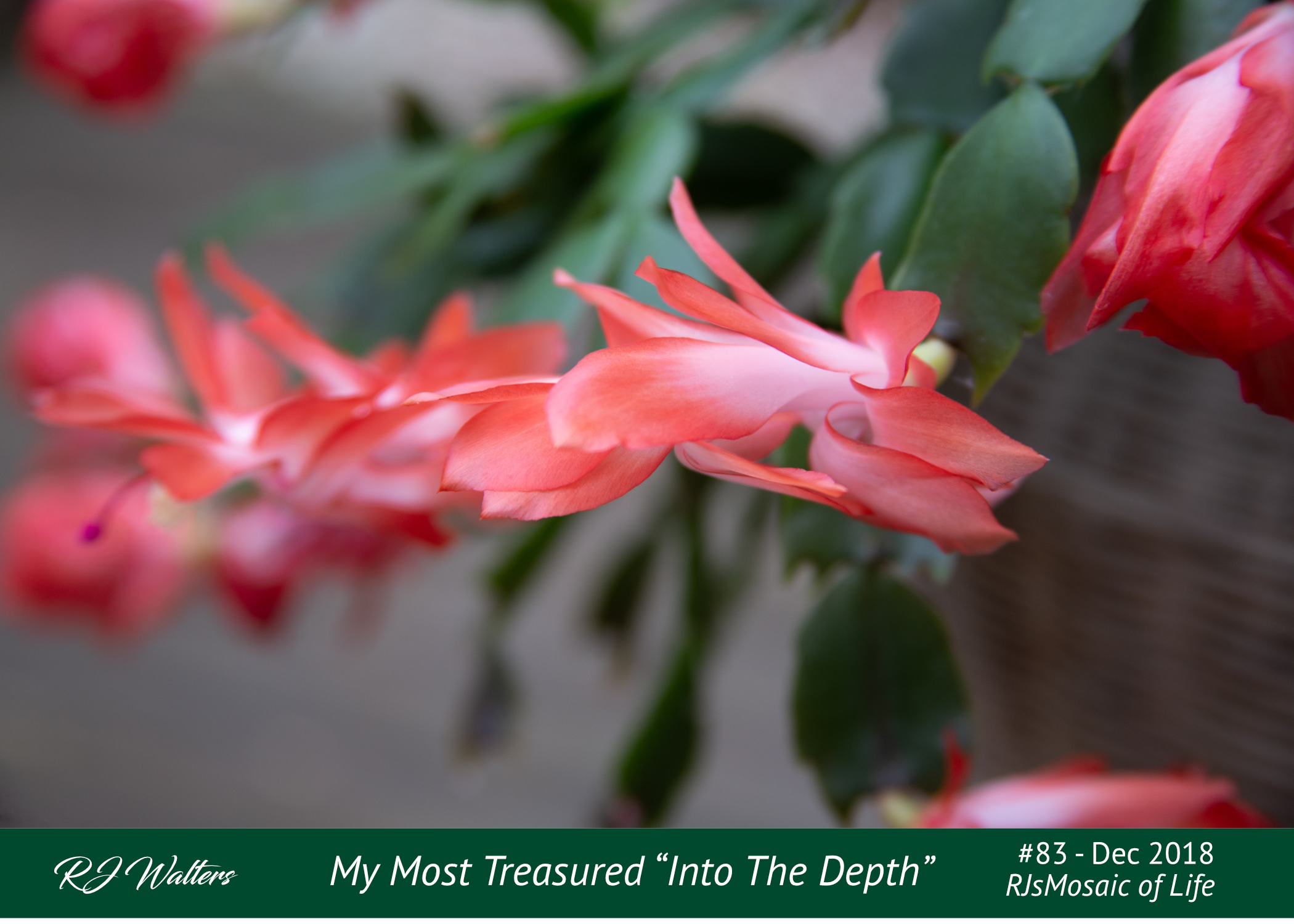
Just when I think I have photographed the most complex “Into The Depth” flower, another one come to take the “Most” title. If I were to make an abstract painting that described the complexity of my mind, it would probably closely resemble this picture.
Just so you know, this picture was not modified in the least from when it was taken.
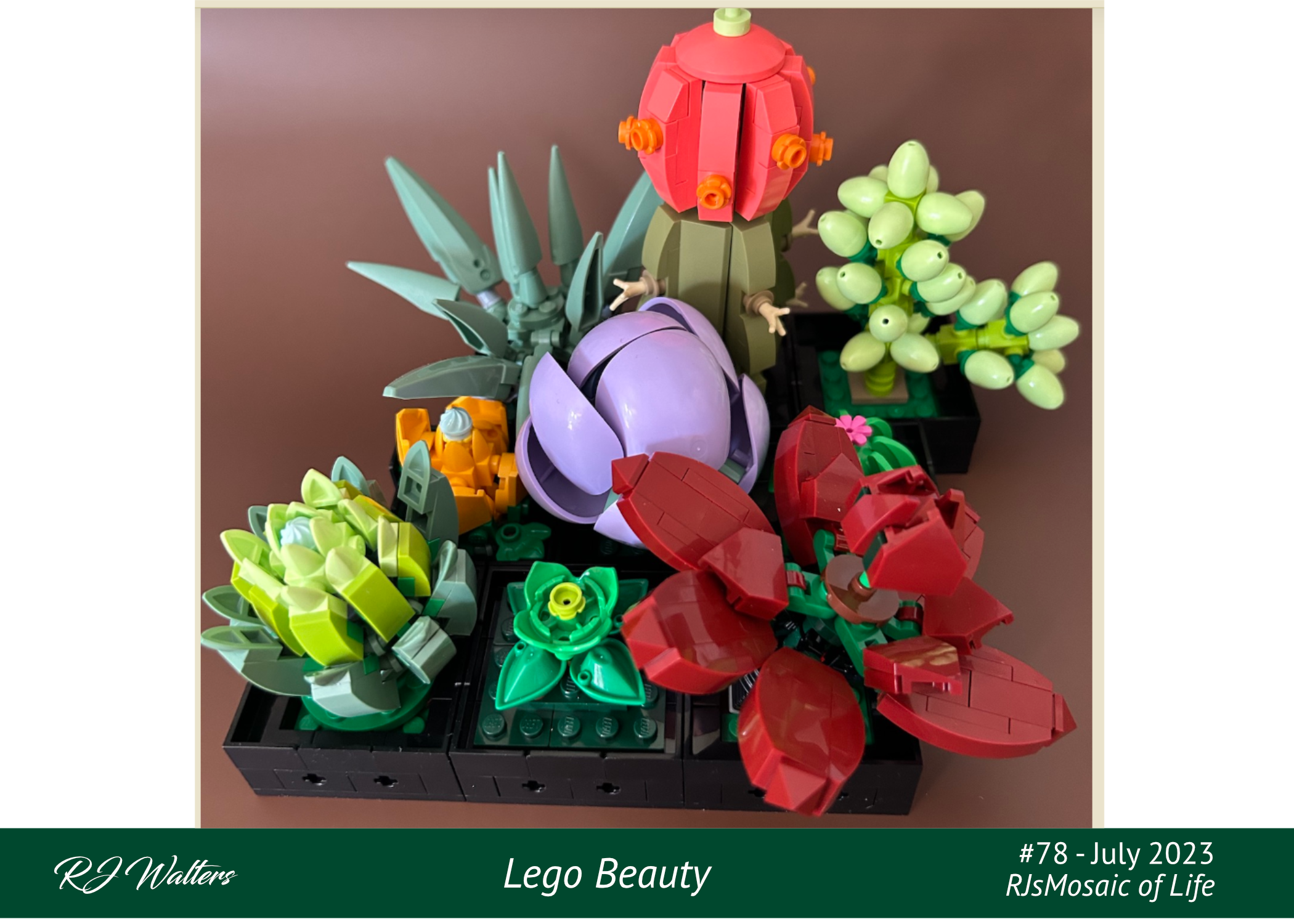
I have found out that Lego is not just a bunch of blocks, but instead it is a creation yet to be discovered. It took about 4 hours to build this 771 piece LEGO Icon Succulents. It was a very peaceful 4 hours. Yes, I know this is a “kit” that has probably been sold to thousands of different people. But this is just what I needed almost a year ago to finally push me in a different direction. It was the beginning of the process, and I’m certainly glad it happened.
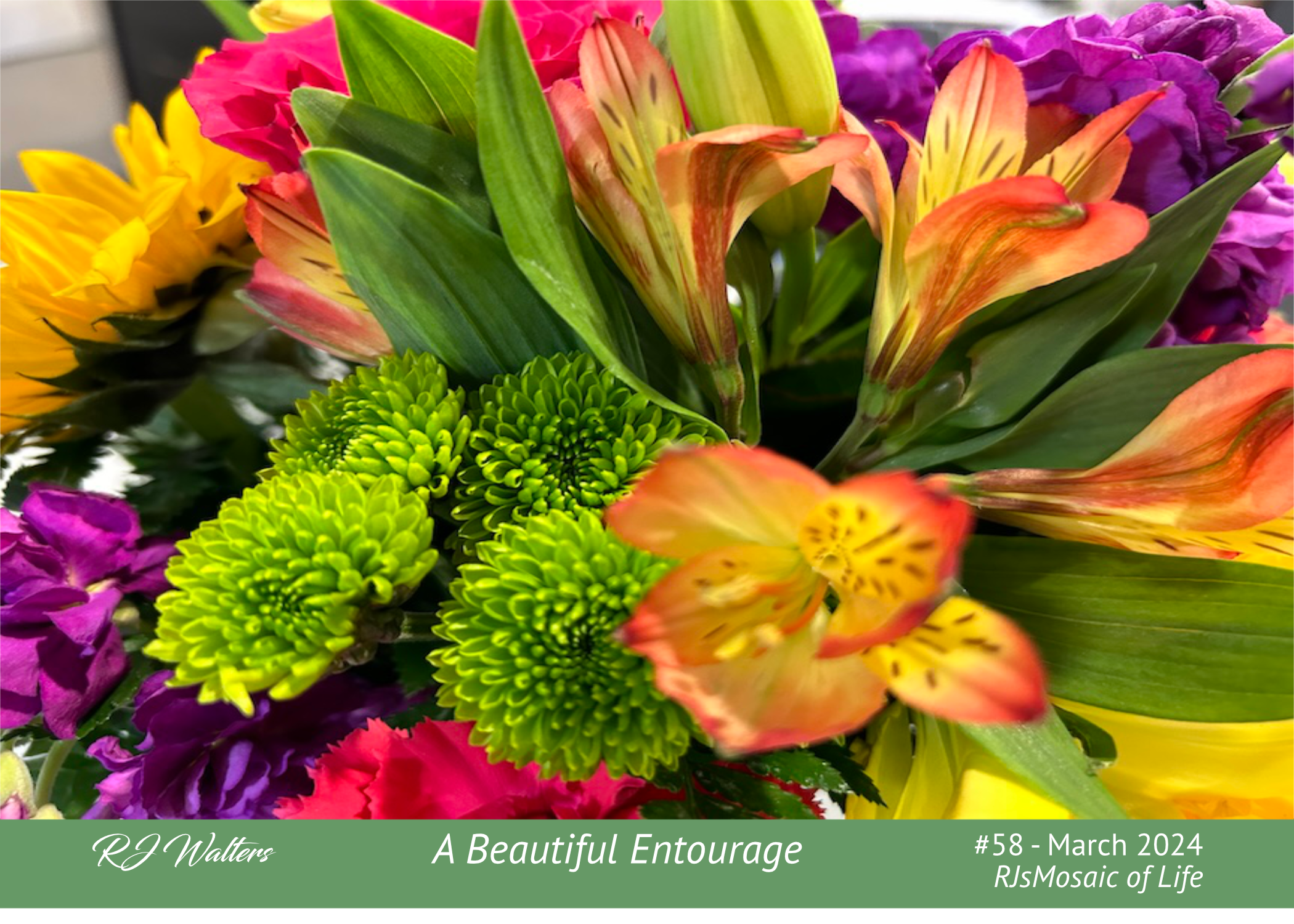
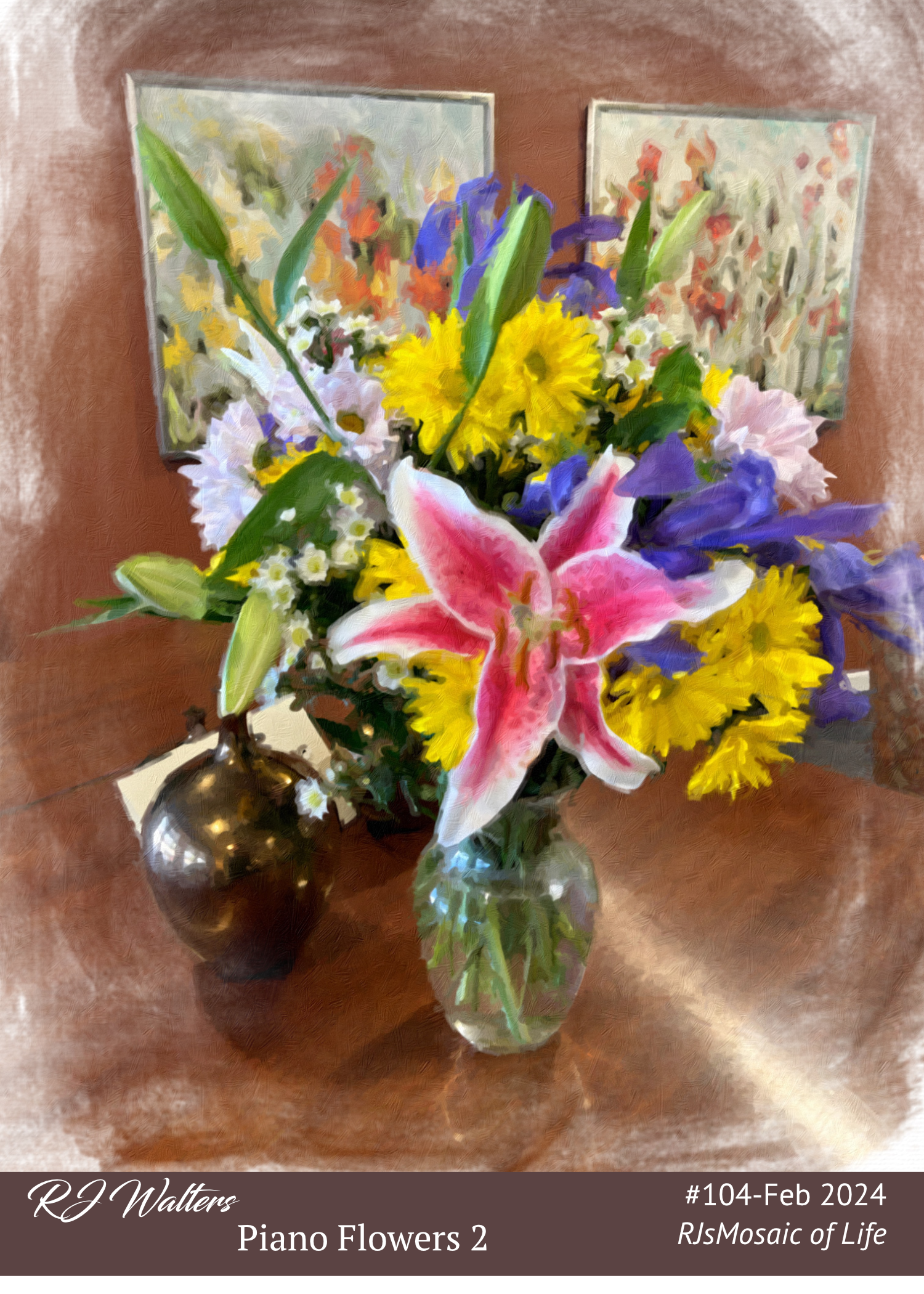
These flowers remind me of something entirely different. What makes this bouquet so beautiful is the variety of individual plants that make it up. Yes, a dozen roses tell a story usually involving love, but a beautiful variety of flowers such as above shows us that diversity of life is where all the beauty resides.
Going off on a related tangent, streaming video makes it possible to go back in time to revisit all the great TV shows of the past. As I mentioned a few posts ago, I am currently watching Northern Exposure, which ran from 1990 to 1995. With all these old classics now available again, I have discovered that the TV shows I rate as the best usually have a very diverse cast, and they all seem to get along so well. That is so different from what I see in my daily life.
Being a deaf Aspie, I have two strikes against me, at least as described by the “normal” world (of which there is no such thing). I am stuck between two worlds, and neither seem to be able to see me as I am. There is the deaf world and the hearing world, and there is the neurodiverse world and the neurotypical world. Since being a deaf Aspie makes me a 1 in 160,000 sort of thing is just a normal occurrence now. But that’s OK. I am finally comfortable with who I am and no longer feel obliged to fit into the mold of those who see me as a “strange bird”.
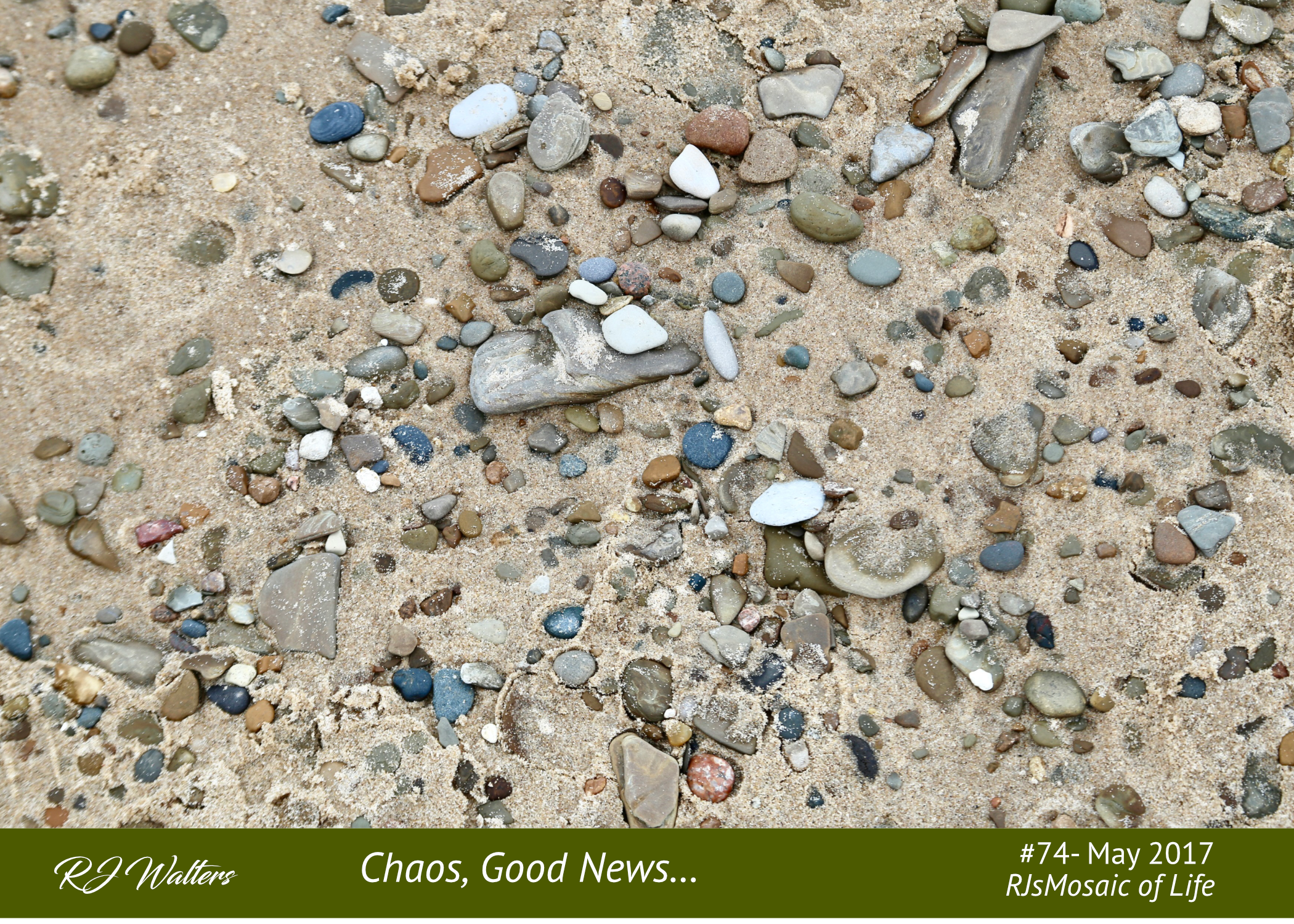
This mosaic was taken on the shores of the Great Lakes. Indiana only has a minute segment of shoreline, but what it has is beautiful indeed. It is at the very southern end of a 317-mile Lake Michigan. Most of the weather in this part of the country comes from Canada, so I suppose that is the reason that many of the rocks and pebbles accumulate at the southern end. To me, this mosaic kinda looks like organized chaos. I especially love the blue rocks scattered among the others.
Whenever I think of the word Chaos I am reminded of one of my favorite SciFi movies called Tron. It is about an inventor who got transported onto the Grid (otherwise known as the Internet today). Everything there was digital in the movie and many of the scenes were impressive, at least considering the movie was made in 1982. “Chaos, Good News” was one of the most remembered quotes from the movie.
Of course, this is not the only SciFi movie I have watched. In fact, I am a junkie when it comes to this genre of entertainment. More on that later.
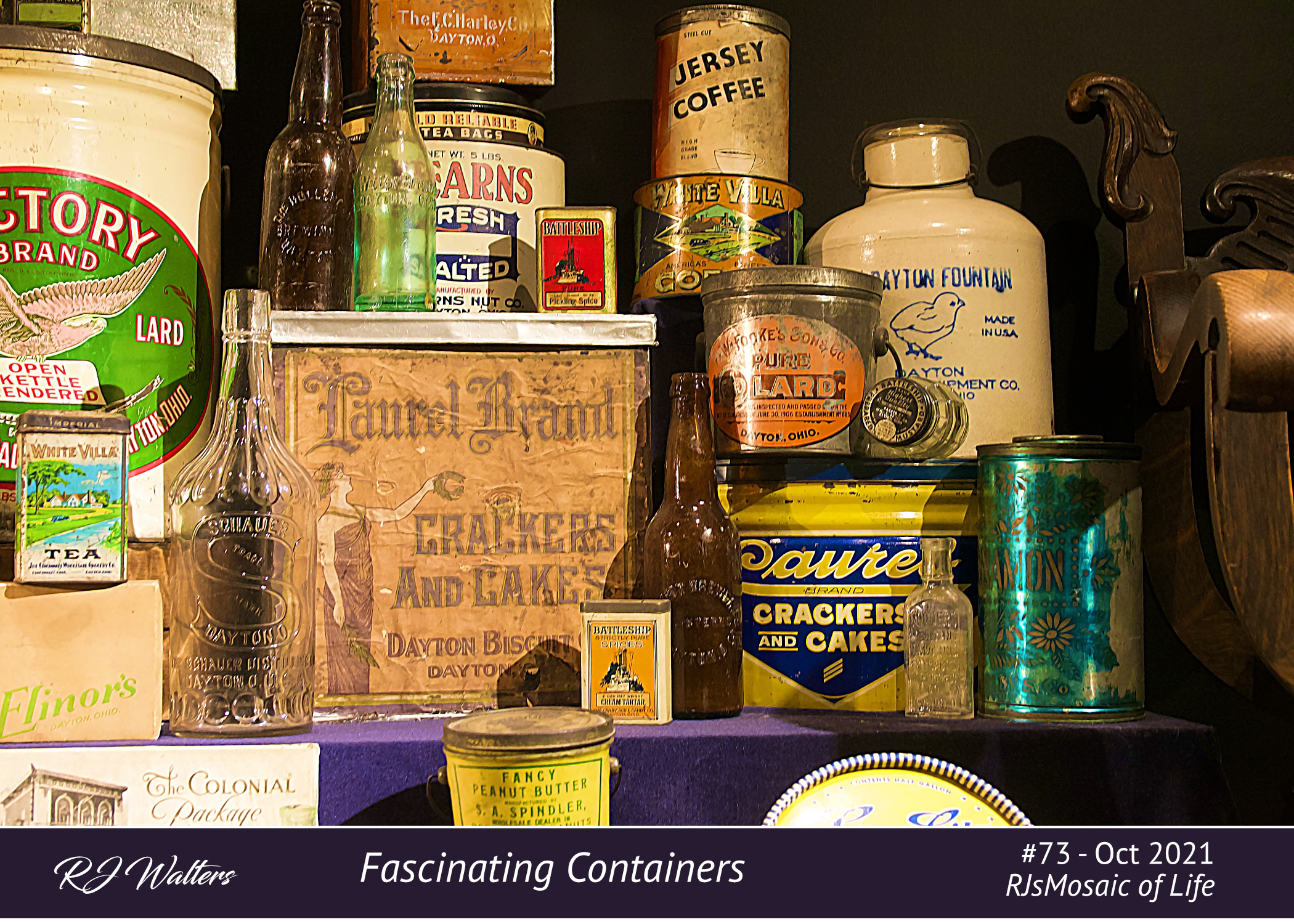
One of my favorite things to look for when I visited local or regional museums were containers. Back in the day before TV commercials, magazines, and such, the primary way to get attention to their products was by creative packaging.
This picture was taken in the Dayton Aviation Heritage National Historical Park. I will give you more details about the park in a future mosaic. For this mosaic, I just what to focus on the containers I found there. Each one tells a story of it’s own.
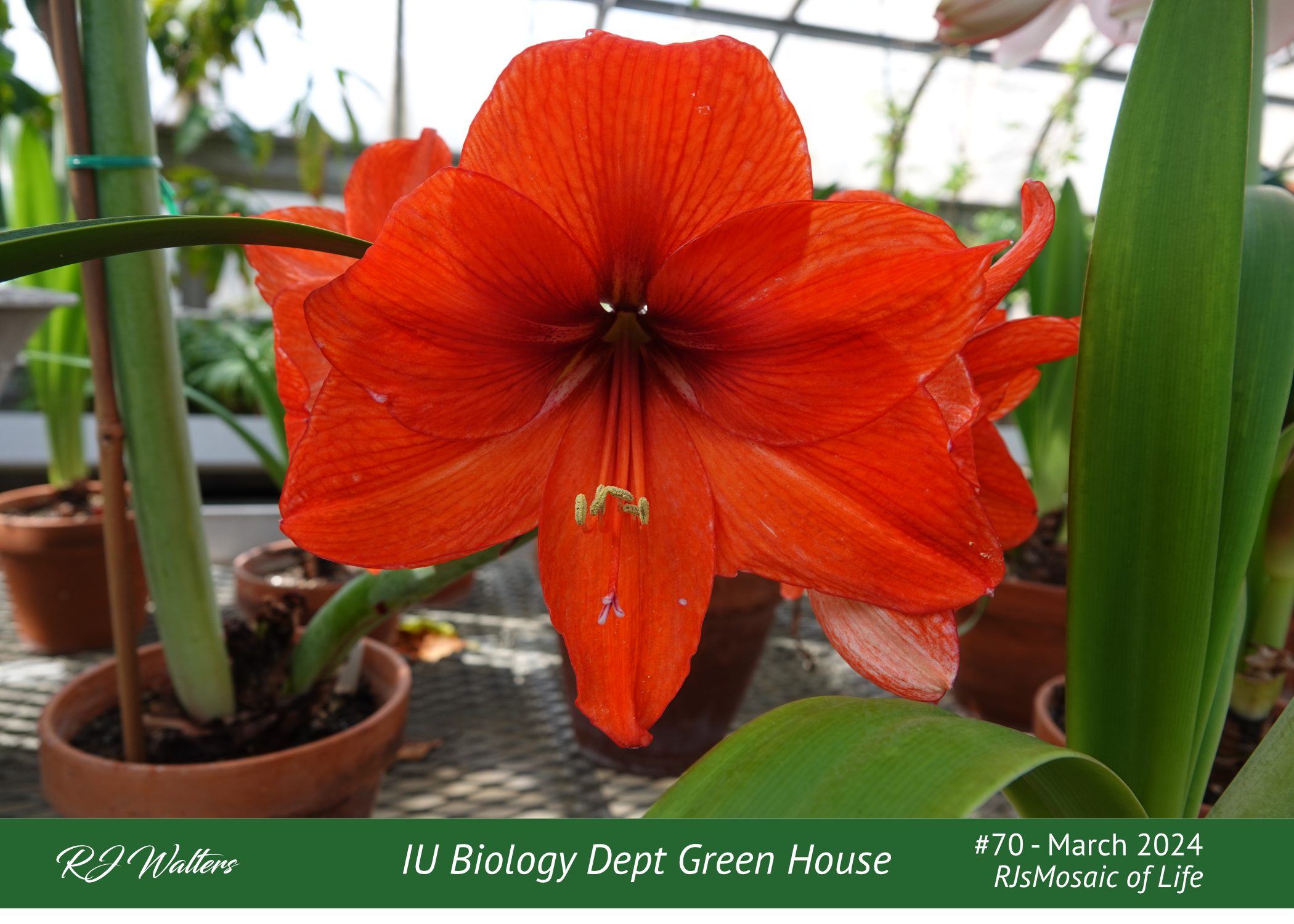
One of the advantages of living in a college town is the number of artsy sources in the community. Last month I visited the IU Biology Dept green house for the first time. I was warned ahead of time that it is a “working” green house, so expect hoses and wet concrete. Most of the flowers were one steel-grated tables, not elaborate presentation as most conservatories are. But, that was perfectly fine with me.
I don’t know when the green house was built, but it was likely 50 or more years old. There were some plants there that were enormous. This mosaic is rightly in the “Into-the-depth” category, but I was also impressed by just how green the leaves were in the surrounding area. And, of course, you can’t miss the green house windows at the top of the picture.
I took over 100 photos that day, so you can expect some more “Into-the-depth” shots in the coming months.
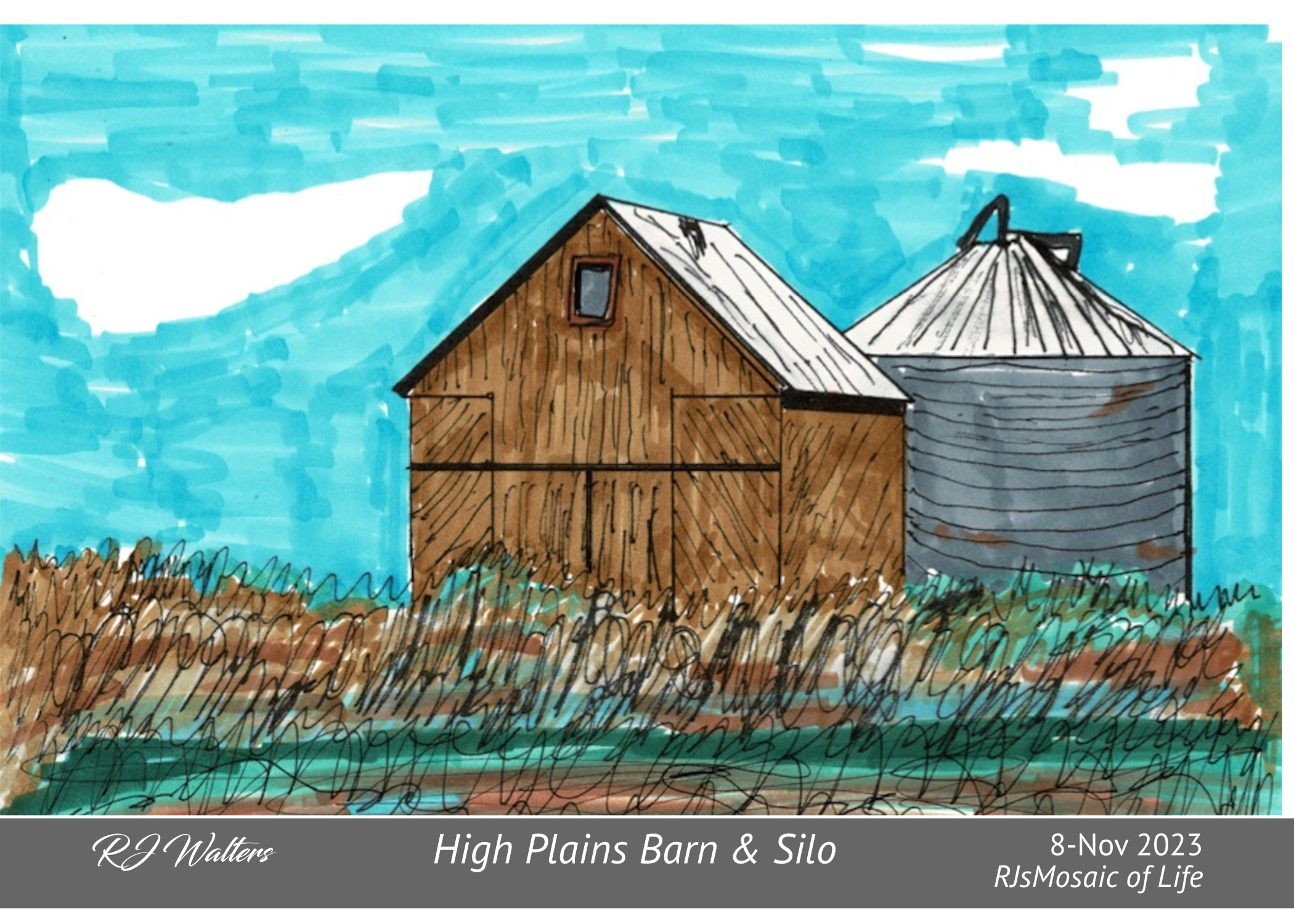
I mentioned a few posts ago that I am hankering to do another purely analog mosaic, but before I do that I need to close out my early attempts in that mode. I have been across the high plains States numerous times, but like Indiana, many traveling through the High Plains just breeze through it without stopping.
The most prominent thing about this area of the country is that it is WINDY. Maybe I should stop here and give you my definition of “High Plains”, that is Nebraska, southeastern Wyoming, and South Dakota, and central Kansas. In hindsight, it was a mistake to write off this area as not worth my time visiting. I’m pretty sure the picture that this mosaic was based on was near Colby Kansas.
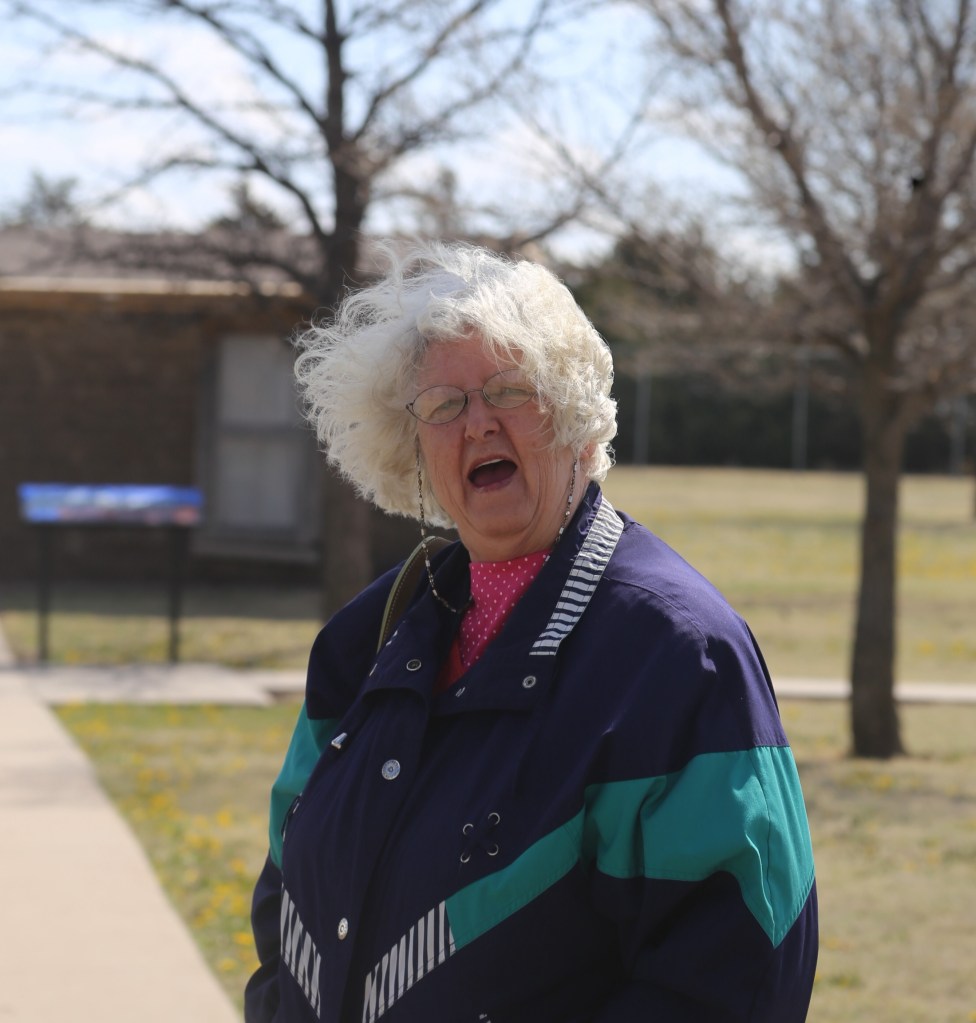
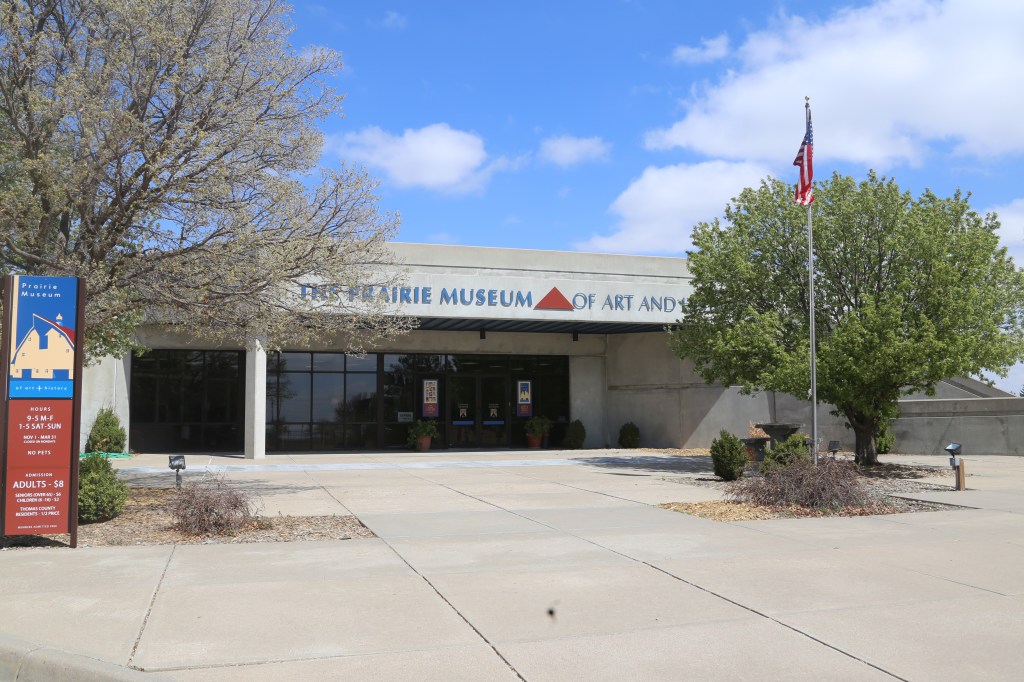
On a side tract, one of the most memorable museums I have visited was in the small town (population 5,500) of Colby, Kansas. It was called the Prairie Museum. I will have a Mosaic/post of this museum in the near future. I put the picture of my departed wife here to show you just how windy it was when we visited. 😎
Getting back to the mosaic at hand, this was one of my last attempts at analog art. I was discouraged by the fact that the sky was so poorly done. I just couldn’t let this one stand as my last attempt. I will be practicing with my technique before I put another analog mosaic on my mosaic wall.

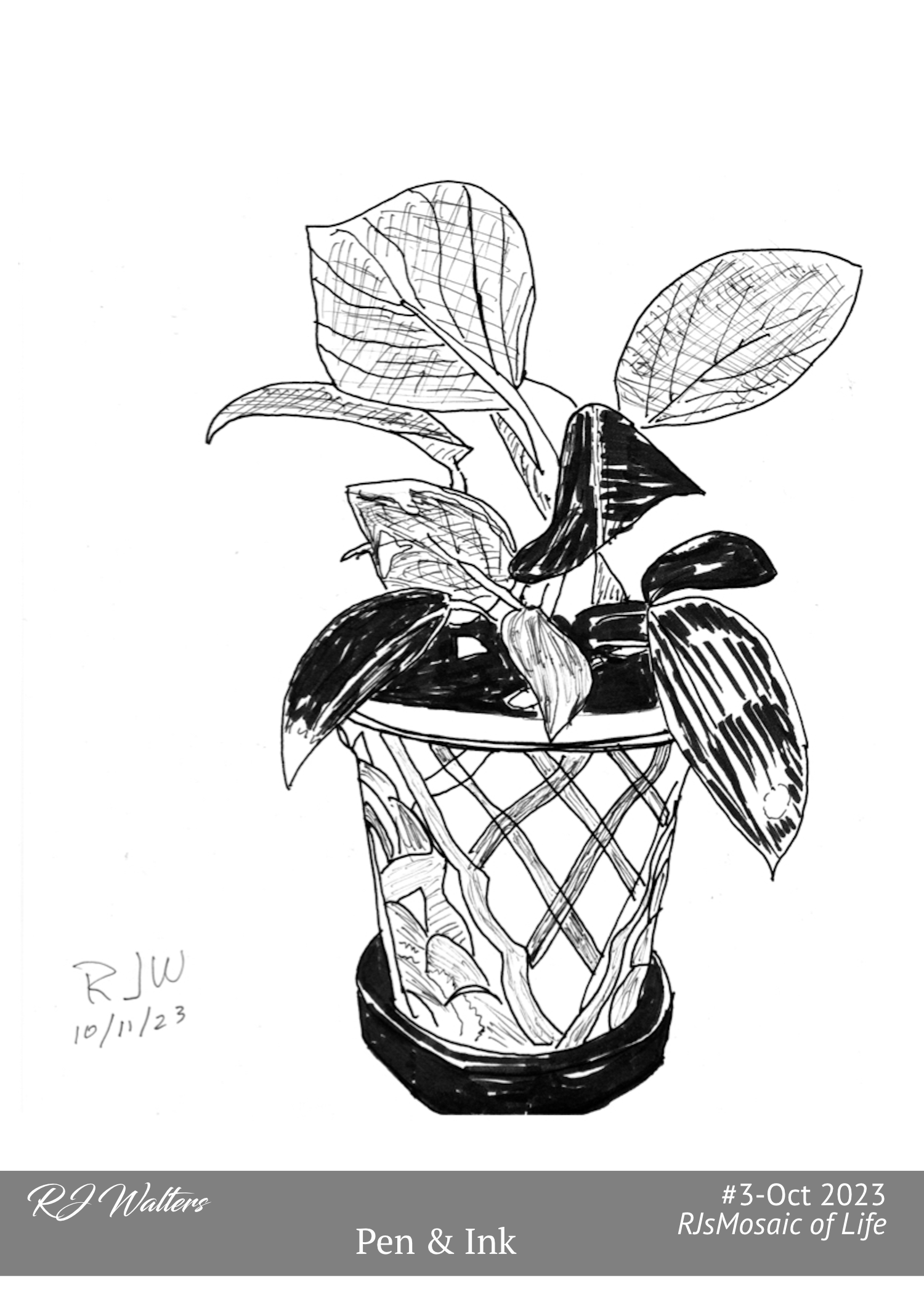
One of my first attempts at analog artsy
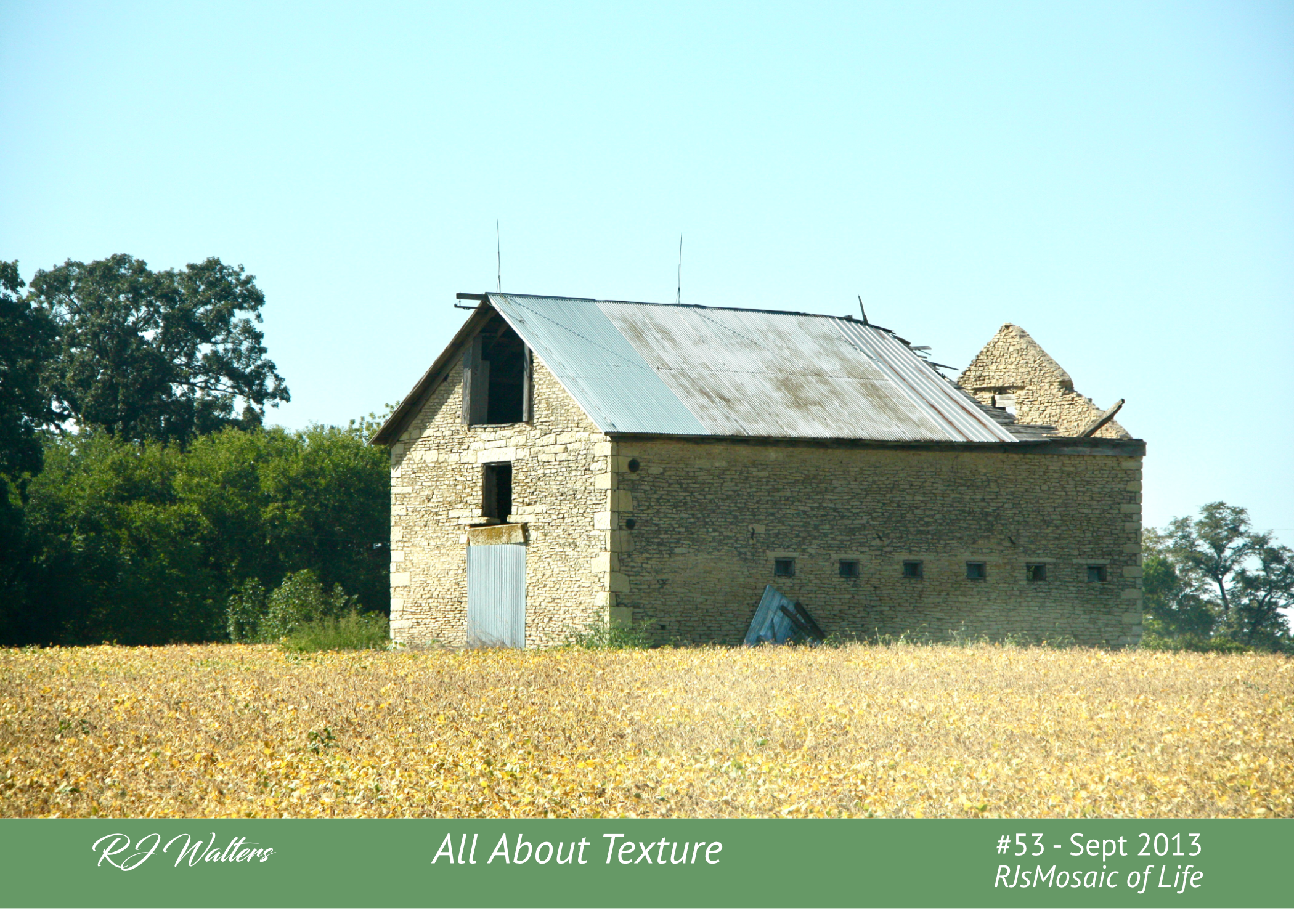
Now that I am beginning to populate this new artsy site, I have discovered that there are certain types of artsy that draw me in more than others. Those are Containers, Flowers, Texture and Reflections. I am a regular visitor of historic sites and almost all of them have an old-fashioned general story filled with containers.
Flowers are probably the main reason for RJsMosaics. Their beauty, variety, and mind-boggling intensity fascinate me. The closer I look, the more I am entranced. Texture, specifically brick walls, as shown in today’s M53-mosaic. I don’t really understand this one, so I will let it go without much explanation. Reflections fascinate me. When I visited Ottawa, Canada, that solidified this as a favorite. There will be many pictures coming in that variety.
I don’t know if there are others out there that share the love for these categories, but if there are, I have put those four as subcategories that appear at the top of each post on the home page. Just click on the name and you will see more pictures in that category.
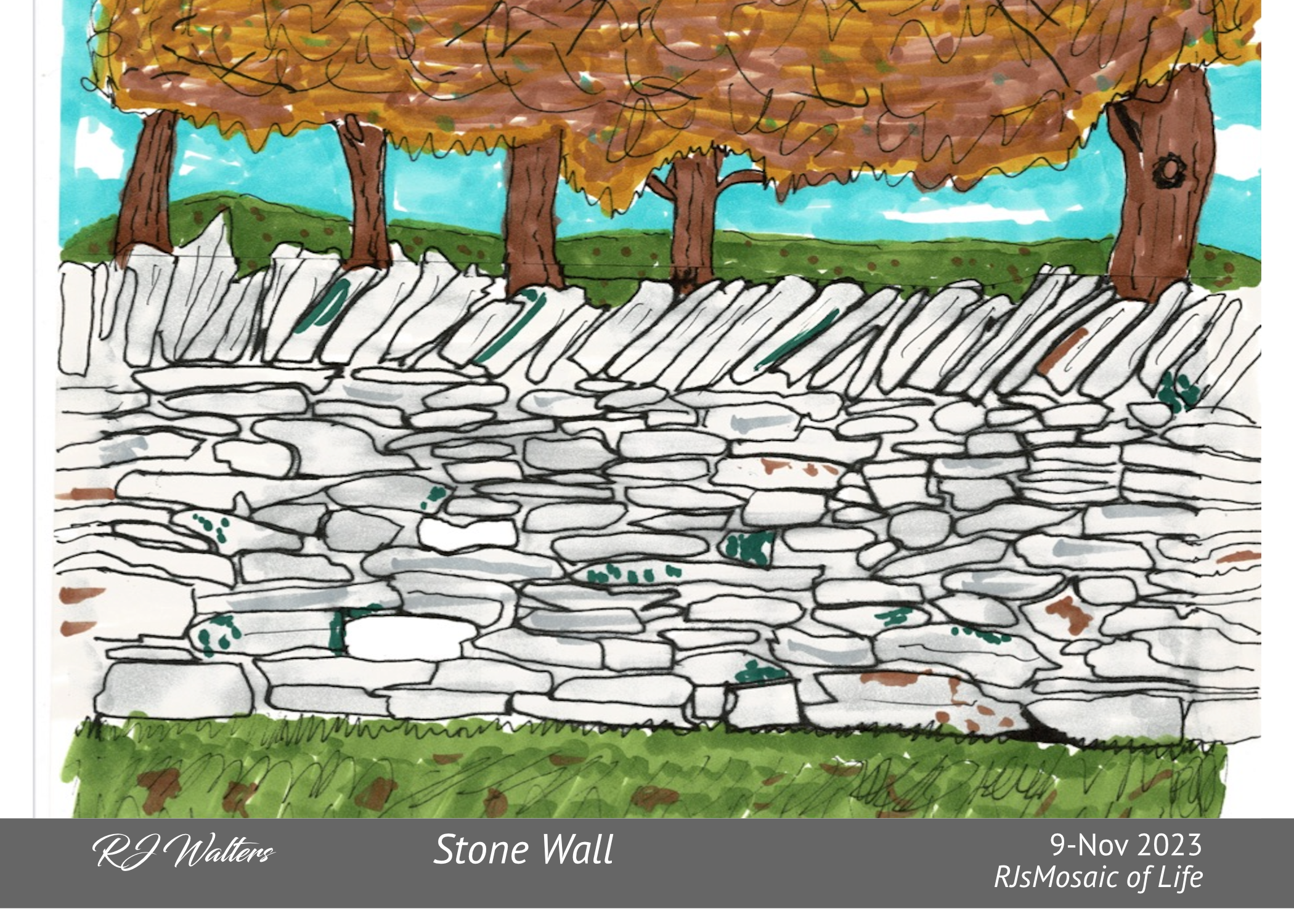
I have always been fascinated by stone walls. This one was at one of my favorite places to visit at Pleasant Hill Shaker Village near Lexington KY. This mosaic was made via the analog method using marking pens. It was very tedious work drawing all the stones, but I think the result is one of my favorites in the analog mode. I will limit this post to artsy, and reserve the story of Pleasant Hill for a future post, or posts.
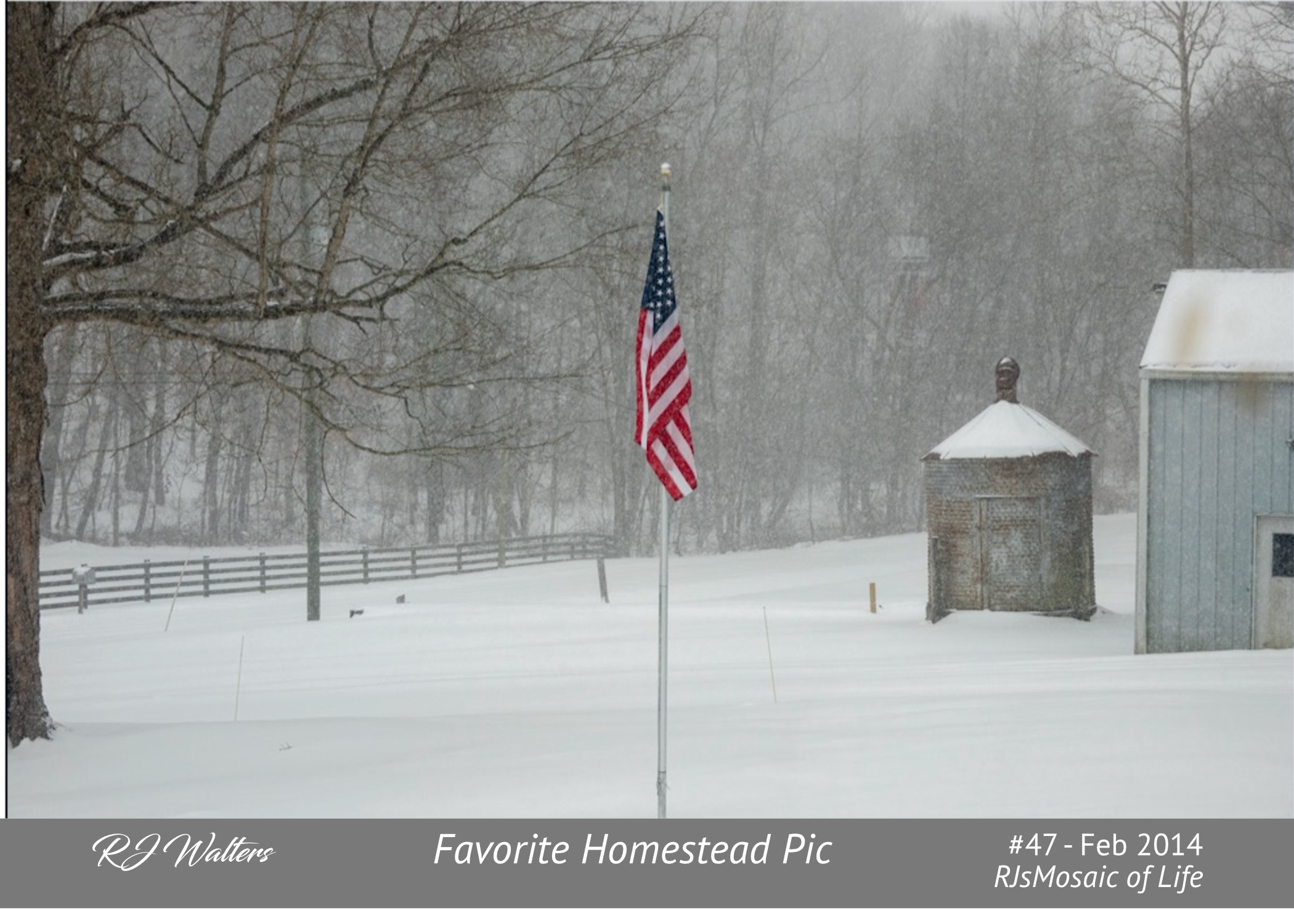
This picture was taken in January 2014
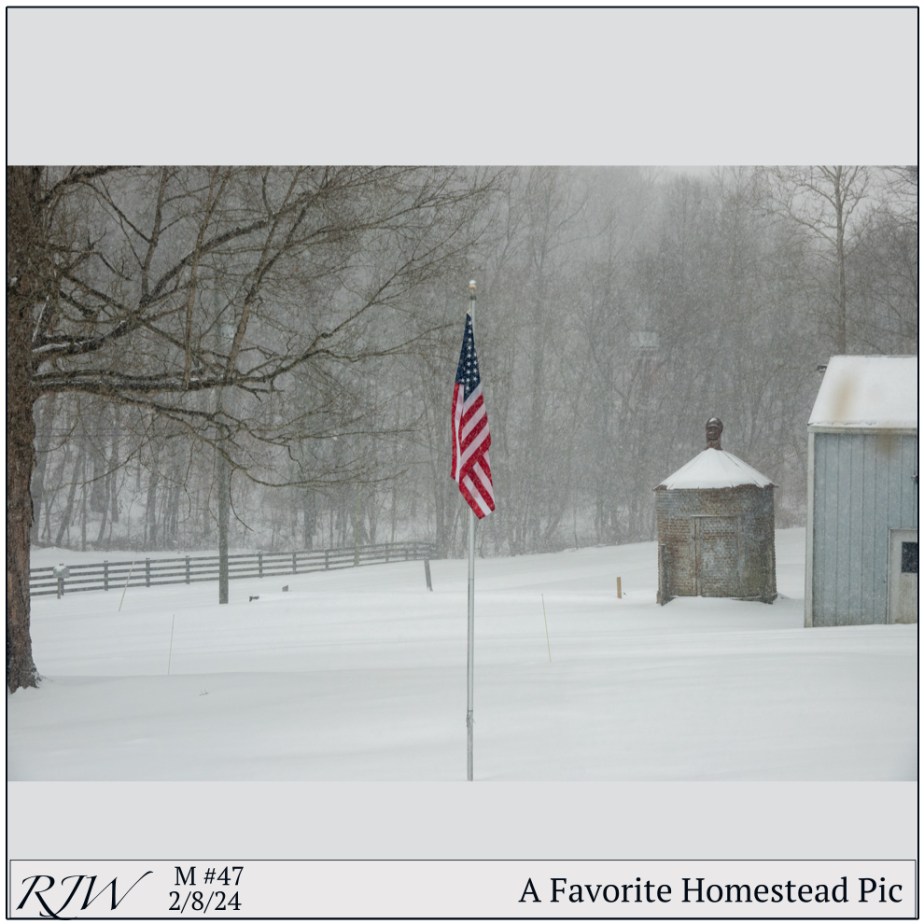
This picture was taken at our 21-year homestead that I left almost 3 years ago. Due to my deafness and resulting loss of balance, snow was always a hazard for me. Over my life I have taken a half-dozen serious falls while attempting to navigate these conditions. Despite the broken ribs and back compression fractures, this is one of my favorite posts looking out our living room picture window.
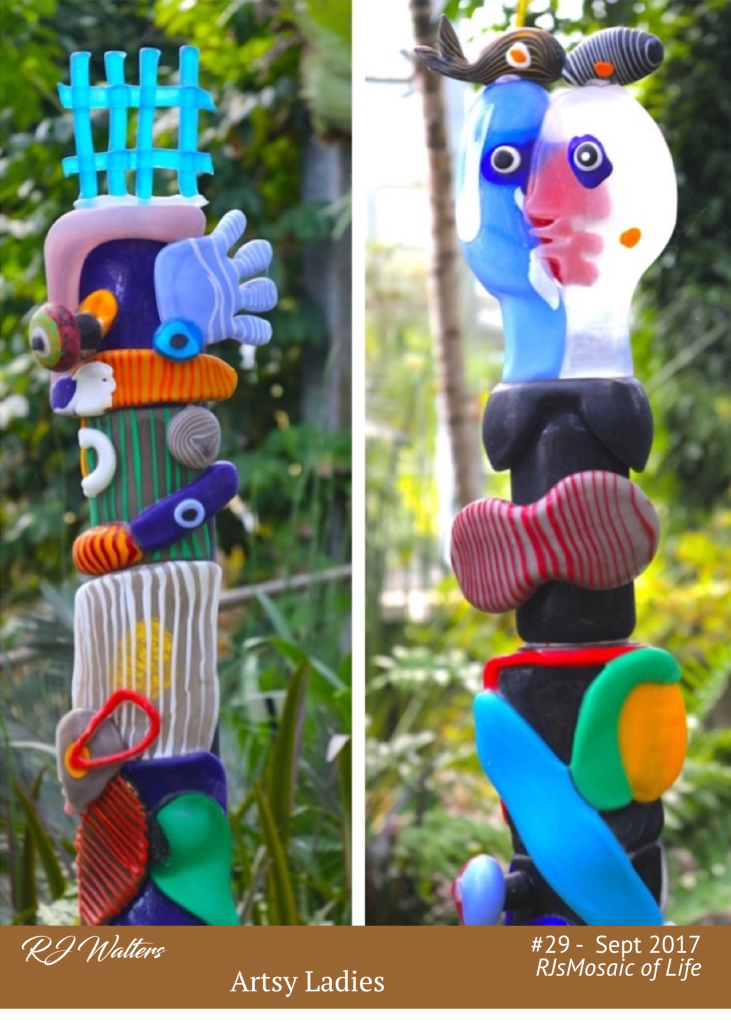
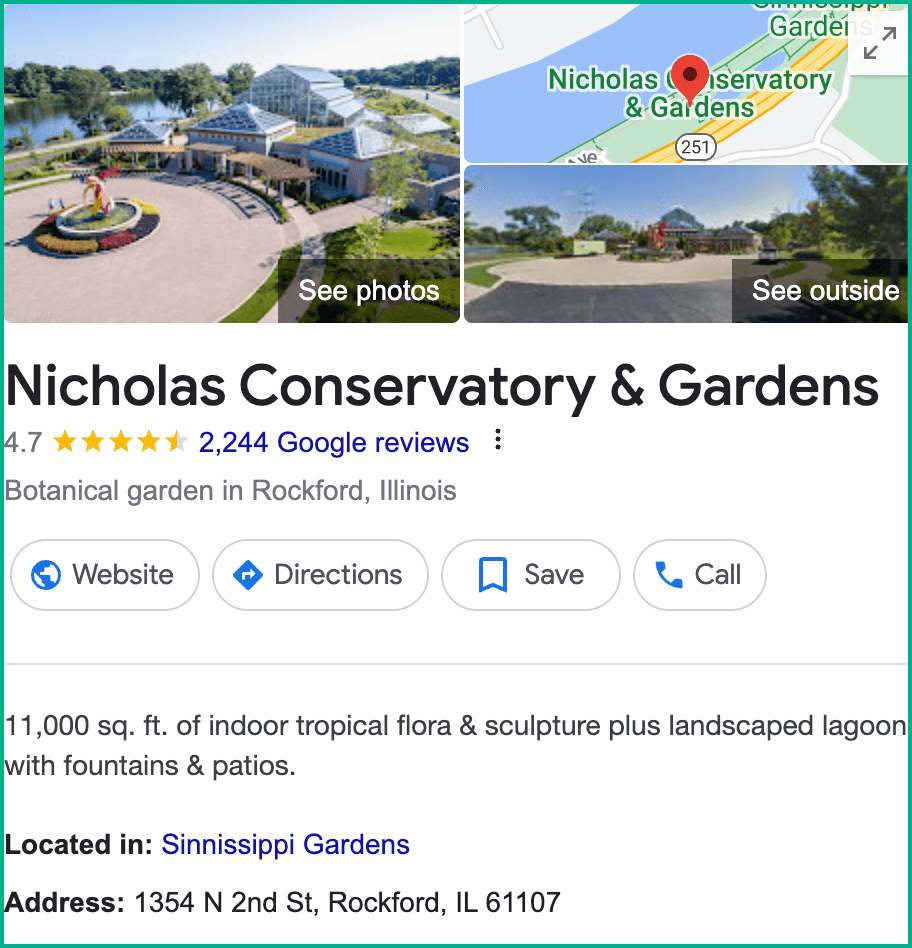
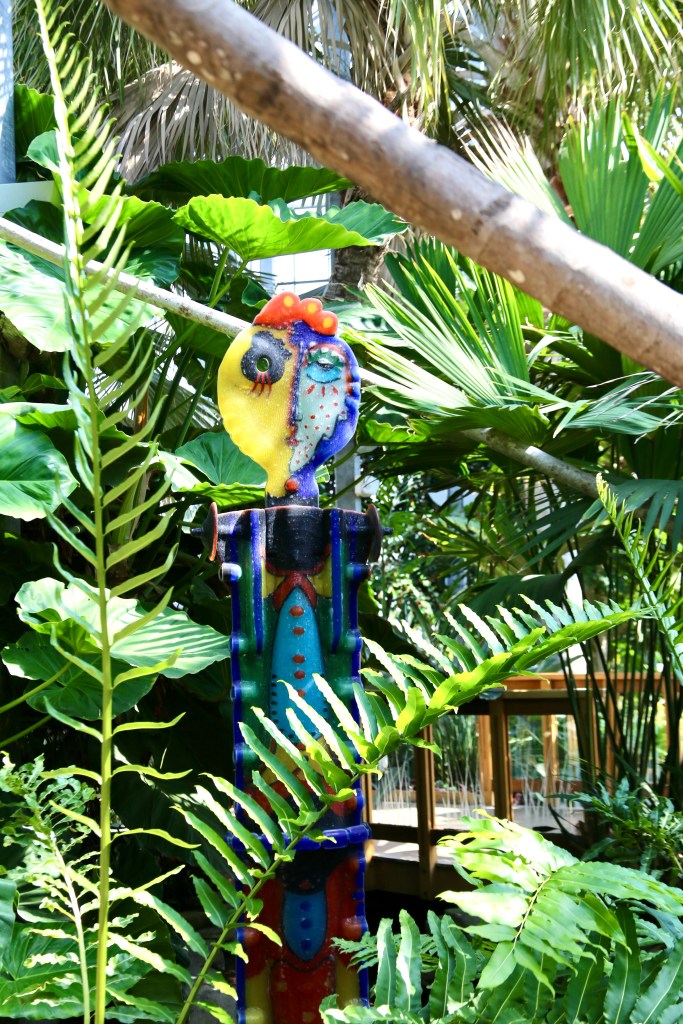
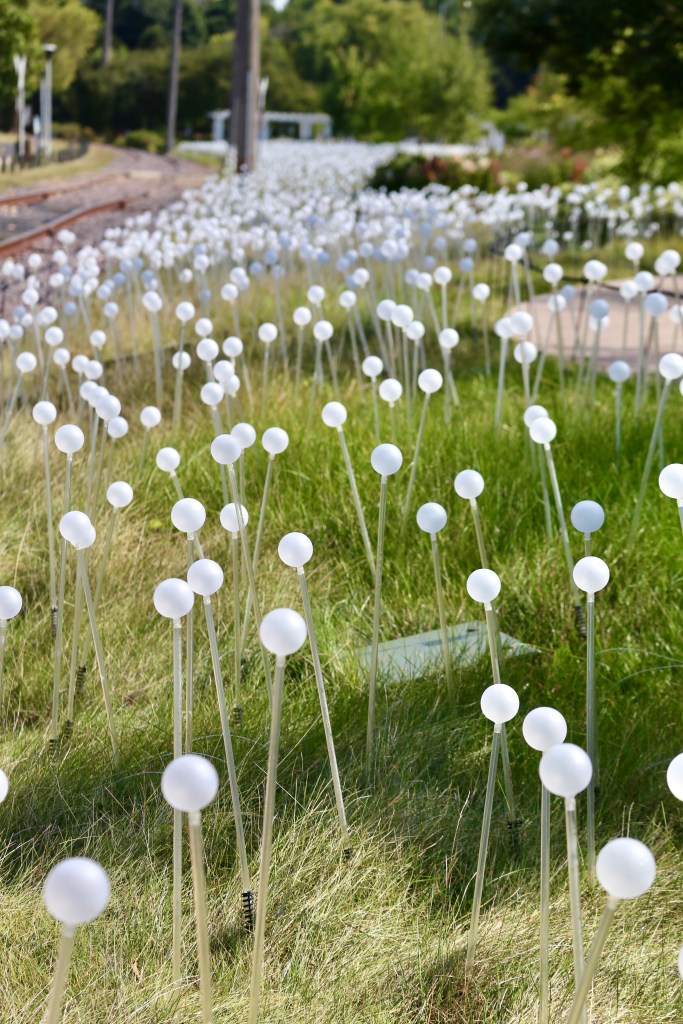
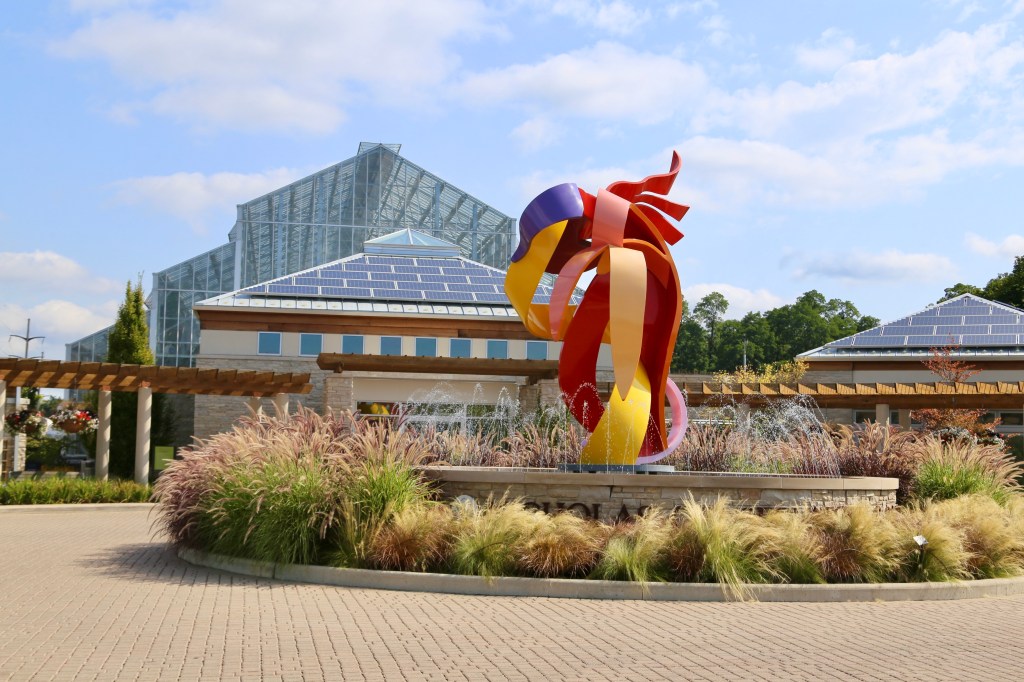
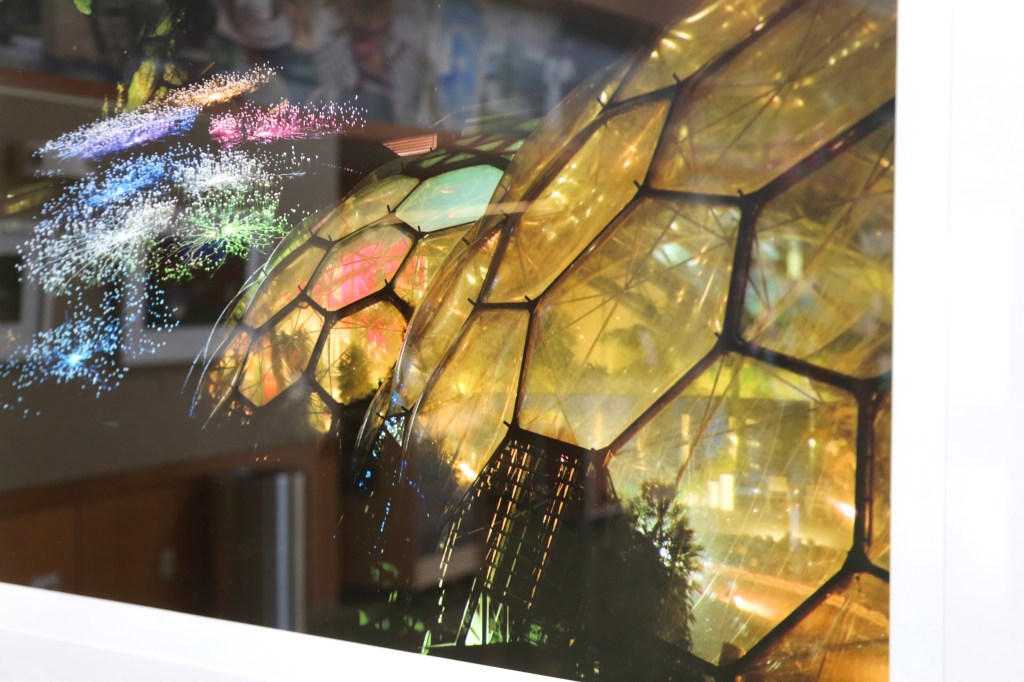
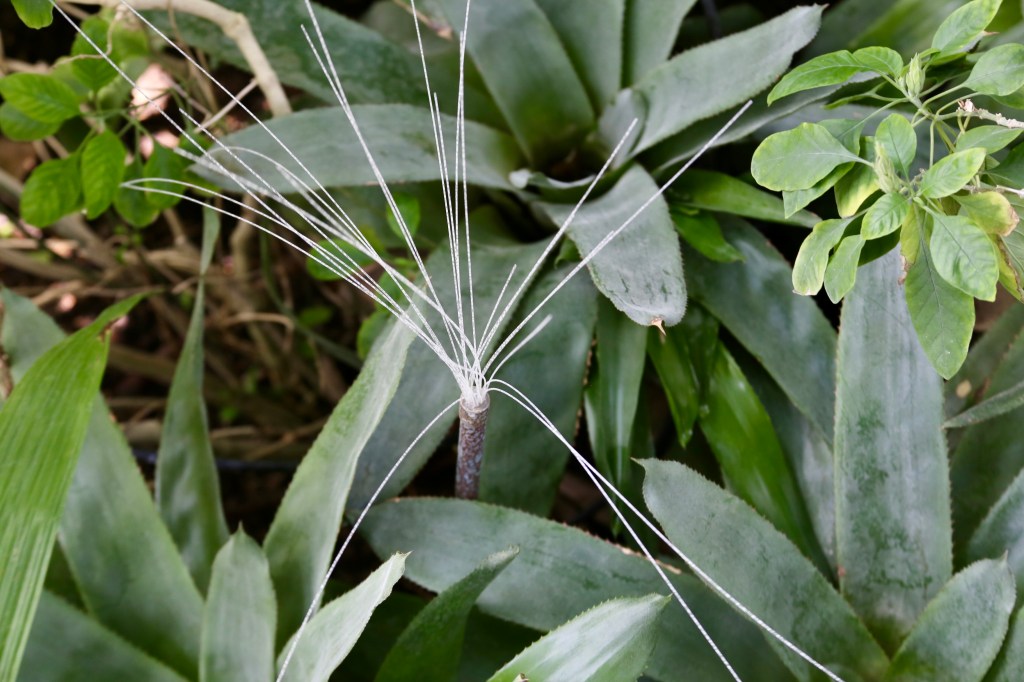
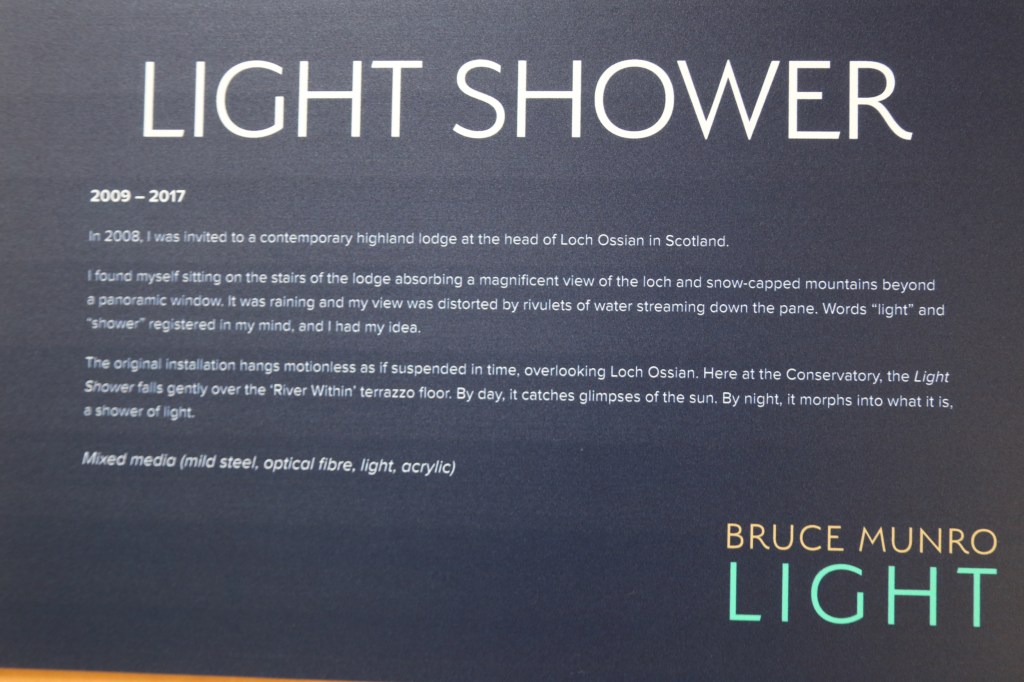
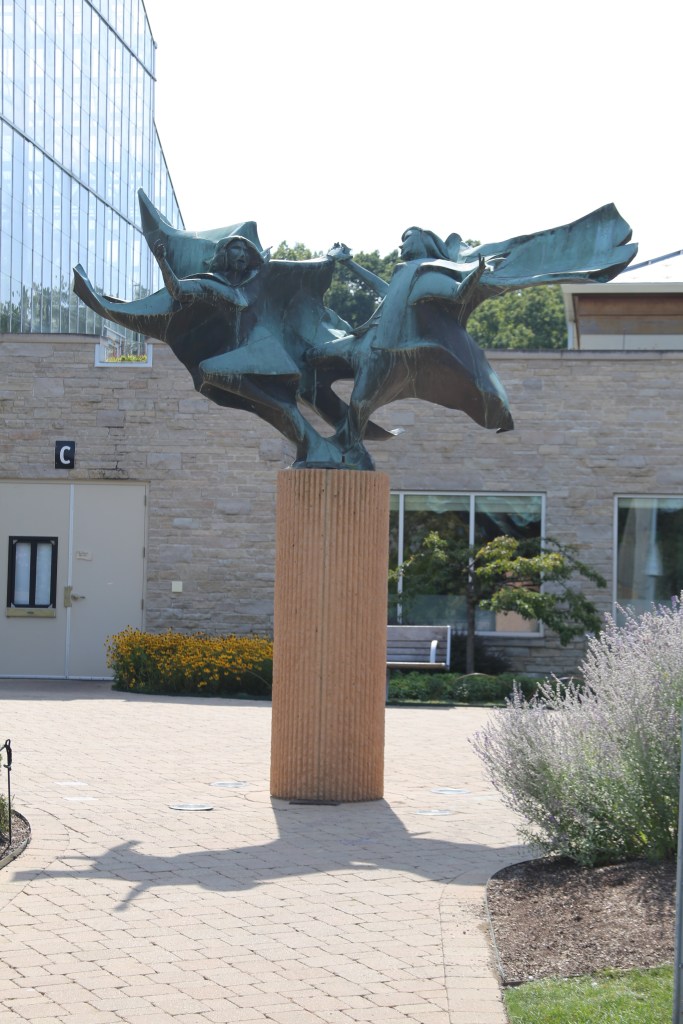
And this is definitely artsy. These Artsy Ladies were in the Nicholas Conservatory & Gardens which is located in Rockford, Illinois. When I visited in 2017, the Bruce Monro Light Exhibit was the current attraction. This was in the beginning phase of my search for artsy. I don’t know if these ladies were part of that exhibit or a permanent part of the conservatory, but they did fit very well into landscape of the dome. They were about 5 feet tall and made of glass, but I can’t imagine exactly how they were actually constructed.
The conservatory itself is certainly in the top three I have visited. The plants were nice, but the artsy is what flabbergasted me. It is well worth a visit if you are in the Chicago area.
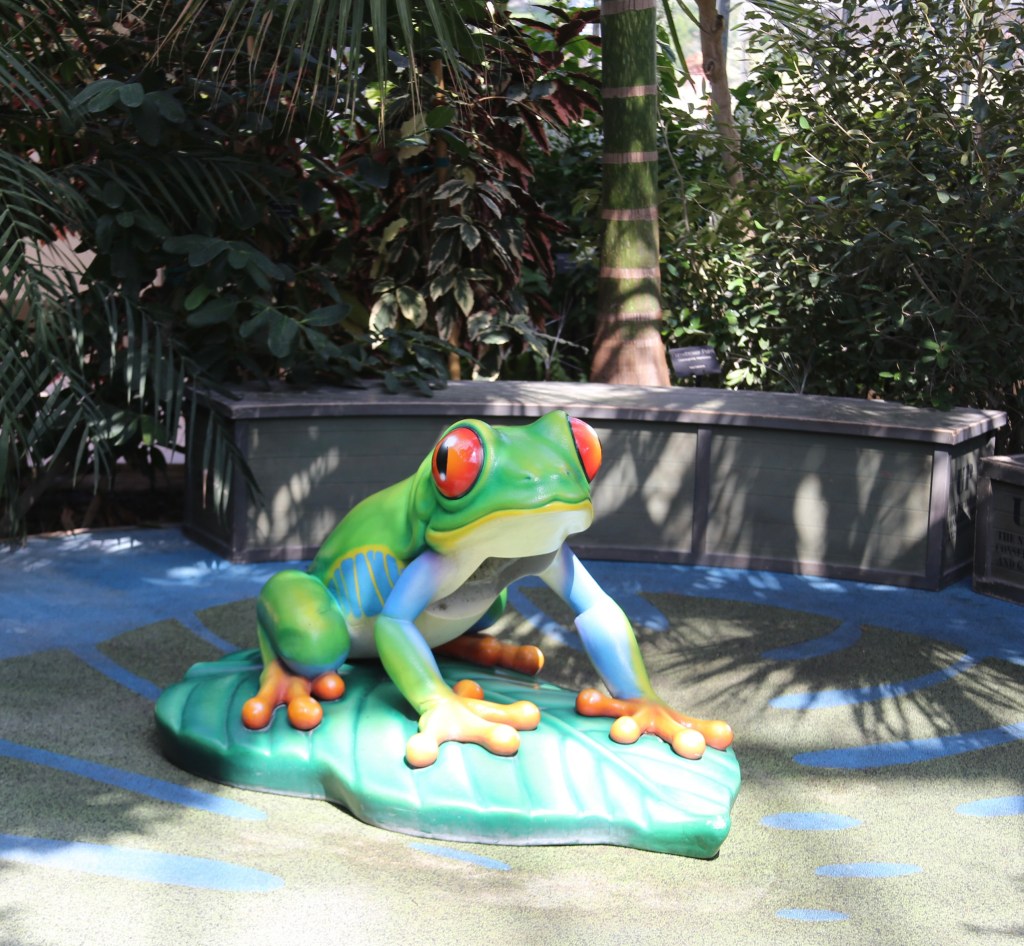
Here are a few other photos with captions if you care to see them. Just click on any image and a larger version will pop up.

/im
A few posts ago, I told you about how I spent 3 months doing analog artsy and then 3 months doing the digital version. This is the second post defining the digital version. (Click HERE if you want to see the first post). When I seriously started studying digital artsy, I had high hopes that I would find something that I totally enjoyed doing, and indeed I have.
Of course, being a techie, I had some previous experience with digital tools, but this time I looked far and wide for just the right tools. I think I came close to finding the perfect tools, at least for me. That is what this post is all about. If you are not interested in the details, perhaps you should just skip this post.
Type 1 – With Raster graphics apps, the program records your strokes and dots mostly the same as brush and paint. The only difference is you don’t have to clean out any brushes, and you have an infinite number of tubes of paint to choose from. You could say this is an analog app pretending to be digital. Sometimes that is what is needed to accomplish your mind’s eye images. Sometimes they can be used to enhance vector graphics drawings.
Type 2 – Vector graphics keeps track of the shapes you draw. Sometimes the shapes are circles and squares. Sometimes they are outlines of the sides of a building or the shape of a flower. Since the app knows the shapes, it can fill those shapes with an unimaginable variation of colors, hash marks, or patterns. The possibilities are almost endless. Vector graphics apps are the primary tools of digital artists and graphics designers.
Personally, I usually start out with vector graphics. To be good at that, you much be able to look at objects as a collection of shapes. For flowers, that might be the outside edge of a flower, or maybe it’s the center. Seeing things as vectors just seems natural to me.
Type 3 – Most of the mosaic panels here at RJsMosaics originate from photos I have taken throughout the years. Sometimes I just want to recreate a small portion of the photograph and disregard the rest. There are apps to do that. These same apps can remove areas of photos that are distracting from the overall picture.
Type 4- Another type of digital app can take an existing photo and make it look like different artistic modes. Some modes include those that turn photos into cartoons. Some morph them into impressionist paintings, or any number of different artistic modes. The picture at the top of his post used one of those tools.
Before I give you my choices for these four type apps, I need to tell you some criteria that I used to make the selections. I am a Mac guy and have been since the Macintosh was introduced in the late 1970s. I was forced by the corporate world to use Windows PCs for a few years as that is what the bean-counters used. The main difference between the two machines is that Apple apps are more intuitive than Microsoft apps. You don’t have to read dozens of manuals or take hours of classes to use Macs. Being intuitive out of the box is a primary priority for me.
There are hundreds of different graphics apps around today. Some are simply junk that crash often. Some are so complex that it takes hours/days/years to become proficient at them. Getting through that list seems a daunting exercise.
Adobe is generally in the high learning curve category, so I usually stay away from them. But, I did find on Adobe app called “Adobe Art Express” that ended up being my choice for the type 3 category
Type 1 – Raster Graphics is Art Studio Pro – It is simple to use because it doesn’t have dozens of brushes or painting tools to make it complicated. Since I use the app primarily for enhancing vector graphic images. I want something simple, and this one does the job.
Type 2 – Vector Graphics is Linearity Curve. This is a rather small company that will likely gobble up much of the personal use audience because it is just simple to understand and use. It does have a learning curve, but it is not as steep as those who have much less functionality.
Type 3 – Erasing and outlining is Adobe Art Express. This is an app that doesn’t reside on your computer but instead is accessed through a browser. It is simply the easiest app in the category to accomplish its purpose.
Type 4 – Morphing is BeFunky. A lot of the options the app gives for morphing just don’t work for me. But, there are a handful that are very pleasing. The picture at the top of this post is of the Multnomah Falls on the Columbia River Gorge used this app. I think it turned that photo very artsy.
This closes out the introductory phase of RJsMosaic. Going forward, I will concentrate as totally as I can on stories, artsy, and roadtrips to tell you the stories/mosaics of my life. I already have dozens of posts in the works and hundreds of preliminary ideas for stories.

This post is the second part of my six-month experiment with becoming artsy. I have already told you about the doodling/analog stage, so this is about the digital stage. The mosaic picture above is one of the first attempts at digital art.
It started out pretty much the same as an analog pictures, in that I traced the basic outline from a photograph I had taken years before. But, this time it was done by manipulating layers in a digital app. The picture was put on the bottom layer and the penned outline was made with an iPad and digital pen on a second layer. When that was done, the photo layer was hidden, and all that was visible was the outline sketch. There was no tracing paper, ink, or marking pens involved.
I then, via my iPad I digitally sketched in the details I wanted, such as the veins in the leaves, and the imperfection in the sunflower head. This was all done on a third layer. Then it was time to choose the colors I wanted to use. If you saw the post about the analog experiments (if you didn’t then click HERE) you saw the 100+ pens I accumulated to try to find the “right” color to use. In this digital experiment, it was as if I had a million pens to choose from. All I had to do was to decide on the color I wanted and then just click the leaf or other object in the picture I wanted to color, and it immediately painted that area. If the color was not quite right, then I simply picked another color, and it replaced the “not quite” color with a click on my iMac. For the picture above I got artsy and chose a half-dozen different shades of green for the leaves.
Pretty much the same thing was done for the rest of the mosaic picture. The end-result was then stored away in a digital file for printing to paper or transferring to things like the picture in this post.
I admit that my techie side gave me an advantage as I had been working on graphic design for at least a couple of years before the above image was made.
That’s enough for this post. The next post in this analog vs digital story will present you with a second very different approach to digital artsy. I will also clue you in on the particular apps I have chosen for future Artsy pictures here on RJsMosaics.