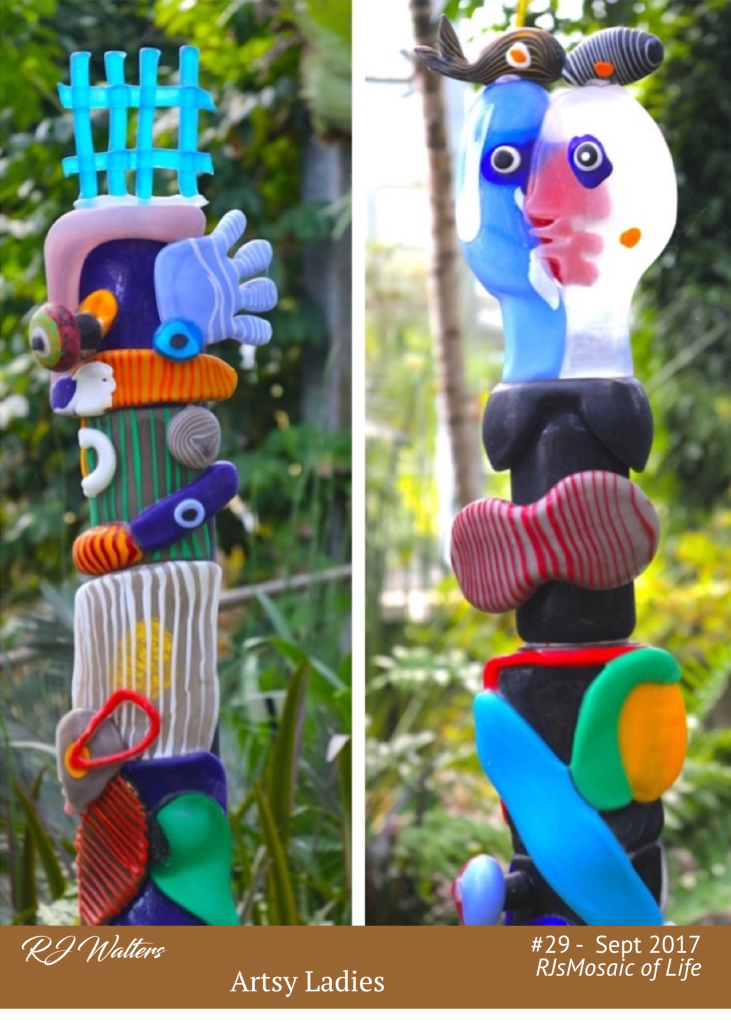
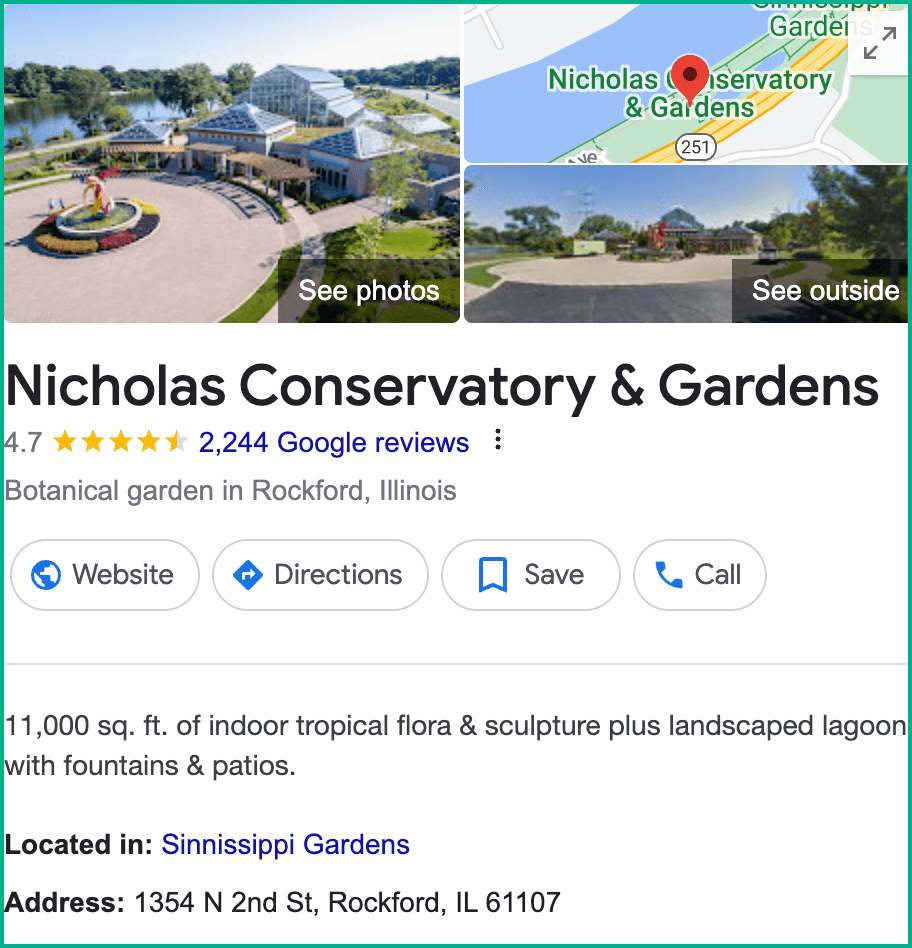
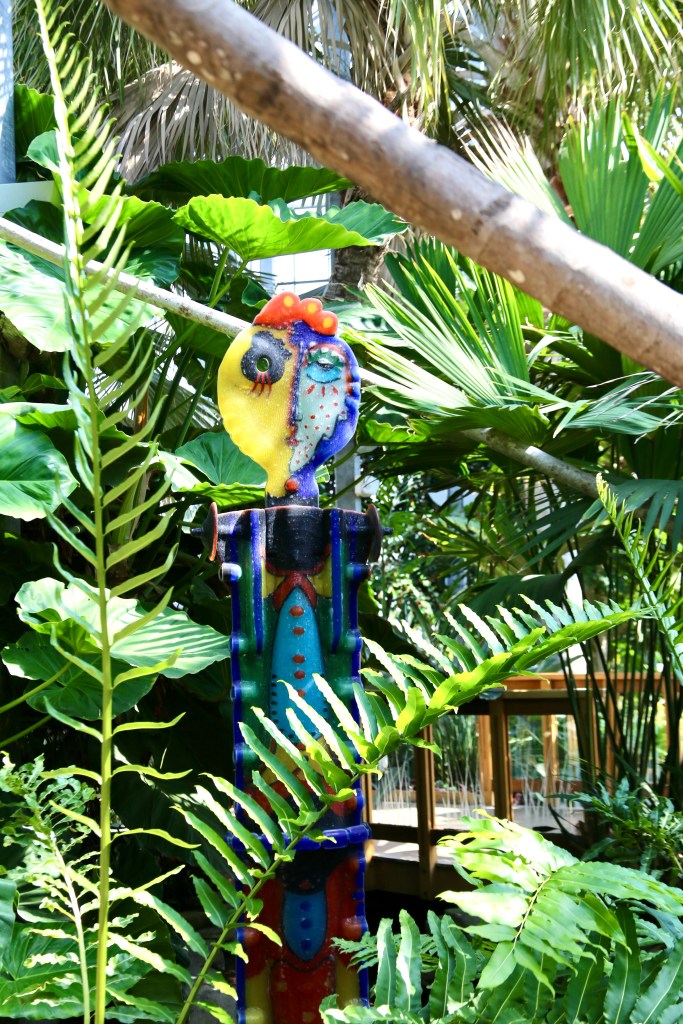
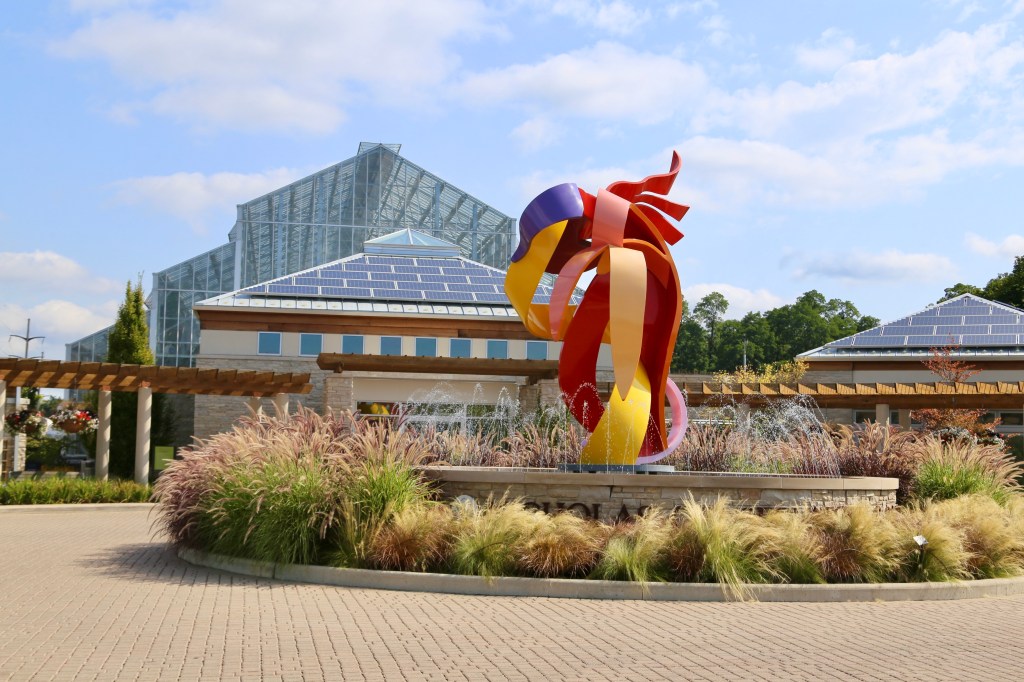
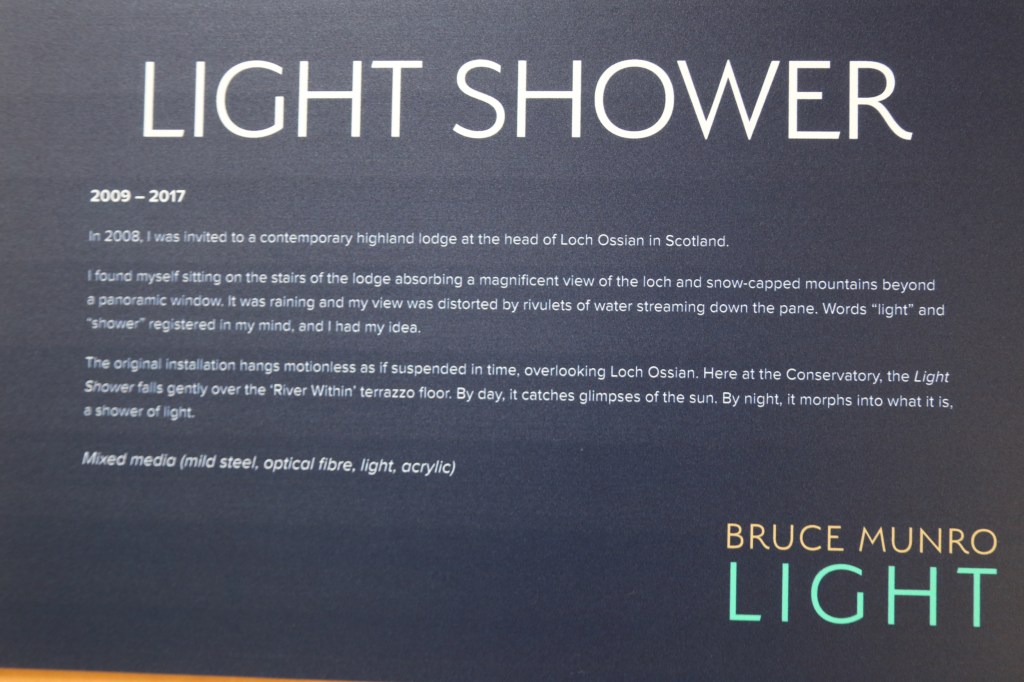
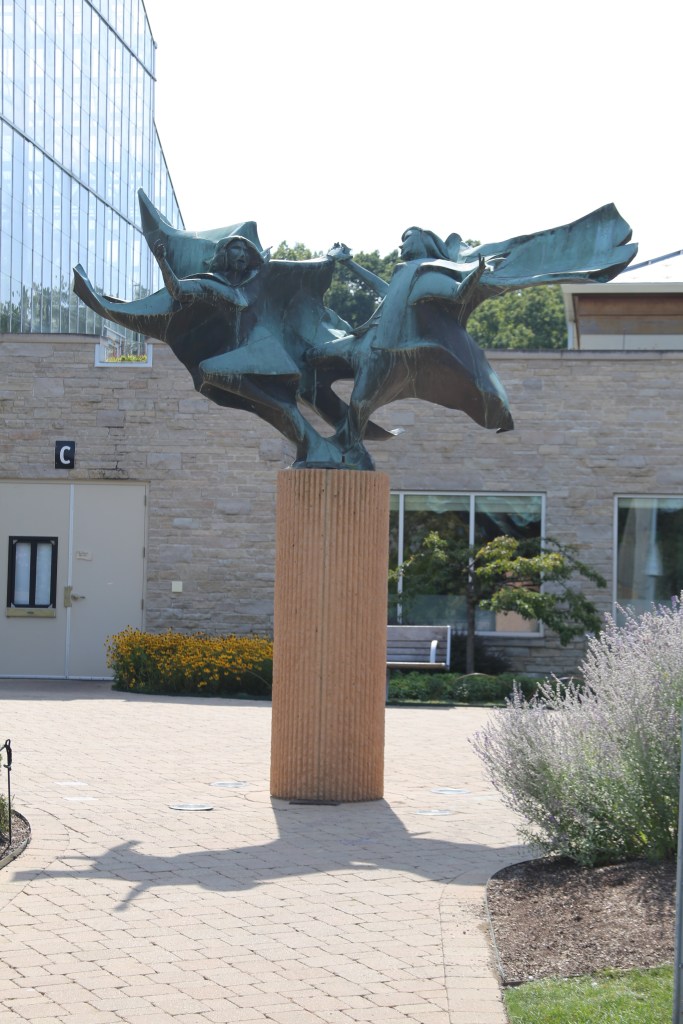
And this is definitely artsy. These Artsy Ladies were in the Nicholas Conservatory & Gardens which is located in Rockford, Illinois. When I visited in 2017, the Bruce Monro Light Exhibit was the current attraction. This was in the beginning phase of my search for artsy. I don’t know if these ladies were part of that exhibit or a permanent part of the conservatory, but they did fit very well into landscape of the dome. They were about 5 feet tall and made of glass, but I can’t imagine exactly how they were actually constructed.
The conservatory itself is certainly in the top three I have visited. The plants were nice, but the artsy is what flabbergasted me. It is well worth a visit if you are in the Chicago area.
Here are a few other photos with captions if you care to see them. Just click on any image and a larger version will pop up.
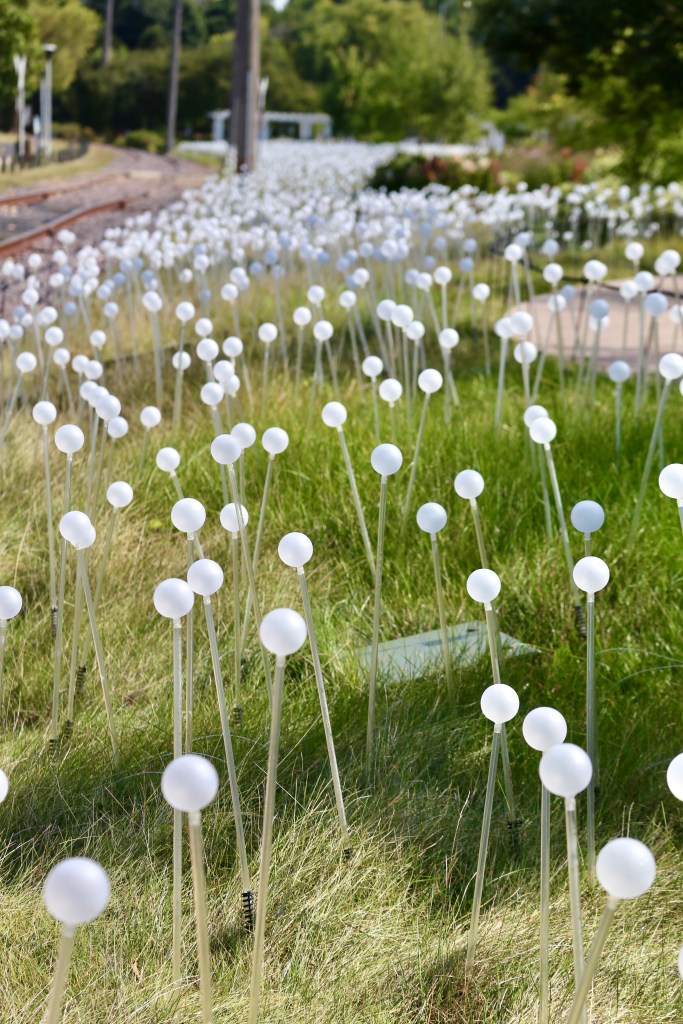
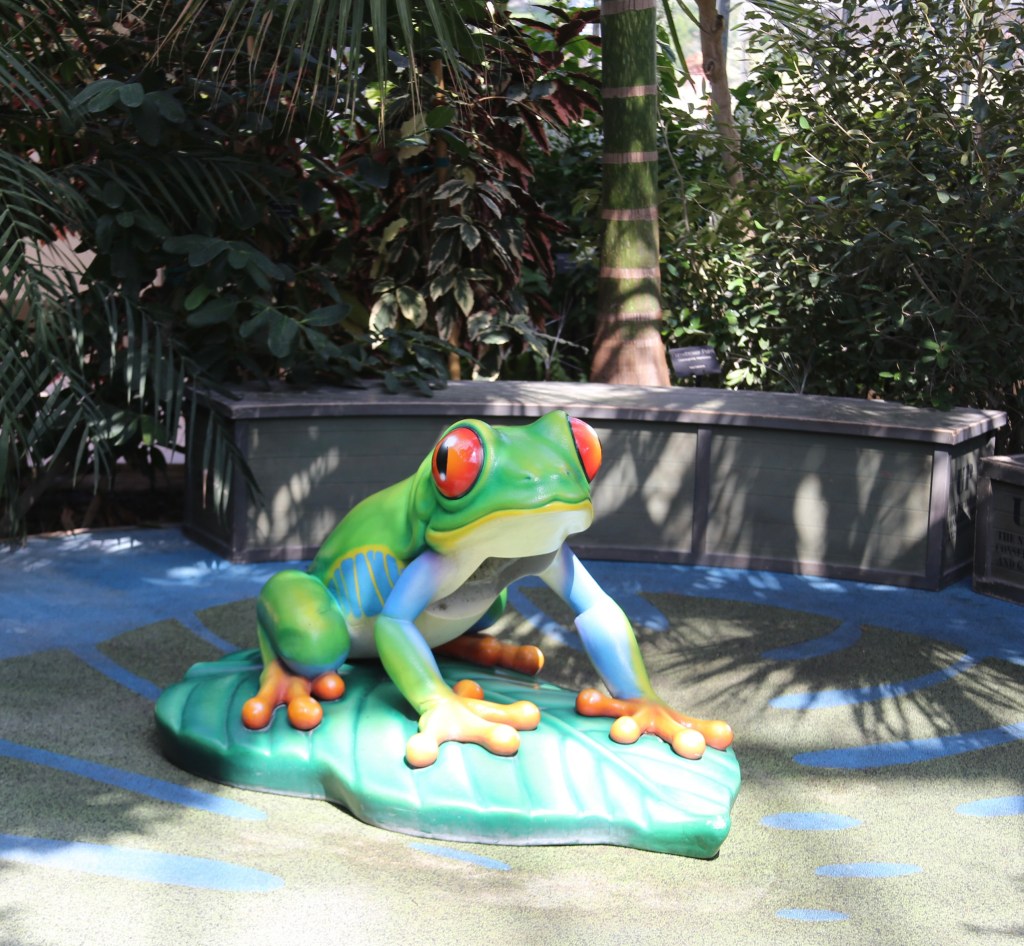
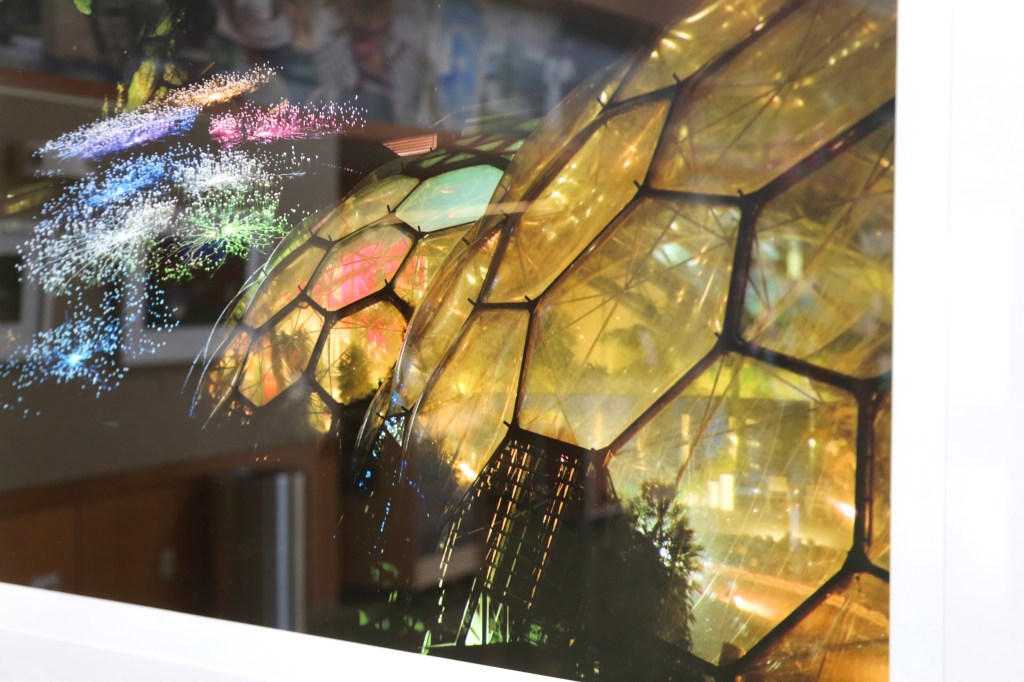
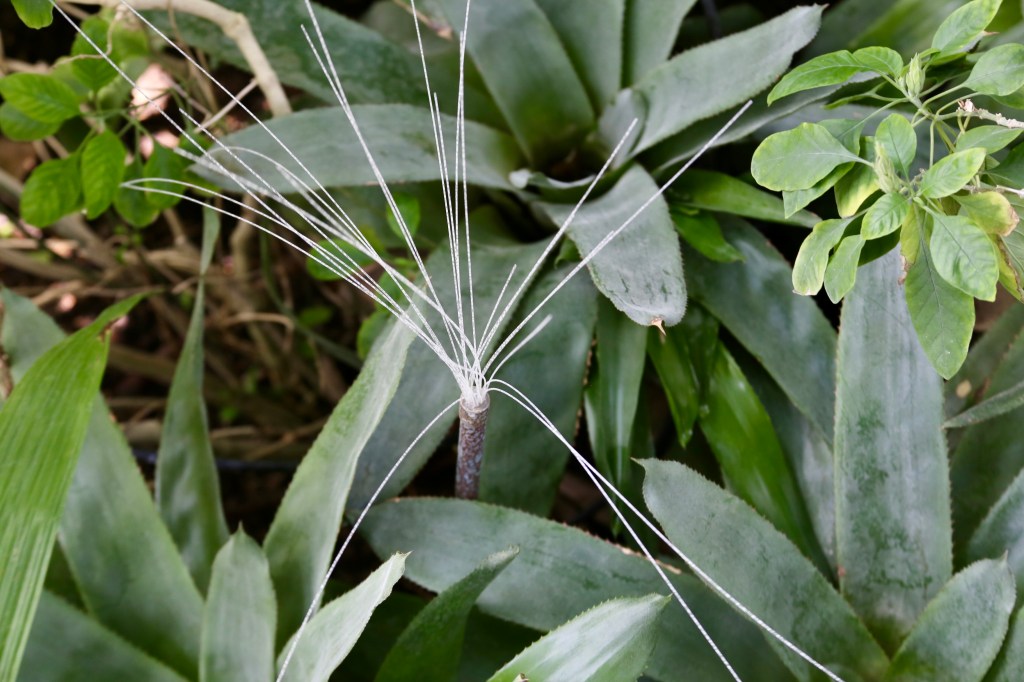
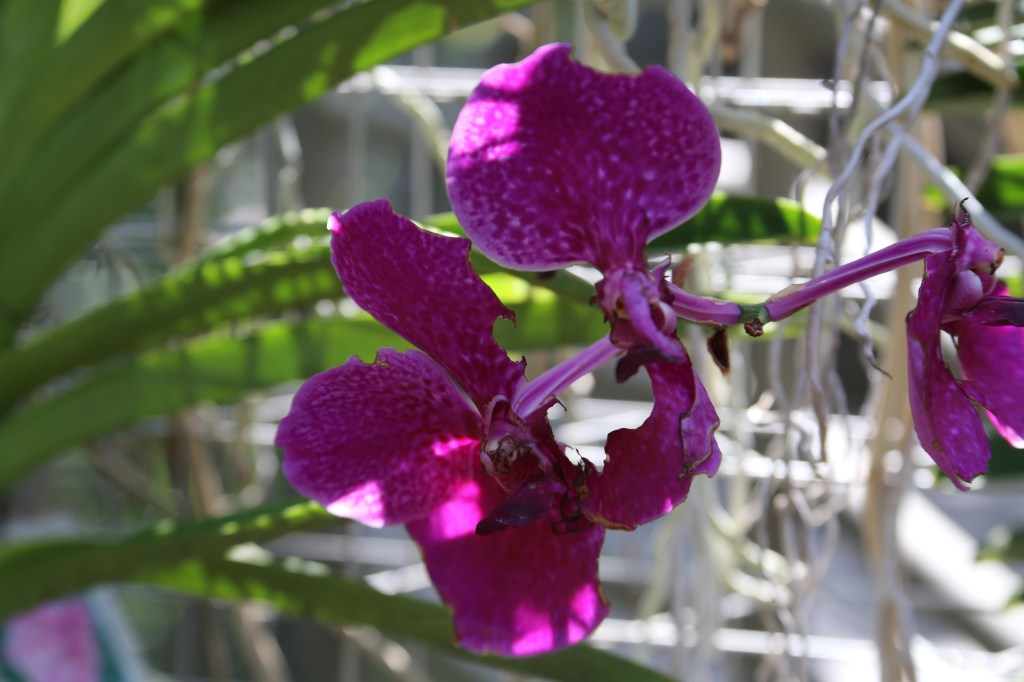
This was a third arty, but a childI think they said there were 80,000 bulbs there that gave a magical view at night.Artsy, artsy, everywhereI had a croaking conversation with this little guyThis is a picture of a picture of a picture.Even fiber optic stems among the plantsA little info about the light showI have to finish up with one of their beauties
A few posts ago, I told you about how I spent 3 months doing analog artsy and then 3 months doing the digital version. This is the second post defining the digital version. (Click HERE if you want to see the first post). When I seriously started studying digital artsy, I had high hopes that I would find something that I totally enjoyed doing, and indeed I have.
Of course, being a techie, I had some previous experience with digital tools, but this time I looked far and wide for just the right tools. I think I came close to finding the perfect tools, at least for me. That is what this post is all about. If you are not interested in the details, perhaps you should just skip this post.
Vector vs Raster Graphics
Type 1 – With Raster graphics apps, the program records your strokes and dots mostly the same as brush and paint. The only difference is you don’t have to clean out any brushes, and you have an infinite number of tubes of paint to choose from. You could say this is an analog app pretending to be digital. Sometimes that is what is needed to accomplish your mind’s eye images. Sometimes they can be used to enhance vector graphics drawings.
Type 2 – Vector graphics keeps track of the shapes you draw. Sometimes the shapes are circles and squares. Sometimes they are outlines of the sides of a building or the shape of a flower. Since the app knows the shapes, it can fill those shapes with an unimaginable variation of colors, hash marks, or patterns. The possibilities are almost endless. Vector graphics apps are the primary tools of digital artists and graphics designers.
Personally, I usually start out with vector graphics. To be good at that, you much be able to look at objects as a collection of shapes. For flowers, that might be the outside edge of a flower, or maybe it’s the center. Seeing things as vectors just seems natural to me.
Type 3 – Most of the mosaic panels here at RJsMosaics originate from photos I have taken throughout the years. Sometimes I just want to recreate a small portion of the photograph and disregard the rest. There are apps to do that. These same apps can remove areas of photos that are distracting from the overall picture.
Type 4- Another type of digital app can take an existing photo and make it look like different artistic modes. Some modes include those that turn photos into cartoons. Some morph them into impressionist paintings, or any number of different artistic modes. The picture at the top of his post used one of those tools.
Before I give you my choices for these four type apps, I need to tell you some criteria that I used to make the selections. I am a Mac guy and have been since the Macintosh was introduced in the late 1970s. I was forced by the corporate world to use Windows PCs for a few years as that is what the bean-counters used. The main difference between the two machines is that Apple apps are more intuitive than Microsoft apps. You don’t have to read dozens of manuals or take hours of classes to use Macs. Being intuitive out of the box is a primary priority for me.
There are hundreds of different graphics apps around today. Some are simply junk that crash often. Some are so complex that it takes hours/days/years to become proficient at them. Getting through that list seems a daunting exercise.
Adobe is generally in the high learning curve category, so I usually stay away from them. But, I did find on Adobe app called “Adobe Art Express” that ended up being my choice for the type 3 category
And the winners are:
Type 1 – Raster Graphics is Art Studio Pro – It is simple to use because it doesn’t have dozens of brushes or painting tools to make it complicated. Since I use the app primarily for enhancing vector graphic images. I want something simple, and this one does the job.
Type 2 – Vector Graphics is Linearity Curve. This is a rather small company that will likely gobble up much of the personal use audience because it is just simple to understand and use. It does have a learning curve, but it is not as steep as those who have much less functionality.
Type 3 –Erasing and outlining is Adobe Art Express. This is an app that doesn’t reside on your computer but instead is accessed through a browser. It is simply the easiest app in the category to accomplish its purpose.
Type 4 – Morphing is BeFunky. A lot of the options the app gives for morphing just don’t work for me. But, there are a handful that are very pleasing. The picture at the top of this post is of the Multnomah Falls on the Columbia River Gorge used this app. I think it turned that photo very artsy.
This closes out the introductory phase of RJsMosaic. Going forward, I will concentrate as totally as I can on stories, artsy, and roadtrips to tell you the stories/mosaics of my life. I already have dozens of posts in the works and hundreds of preliminary ideas for stories.
I hope you will stick around and maybe even offer some stories of your own.
This post is the second part of my six-month experiment with becoming artsy. I have already told you about the doodling/analog stage, so this is about the digital stage. The mosaic picture above is one of the first attempts at digital art.
It started out pretty much the same as an analog pictures, in that I traced the basic outline from a photograph I had taken years before. But, this time it was done by manipulating layers in a digital app. The picture was put on the bottom layer and the penned outline was made with an iPad and digital pen on a second layer. When that was done, the photo layer was hidden, and all that was visible was the outline sketch. There was no tracing paper, ink, or marking pens involved.
I then, via my iPad I digitally sketched in the details I wanted, such as the veins in the leaves, and the imperfection in the sunflower head. This was all done on a third layer. Then it was time to choose the colors I wanted to use. If you saw the post about the analog experiments (if you didn’t then click HERE) you saw the 100+ pens I accumulated to try to find the “right” color to use. In this digital experiment, it was as if I had a million pens to choose from. All I had to do was to decide on the color I wanted and then just click the leaf or other object in the picture I wanted to color, and it immediately painted that area. If the color was not quite right, then I simply picked another color, and it replaced the “not quite” color with a click on my iMac. For the picture above I got artsy and chose a half-dozen different shades of green for the leaves.
Pretty much the same thing was done for the rest of the mosaic picture. The end-result was then stored away in a digital file for printing to paper or transferring to things like the picture in this post.
I admit that my techie side gave me an advantage as I had been working on graphic design for at least a couple of years before the above image was made.
That’s enough for this post. The next post in this analog vs digital story will present you with a second very different approach to digital artsy. I will also clue you in on the particular apps I have chosen for future Artsy pictures here on RJsMosaics.
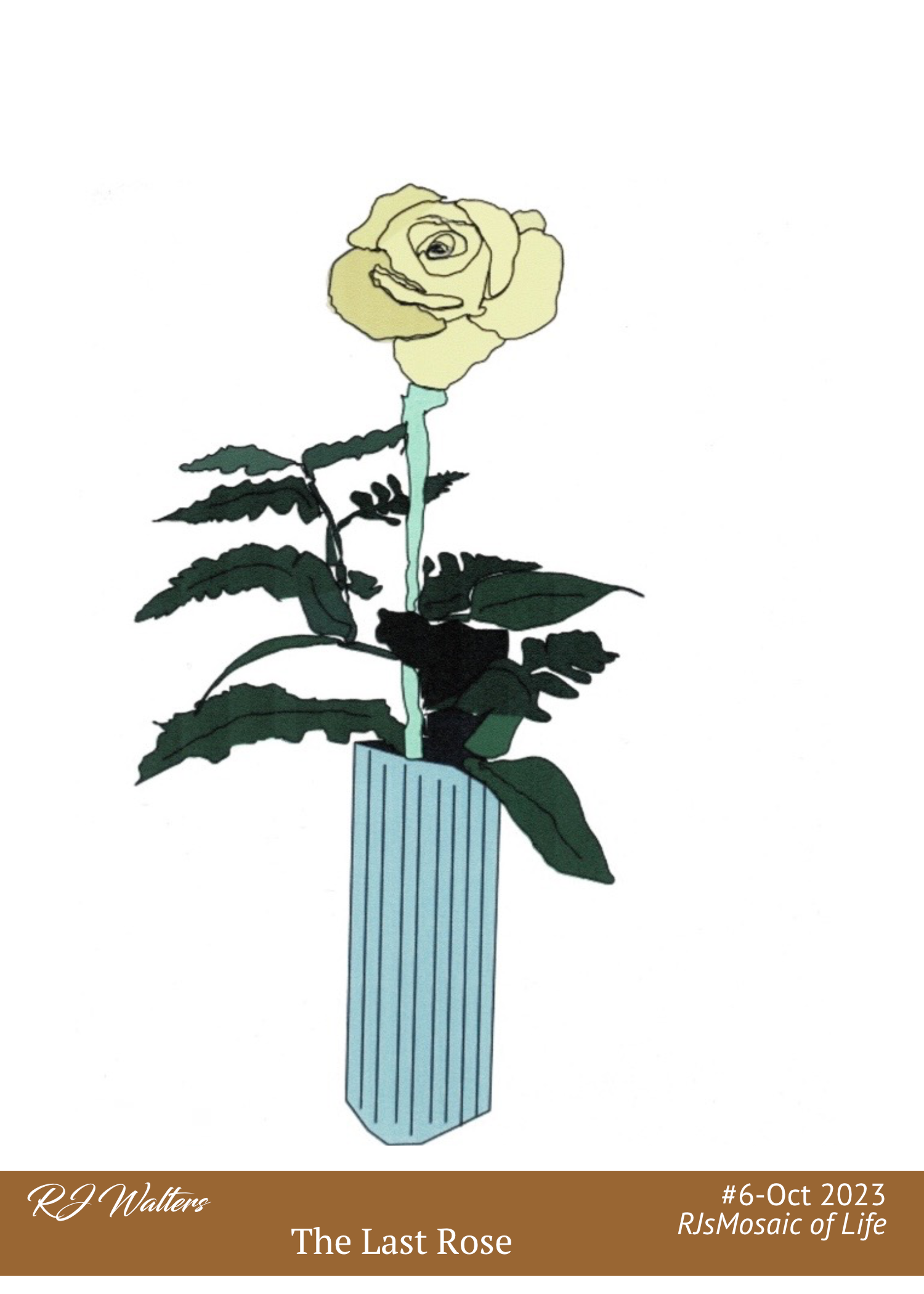
In today’s artsy post, I give you the Last Rose, and the story behind it.
When my future wife asked me out on a date in late 1985, it totally surprised me. A few months before, I had totally given up the idea of dating. Due to my Aspie traits, all the attempts at dating from the years before that were disasters. I think I said “yes” to her asking me on a date more out of shock than anything else.
Long story short, I asked her to marry me a few months later, and like me on that our first date, I think she said “yes” out of shock. After that settled down, we had a long discussion. We were both over 40 and never married. She, too, had given up any idea of marriage. But, for some reason, God, whatever that is, put us together and the marriage lasted for 36 years until “death do us part”.
Getting back to the story behind this picture, before the wedding date, I gave her weekly roses to mark the number of weeks until we were married. It started out with fifteen red roses and finished up with a single white rose the week of our marriage.
I knew early in the artsy project that that rose would be a subject for one of the mosaics on my mosaic of life board.
This site is a celebration of life and the many pieces that make it up.
Most of us go through life dreaming of the big things, but in reality, life is mostly made up of the little things that happen every day. RJsMosaic is about celebrating those small things as well as the big ones.
It is also about celebrating the things that make us the unique people we are. It is about our special talents, achievements, and stories of our lives. It is about appreciating each day the Lord gives us. If this appeals to you, I invite you to tag along with me during this journey celebrating our time on this earth. I also invite you to share your stories via comments.
Eventually, I dream that this site will have many like-minded subscribers/members who are linked together in our celebration of the Mosaic of Life. We will share stories and experiences and support each other. I know that sounds like a pipe dream, but after you get to know me, you will realize pipe-dreams are what I am made of.
I realize that this dream of friends getting together is called social networking, and has long since been replaced by social media. If you are like me, your Facebook page is nothing like it used to be. I used to be able to see what friends were up to and share my stories with them. Now, most Internet stuff has become social media sites that are primarily interested in selling you something. Facebook has become more like a commercial television network of yesteryear that is full of advertisements than a networking site it once was.
I don’t know how successful this site might eventually become, but one thing is certain that as long as I manage it
Back in the “Good Old Days”, no respectable household would be without at least a 25lb can of “Pure Lard”. I can remember dad buying lard a pound at a time, but that was about it. Lard is simply animal fat that is rendered, after it was cut off the butchered animal. Rendering was a process of putting the fat in a large kettle and boiled, and then straining it through a sieve. Sounds scrumptious, doesn’t it?
You might be asking why I have a picture of a lard can? It’s because one of my hobbies is documenting old containers of the past. I have hundreds of pictures of containers, so this will be the first of many to appear on my mosaic.
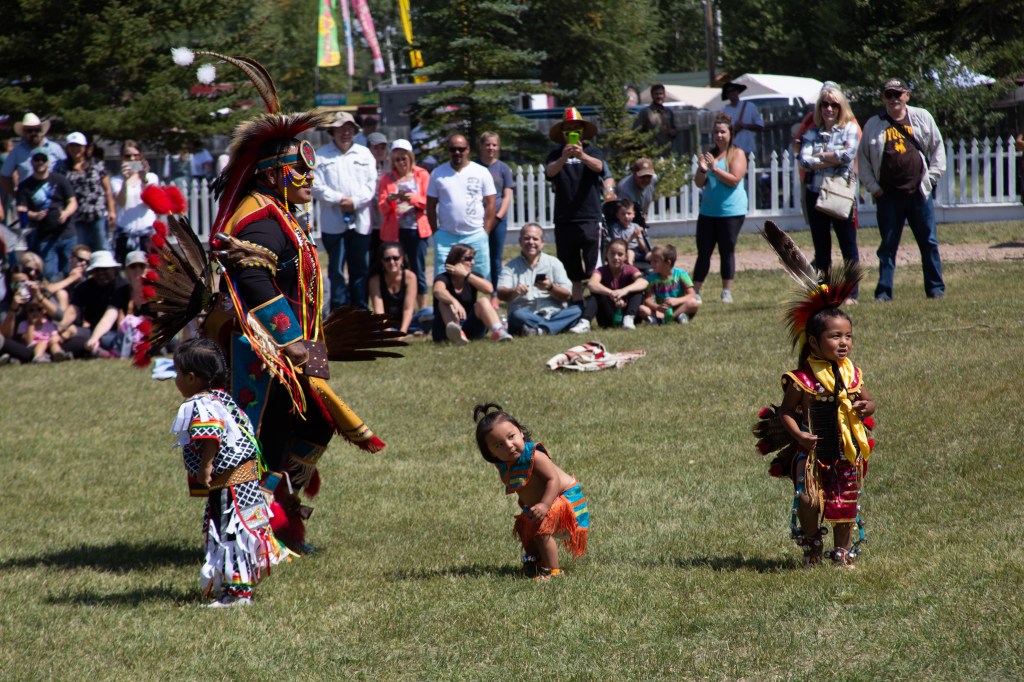
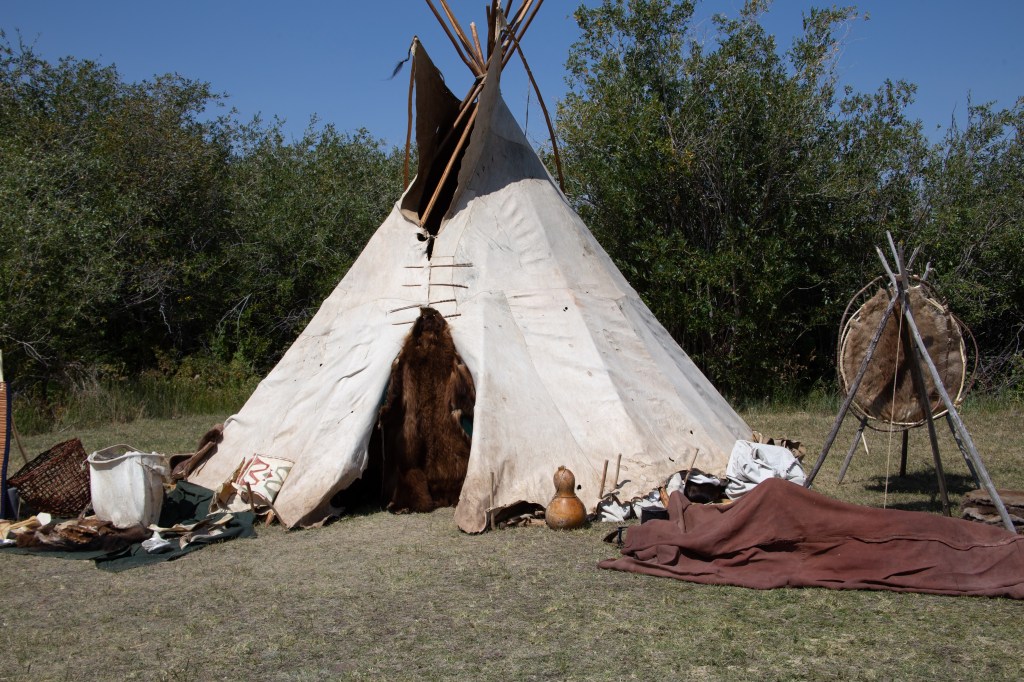
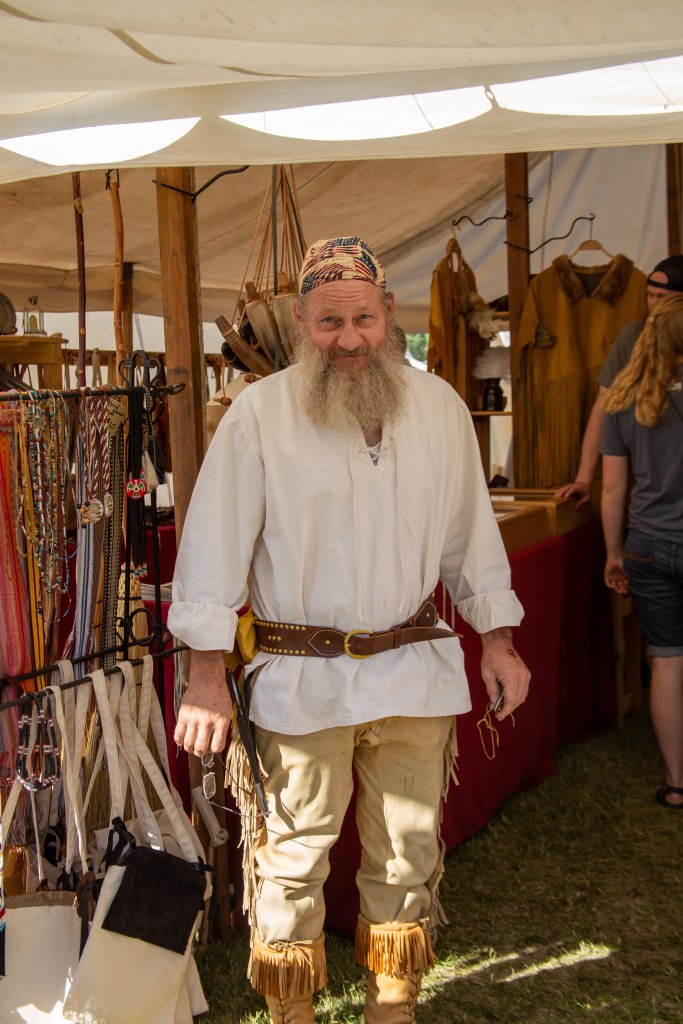
Since an early age, I have been fascinated with American history. The fur trapper rendezvous, especially the original one started in 1825 at Ft. Bridger, Wyoming, was put on my dream list of destinations. I was fortunate enough to visit it in 2018. 60,000+ people attended the 2023 version.
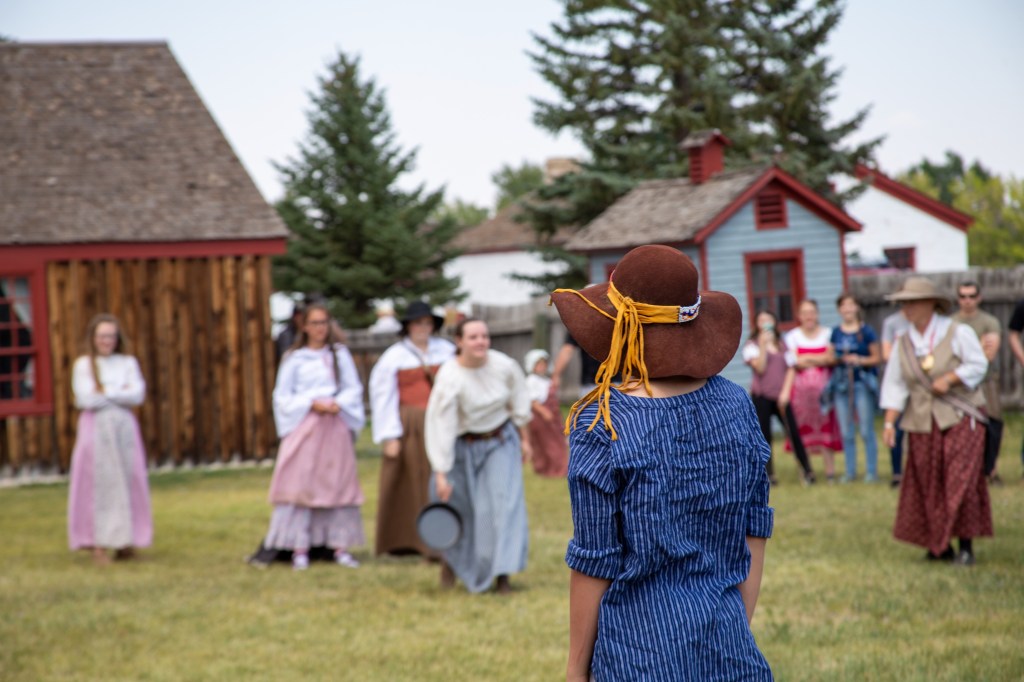
Getting there was one of those “If Not Now, When?”. My µRV fabrication was complete, and my wife was having a period of a degree of wellness, so I believed I could leave her by herself, with emergency help nearby, for the week it would take for the 2800-mile round trip. The above picture was one of the first ones I took upon entering the grounds. It seemed strange that the young man was carrying a skillet. I would find out later why.
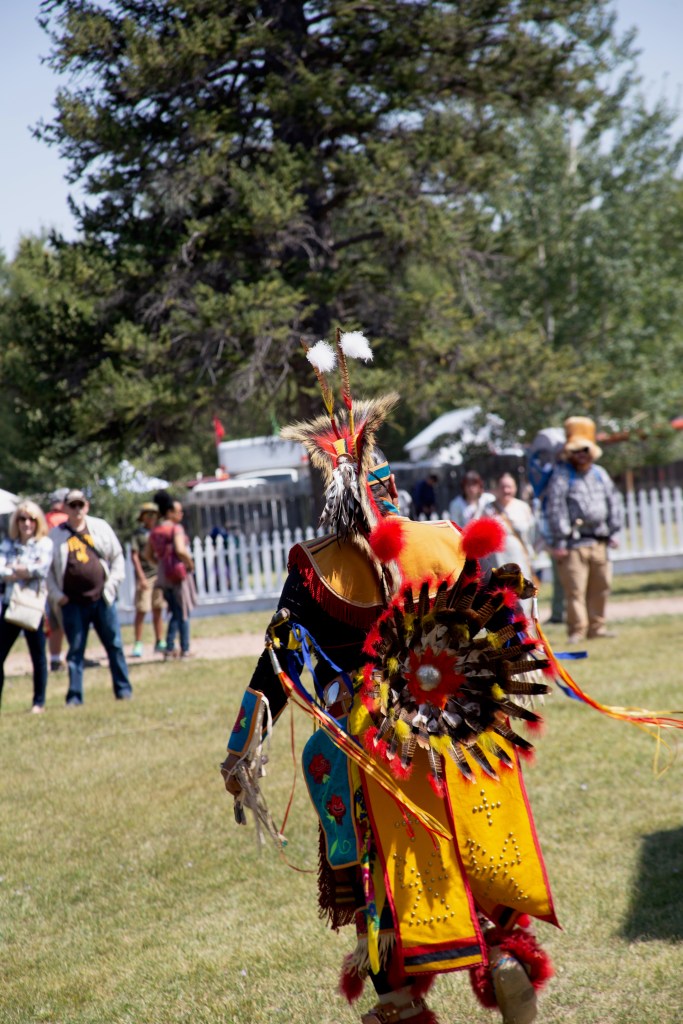
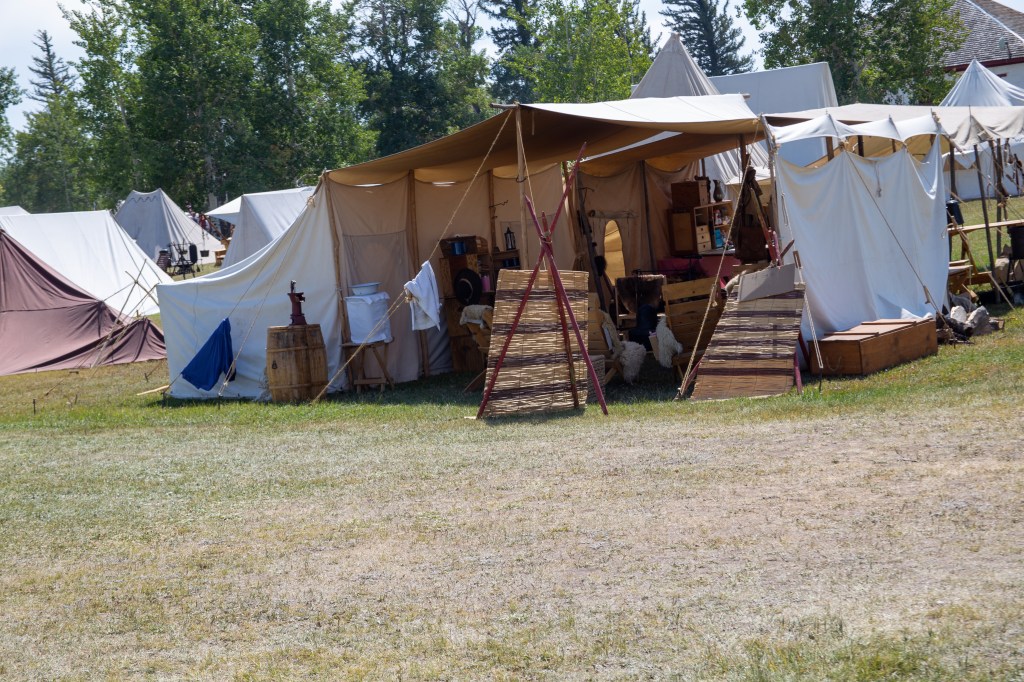
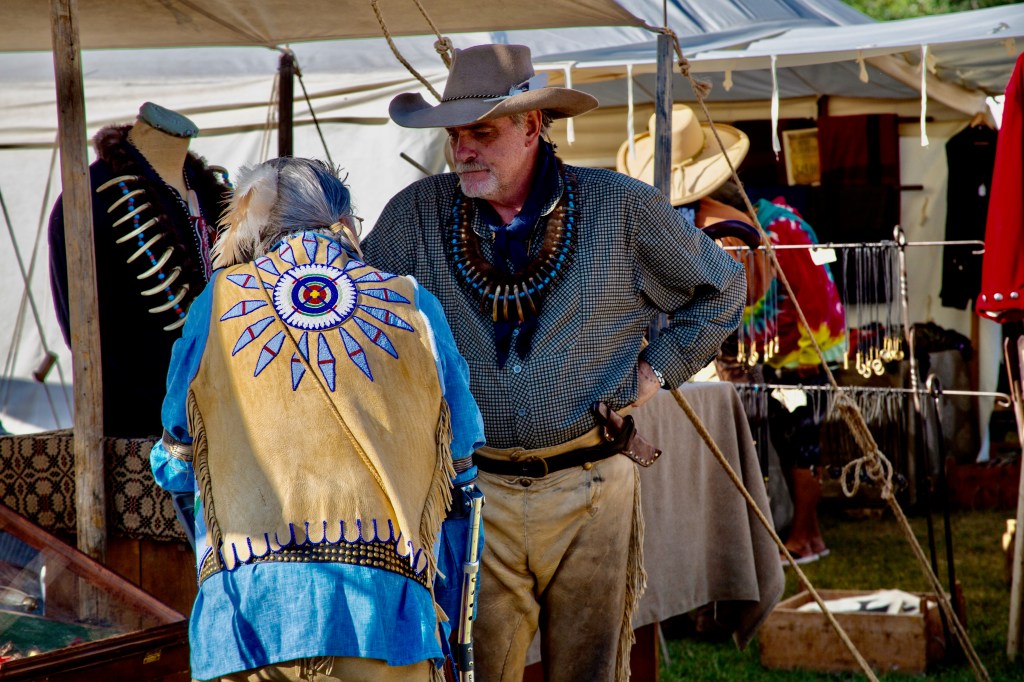
The other very surprising thing that quickly dawned on me as I was entering the grounds was that almost everyone was dressed for the period. I felt awkwardly and out of place, so quickly found a vendor selling rendezvous type clothing, and bought what I needed to blend in with the crowd. I have been to perhaps 20 reenactments/rendezvous, so I have something to compare this one to. Except for one other event, I can say that the Ft. Bridger Rendezvous was head-and-shoulders above the rest. The Native American stuff was the outstanding. All the people dressed in period garb made it almost surreal.
I will let the pictures below tell you the rest of the story. I did make it back home just short of a week, and my wife made it through my absence with no “events”.
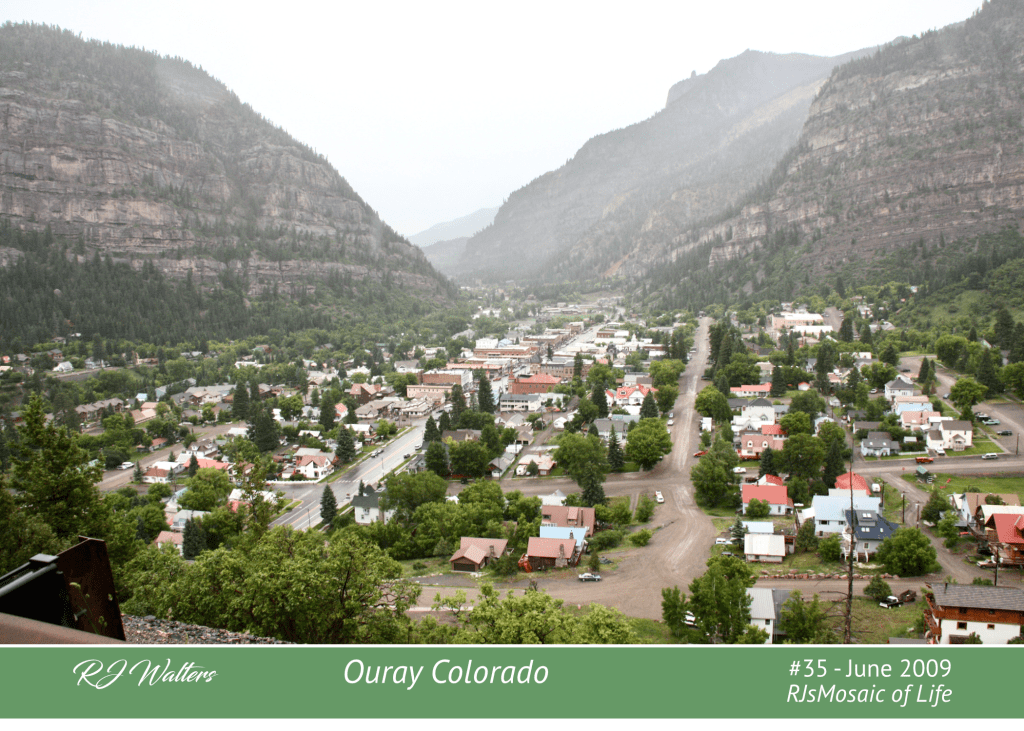
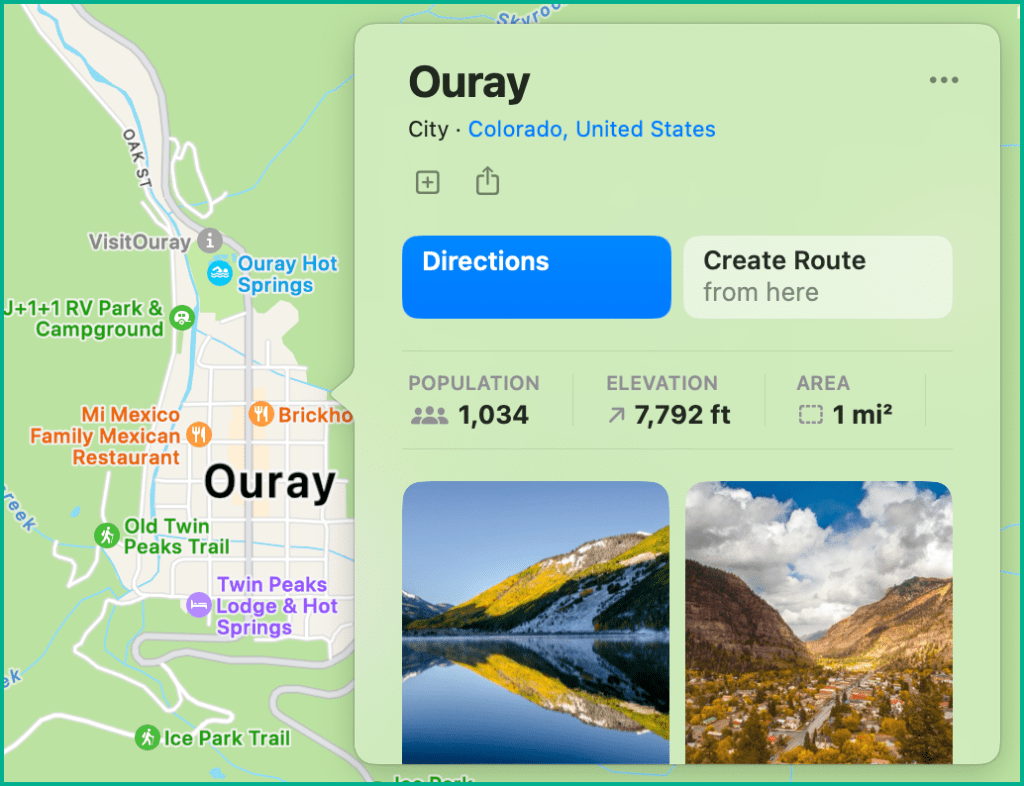
I came across Ouray, Colorado on a month-long Western U.S. trip in 2009. It is on the tip of the Rocky Mountains between Grand Junction and Durango, Colorado. I didn’t know anything about this town of 1000 or so beforehand, so the beauty of its setting totally surprised me. Afterward, I learned that Ouray is called “The Switzerland of America”. We spent a few hours there having lunch, doing our laundry and browsing a few stores.
When I took this picture above as we were leaving town, I thought to myself, that maybe we should go back and discover more about the town. But since I am a schedule freak, I didn’t want to get out of sync with my timeline. On reflection, that was possibly one of my biggest “on-the-road” mistakes. I wish I had taken the time to enjoy where I was instead of looking to the next destination.
This “Pictures And Stories” post was brought on because I just put the above picture as wallpaper for my Mac screen, and noticed some more details that have escaped me until now. The State highway that goes between the two cities, fifty miles in each direction, was blacktopped, but the rest of the town was gravel or dirt roads.
The time I looked I noticed that most of the houses don’t seem to have garages. Given the 140 inches of snowfall they get annually, that seems strange. But, I was looking at it from a city-slicker standpoint. Their only link to civilization, fifty miles in either direction, was the two land highway with few guardrails, in the middle of the mountains. So, there was really no place to go when it snowed. But, I can’t think of a better place to be snowed in.